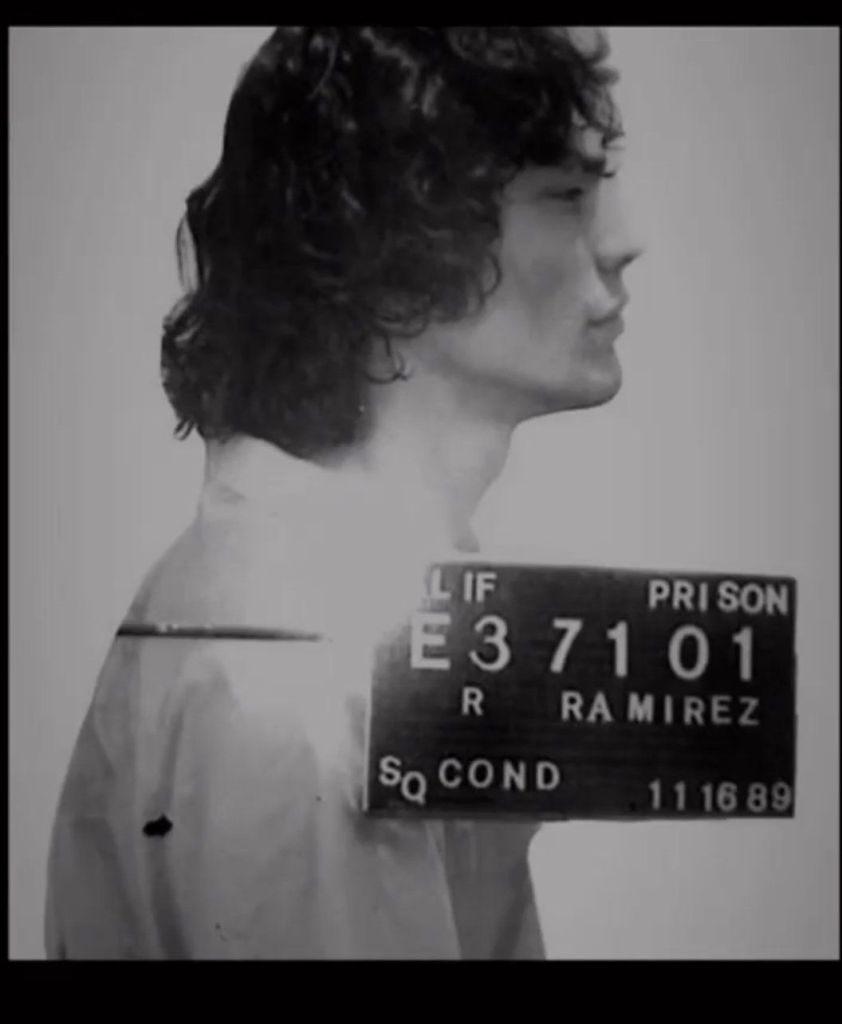
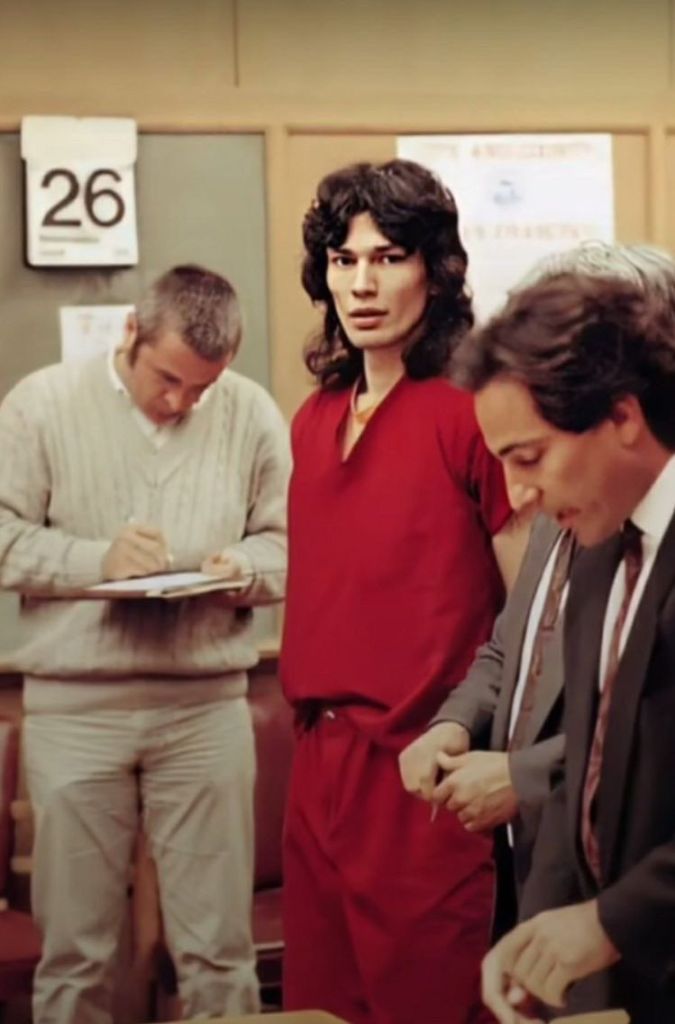
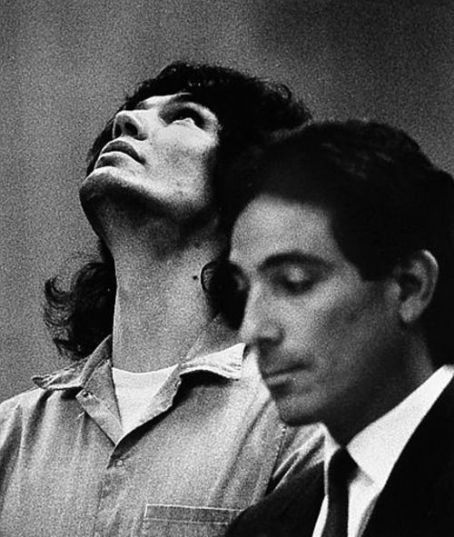
This analysis examines the life and trial of Richard Ramirez, also known as The Night Stalker. Our research draws upon a wide range of materials, including evidentiary documentation, eyewitness accounts, crime reports, federal court petitions, expert testimony, medical records, psychiatric evaluations, and other relevant sources as deemed appropriate.
For the first time, this case has been thoroughly deconstructed and re-examined. With authorised access to the Los Angeles case files, our team incorporated these findings to present a comprehensive overview of the case.
The Writ of Habeas Corpus
The literal meaning of habeas corpus is “you should have the body”—that is, the judge or court should (and must) have any person who is being detained brought forward so that the legality of that person’s detention can be assessed. In United States law, habeas corpus ad subjiciendum (the full name of what habeas corpus typically refers to) is also called “the Great Writ,” and it is not about a person’s guilt or innocence, but about whether custody of that person is lawful under the U.S. Constitution. Common grounds for relief under habeas corpus—”relief” in this case being a release from custody—include a conviction based on illegally obtained or falsified evidence; a denial of effective assistance of counsel; or a conviction by a jury that was improperly selected and impanelled.
All of those things can be seen within this writ.
The Writ of Habeas Corpus is not a given right, unlike review on direct appeal, it is not automatic.
What happened was a violation of constitutional rights, under the 5th, 6th, 8th and 14th Amendments.
The word “occult” comes from the Latin “occultus”. Ironically, the trial of an infamous occultist and Satanist is the epitome of the meaning of the word itself: clandestine, secret; hidden.
We’ve written many words; a story needed to be told, and we created this place to enable us to do just that. Here, in this space, we intended to present the defence omitted at Richard Ramirez’s trial in violation of his constitutional rights. Our investigations have taken us down roads we’d rather not travel along, but as we did so, we realised that there was so much hidden we could search for a lifetime and still not see the end of it. Once we’d started, there was no turning back; we followed wherever it led.
This was never about proving innocence; that was never the intent or purpose. We wanted to begin a dialogue, allowing this information to be freely discussed and for us to verbalise the rarely asked questions. We asked, and we’restill asking.
We can’t tell you, the reader, what to think; you must come to your own conclusions, as we did.
And so
We’ve said what we came here to say; with 114 articles and supporting documents, we’ve said as much as we can at this point. This blog will stand as a record of that, and although we will still be here, we intend to only update if we find new information, if we suddenly remember something we haven’t previously covered, or to “tidy up” existing articles and examine any new claims (or expose outrageous lies) that come to light. The site will be maintained, and we’ll be around to answer any comments or questions.
What Next?
We will focus on the book being worked on; we’ve also been invited to participate in a podcast. When we have dates for those, we’ll update you.
The defence rests? Somehow, I sincerely doubt that; ultimately, we’re all “expendable for a cause”.
“How a 13-year old boy brought down the Night Stalker!”
This story is one of many articles that claim something or someone directly led to Richard Ramirez’s capture. As with everything the media has told you about the Night Stalker, the reality is a little different. Bill Carns and his girlfriend Inez Erickson (sometimes named as Carole Smith) survived a Night Stalker attack in Mission Viejo, Orange County, California. James Romero, a 13-year-old neighbour was rewarded a small motorbike and some money after spotting a man prowling around his house, before escaping in an orange Toyota station wagon. Eagle-eyed James memorised the licence plate and the police found the car, helping them catch Richard Ramirez.
It is a nice end to a horrible story, a young lad giving police that missing puzzle piece in the manhunt, but James Romero actually lived 1.5 miles away from the Carns home. He was not a neighbour. Bill Carns lived on Chrisanta Drive and the Romero family lived on Via Zaragosa at the furthest point possible from the Carns house.
A child seeing the back of a man in a baseball cap, on his front lawn, in the dark, a mile from an attempted murder does not prove that man was the attacker.
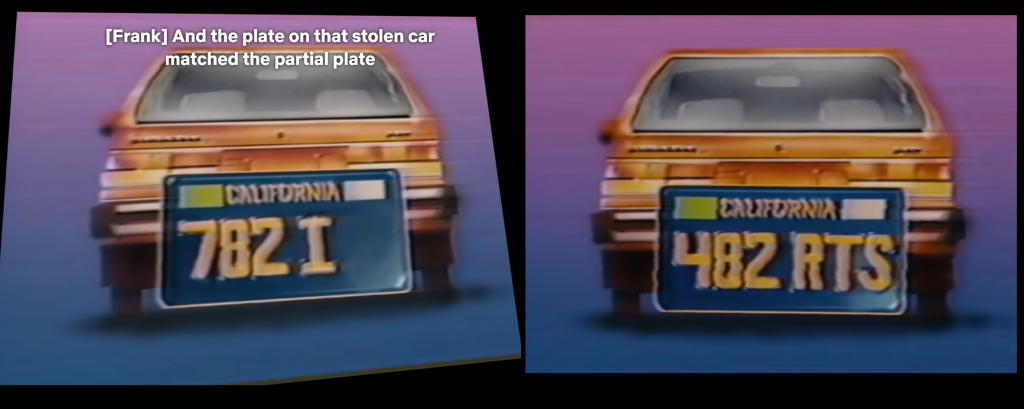
James reported the prowler to the police (nothing to do with hearing about a local murder, but because someone was sneaking about on their property). He described the orange station wagon with a cargo rack and gave a partial licence plate of 782 I.
A composite of the car from the Herald Examiner
Later, in Los Angeles, 50 miles away from Mission Viejo, a 1976 orange Toyota station wagon was stolen from Bill Gregory in Chinatown. A man reported it to the police after seeing the news story about the car seen in Mission Viejo. This car was later found four miles away in a parking lot on South Alexandria Avenue in Koreatown (locked and neatly parked).
Its licence plate read 482 RTS.
The Netflix documentary shows us archive news footage, comparing the stolen car’s plate to the one given by James Romero.
Only 8 and 2 are matches. And even if it was the same vehicle, James did not see this car anywhere near Bill Carns’ house. Later news reports claimed the boy’s identification was much more accurate, and that he only missed the R and the S off.
You might also notice that the composite shows the 3-door variant of the car, whereas the LA car is a 5-door.
Break it all down and we end up with very little evidence at all.
A boy sees a prowler driving an orange car in Mission Viejo.
A man and a woman were attacked elsewhere in Mission Viejo.
A car theft 50 miles away in LA.
Numberplates that do not match.
It is said that Ramirez’s latent fingerprint (invisible to the naked eye, and unable to be found through dusting) was found on the interior mirror, which seems suspiciously convenient. Suspicious because the way they identified Ramirez’s fingerprints through a special new computer program seems to be a myth. They were actually examined manually, which is unreliable and subjective. The evidence listed above is circumstantial and unconnected, so of course, they had to connect it with an invisible fingerprint, just like they used the Avia shoe at the ‘Uncharged Incident’ when they were unable to use the child cases.
Because Carns’ girlfriend did not want to testify a second time (she had testified at the preliminary hearing and admitted she never saw the gunman’s face). The Carns attack never went to trial so we will never know if the fingerprint evidence could be refuted. Although we do know that if Ramirez had been represented by Ray Clark or the Hernandez clowns, they definitely would have forgotten to bring their own expert…
Did Richard Ramirez really drive such a car?
If you read the testimony of Ramirez’s burglar associate Sandra Hotchkiss, she claims that she and Ramirez were driving an orange Toyota station wagon that was involved in an accident, on an unspecified date in 1985. If the car James Romero saw was Ramirez’s car, why was it not dented? If the vehicle dumped in the car park was his, why was it not also dented?
Because it was not the same car.
Then there are the child molestations of which Ramirez was falsely accused. One boy, aged 9, said he had been kidnapped from Montebello in an orange station wagon, but that was not Ramirez unless he was 5’9”, medium build and blonde…
Therefore, that was also not the same car. Not only that, shortly after the theft, its owner received scary silent phone calls to the church he worked at (his work phone number had been left on paperwork inside the car). Richard Ramirez is not associated with crank calls (that’s more the Golden State Killer’s thing), so this points to an unrelated crime.
It was because of James Romero’s description that a hat was added to the composite sketch and detectives then tried to link it with the hat found at Okazaki (and by extension, Carrillo’s extraordinary serial killer hypothesis) as if Richard Ramirez was the only man in California to wear baseball caps.
This is so ridiculous.
Everything about Richard Ramirez is ‘unique’. The only man with an AC/DC hat, the rarest shoes in Southern California, the unique orange station wagon, the only man who used red primer bullets, the only satanist, the only person with bad teeth, and so on.
From the little evidence we have access to, nothing connects Ramirez to the attacks in Mission Viejo. It is all smoke and mirrors. But James Romero was hailed as a hero, flown to Los Angeles for a press conference, awarded money, game tickets and a quadbike for “bringing down the Night Stalker.”
On July 7, 1985, Sophie Dickman was raped and robbed in Monterey Park by a man with a gun and soft curly brown hair. But her case, like many others in the Night Stalker investigation, raises disturbing questions, not only about the suspect’s identity, but about eyewitness unreliability, investigative overreach, and prosecutorial inconsistency. Was Richard Ramirez really her attacker? The evidence, when examined closely, tells a much murkier story.
Why the Dickman Case Was Linked to the Serial Killer
At the time of Sophie Dickman’s attack, the Los Angeles County Sheriff’s Department (LASD) was grappling with what appeared to be a serial killer spree. On May 30, Mabel Bell and Florence Lange were bludgeoned in Monrovia (Bell died on June 15). On June 28, Patty Higgins had her throat slashed in Arcadia. Then, on July 2, Mary Cannon was stabbed and bludgeoned – also in Arcadia. On July 5, Whitney Bennett was beaten and strangled in Sierra Madre but survived. Finally, on July 7, Joyce Nelson was bludgeoned and strangled in her home – just one mile from where Sophie Dickman was raped the same night.
Linda Arthur, an LASD Deputy and crime scene analyst, lived opposite Sophie Dickman (Arthur was featured in the Netflix documentary). She alerted Detective Gil Carrillo to the crime scene, even though it was out of LASD jurisdiction – Monterey Park has its own police department who attended the Dickman crime.
Arthur believed that this rape was somehow to do with the “Valley Intruder” – as the Night Stalker was known back then. Her reasoning, given in City in Fear: Night Stalker (a documentary for MSNBC), was that the rapist “drove away.” She also cited feelings and vibes as opposed to evidence. Arthur was one of the few investigators that believed in Carrillo’s serial killer hypothesis – other detectives did not yet accept that there was one serial killer.
Yet linking Dickman’s case to the spree made little sense. It was not a homicide, and at that point, there had been only one comparable rape-robbery: the Carol Kyle case in Burbank. But Kyle’s assault hadn’t yet been tied to the Night Stalker series, and it wasn’t even known to LASD – Burbank Police were handling it separately, and it wouldn’t be folded into the serial narrative until late August.
Despite this, both the Monterey Park Police and LASD quickly listed Dickman as a possible victim of the serial killer. The press followed suit, reporting her assault as part of the growing Night Stalker crime wave.
An Eyewitness Under Pressure?
The Night Stalker underwent one of his many metamorphoses in the Dickman case. She told Monterey Park officer William Costleigh that her attacker was white, aged about 27 and stood at 5’8″ or 5’9″ tall. He had brown curly hair that curled in a “soft” and “natural” way (this was the era of the perm). Below is an image of her crime report, from a supporting document to Ramirez’s 2008 federal habeas corpus.
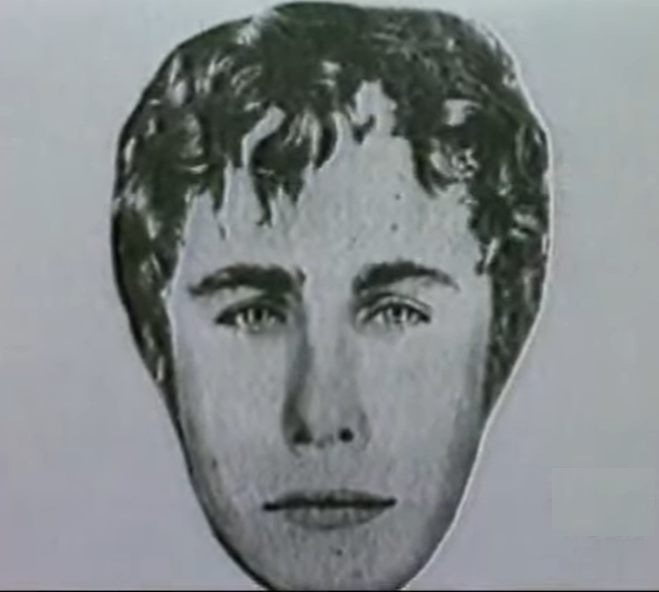
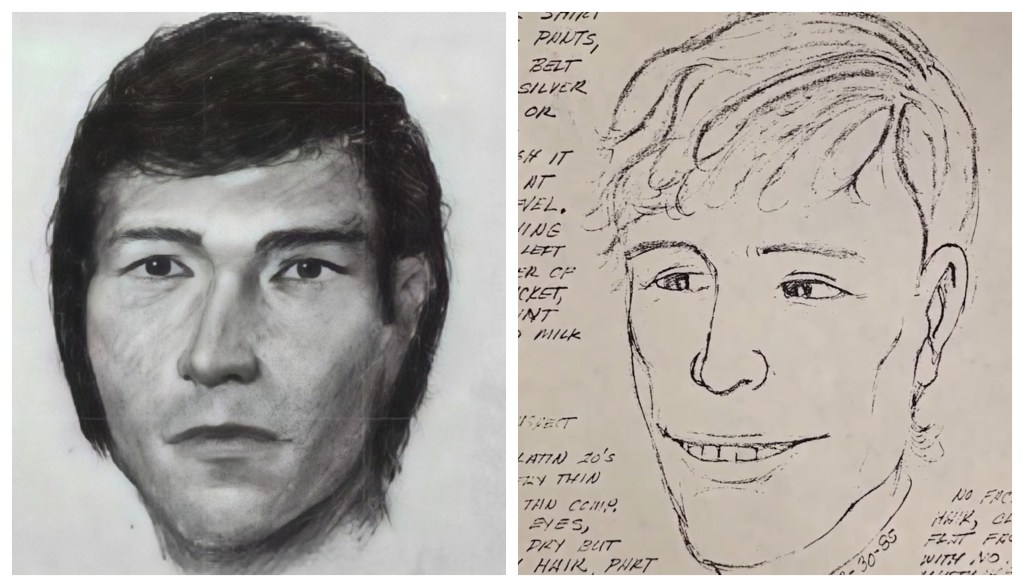
Sophie Dickman was also interviewed by Monterey Park Detective David Corrigan. He helped her to prepare a composite sketch which reaffirmed the rapist’s height as 5’8″-5’9″. This information was printed on flyers and disseminated at a neighbourhood watch meeting in Monterey Park on July 11, 1985. Below is the composite drawing dated July 7:
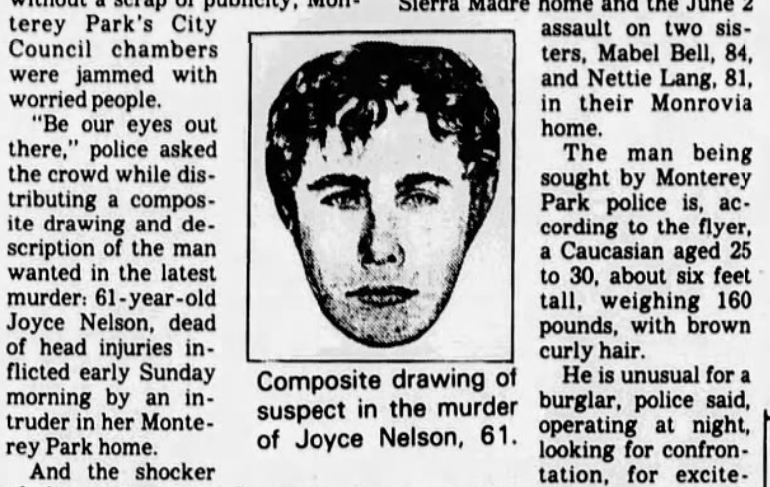
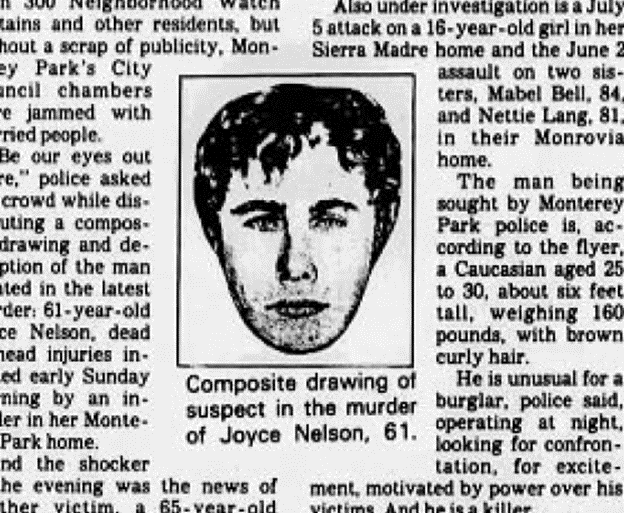
The newspapers, using information given by the police, claimed that the Sophie Dickman composite sketch also portrayed the Joyce Nelson killer, ergo, he was the serial killer. In the newspaper clipping below, note that the suspect’s height is given as “about six feet tall” instead of 5’8-9″.
Los Angeles Times, July 13th 1985
Background Context:
There is a reason that the height changed. While looking for clues in other crimes throughout Los Angeles and the county, Detective Carrillo had seen a June 15 teletype from a Los Angeles Police Department (LAPD) traffic stop involving a runaway suspect driving a stolen vehicle. The suspect’s description seemed to fit the man Carrillo was pursuing.
Firstly, there had been a child abduction not far from the traffic incident and Carrillo believed that the serial killer was also responsible for multiple kidnappings, so marked this driver as a person of interest. The child abduction aspect of the Night Stalker case is covered in other articles and will not be discussed here.
Secondly, the driver had drawn a pentagram in the dirt on the car’s hood. The most recent murder before the traffic stop was Bell and Lang (May 30) – where pentagrams were drawn at the crime scene.
Behind the scenes, LASD detectives asked the LAPD to hold the car for prints but it was parked in an outdoor impound and the prints melted away in the sun. However, a dental appointment card was discovered, leading them to a dental surgery. The dentist told police that his patient was a tall, thin Hispanic man with curly hair and severe tooth decay and went by the name “Richard Mena.”
The detectives did not know this yet, but Richard Mena was Richard Ramirez. They discovered this around July 9th. So, when Sophie Dickman’s rape and Joyce Nelson’s murder hit the news, police told the media that the killer was around 6 feet tall. Richard Ramirez was 6’1″.
The most interesting thing about this is that before July 7, no victim had described a suspect who looked like Richard Mena, aka Richard Ramirez. That is another aspect that is discussed in other articles.
Cross-Examination of the Height:
At trial, under cross examination by Ramirez’s attorneys, Sophie Dickman denied telling Costleigh that the suspect was 5’8″-5’9″. She insisted that she had said the rapist was 6’1″ – Ramirez’s height.
“She later testified that she had described his height to the police as 6′ or 6’1”.
– Petition, pg. 396.
The problem is, she gave the same description to Detective Corrigan when making the composite sketch. Dickman was asked if her 5’8″ description was on the flyers that Corrigan distributed around Monterey Park’s neighbourhood watch meeting. She claimed she could not remember. It was then revealed that Dickman previously admitted at the preliminary hearing that her original 5’8″ description was on the flyer. According to Philip Carlo’s, Ramirez’s biographer, she became snappy and said, “Well, I don’t remember telling you that, but if I did, I did.” (Carlo, pg. 311).
Carlo alleges that Detective Carrillo and his partner Sergeant Frank Salerno were anxious for her to leave the witness stand because she was such a poor eyewitness.
Leading the Witness?
The Monterey Park Police Department allowed Sophie Dickman to be questioned by the Detective Carrillo. He showed her a photo spread of suspects. She chose a man who looked nothing like the curly-haired, short, thin white man in her initial description.
The suspect was Arturo Robles, a 6’0″, broad Mexican man with straight hair. Back in April 1985, Carrillo had already arrested and released Robles in connection with the Dayle Okazaki case – the first alleged Night Stalker attack.
“Police showed Sophie D. the same photographic lineup not including defendant’s photograph that had been shown to Maria Hernandez, and Sophie D. picked out the same person who, as noted above, was apprehended, questioned and released.”
– Ramirez’s 2006 Appeal
It is strange how Carrillo should show both women photos of Arturo Robles and both chose him even though he looked nothing like their respective attackers. This wide variety of suspect descriptions damages Sophie Dickman’s credibility as an eyewitness.
A Rigged Line-up
Sophie Dickman identified Richard Ramirez at a line-up on September 5, 1985. The line-up was proven to be tainted and two Sheriff’s deputies were caught on film signalling to witnesses to pick Suspect Number Two – Richard Ramirez. Here is the video below:
Under cross-examination, Dickman admitted to seeing Richard Ramirez “lots of times” on television multiple times a day, as well as in the papers which could also have contributed to her identifying Ramirez. Yet, like other victims, Maria Hernandez, Carol Kyle, Somkid Khovananth, Sakina Abowath and Virginia Petersen, she did not call the police when she saw her alleged attacker on the news. According to Philip Carlo, Dickman arrogantly stated, “That is their job. They didn’t need any hints from me.”
Ramirez’s 2008 appeal says that Dickman learned she was part of the Night Stalker cases from the news after Ramirez was caught.
“She learned from the news that the Night Stalker was responsible for her attack about five days after the arrest, which was prior to the live line-up.”
– Petition, pg. 397.
The Confusion Surrounding the Rape
Sophie Dickman was sexually injured. She said:
“He was just thrusting and pounding and that was it. He turned me over and tried sodomy … he was thrusting and pounding against the rectal area, except it was more like my tailbone … it felt like I was being torn in two.”
– Carlo, pp. 308-309
Carlo also wrote that prosecutor Halpin asked Dickman if she could tell if the suspect actually penetrated her genital area to which she replied, “I don’t think so. He didn’t have an erection.”
The prosecution did not submit semen evidence from the Dickman case. Carlo wrote that Carrillo and Salerno were surprised because Dickman was swabbed with a rape kit and semen was found. How does a man ejaculate without an erection, much less make a woman feel like she was being torn in two?
The Jewellery Expert?
Reporting on the trial, theLos Angeles Times wrote that Sophie Dickman testified that the rapist was knowledgeable about jewellery.
“The woman, who concluded her testimony Thursday, also said Ramirez was able to instantly distinguish real diamonds from cubic zirconia, the popular imitation diamond.”
– Los Angeles Times, 17th March 1989.
This is in direct contradiction to what Ramirez’s burglary accomplice, Sandra Hotchkiss testified.
“One the first occasion, Hotchkiss bought several rings and chains from Petitioner [Ramirez]. Hotchkiss later bought jewelry from Petitioner at good prices because he was unaware of the weight of the gold or the value of stones.”
– Petition, pg. 142.
Hotchkiss portrayed him in a way that is starkly at variance with the angry, demanding rapist in Dickman’s house. Later, the Petition reveals that Hotchkiss was the one leading Ramirez.
“She picked the homes to be burglarized. According to Hotchkiss, Petitioner [Ramirez] did not know how to identify valuable jewelry.”
– Petition pg. 143.
The Los Angeles Times, observing Sandra Hotchkiss’ testimony reported that:
“Once inside, she said, Ramirez often behaved nervously, going in and out of the house while making a lot of noise. Ramirez was, she said, “too slow” and “just wasn’t smooth,” adding: “He didn’t know jewelry.”
– Los Angeles Times, 25th May 1989
Ramirez often abandoned Hotchkiss during burglaries. Ramirez’s ‘fence’ Felipe Solano also stated that Ramirez knew nothing about jewellery. Both he and Hotchkiss took advantage of his cluelessness (Habeas Corpus petition, pg. 113).
Circumstantial Evidence – Stolen Items
Sophie Dickman identified rings, pins and earrings recovered from Felipe Solano’s homes at the property line-up on September 5, 1985. Solano said that Ramirez sold them to him.
On the surface, this looks compelling but is more complicated than it seems. In court, Felipe Solano’s testimony unravelled, when it was revealed he was protecting multiple criminals – one of these could have committed some of the Night Stalker crimes.
According to Philip Carlo, Sandra Hotchkiss claimed that Solano was beaten up by policeuntil he told them he received the jewellery from Ramirez. Hotchkiss tried to tell the District Attorney, insisting this beating was recorded on tape. The recording was never presented as evidence and the police denied the beating.
Ultimately, the chain of custody of the stolen items was never established, none were recovered from Richard Ramirez and his fingerprints were not found on any of them. At the end of the article, there will be a link to posts explaining the network of burglars in the Night Stalker case.
The Shoes Did Not Match
A major part of the prosecution’s evidence was Avia Aerobics model 445B shoeprints. These were found at seven Night Stalker crime scenes. Avia prints were not found at the Dickman crime scene but they were found at Joyce Nelson’s house on the same night. Dickman said the rapist wore hi-top sneakers in black with a white stripround the side. Avia Aerobics did not come as hi-tops with white strips. Did the Night Stalker change his shoes as well as his modus operandi?
Ultimately, there was no forensic evidence to tie Richard Ramirez to this crime but he was tied with questionable circumstantial evidence. He received the death penalty for the Dickman crime.
Originally written on 27th December 2022. Updated on 29th May 2025.
*Images may require viewing via desktop for clarity*
In Part One, which can be found HERE, I examined how unqualified the defence counsel was, how ill-prepared and unorganised they were and how they virtually abandoned Ramirez to his fate.
Welcome to Part Two, where we will continue to examine the failings and shortcomings of Daniel and Arturo Hernandez, and their contribution to the saga, that ended in the death penalty being meted out to Richard Ramirez, on the back of some of the crumbliest evidence ever to echo round a courtroom.
*Some images are best viewed on a desktop, due to size*
Here are some basics:
“An attorney owes all clients: the duty of loyalty, the duty of care, and the duty of confidentiality. Within the bounds of the law, the duty of loyalty requires the lawyer to put the client’s interests ahead of the lawyer’s own interests and to do nothing to harm the client.“
But what happens when the lines are blurred? What happens when the lawyer doesn’t seem too sure about who is the client? Is it the man in chains at the defence table, or perhaps, the family of the defendant, a third party, the ones who are paying (or have promised payment)?
This is what is referred to as a conflict of interest and it was this conflict which led directly to gross negligence, a violation of rights, a cover-up of mental impairment, and ultimately, resulted in a miscarriage of justice.
California Lawyers Association
Generally speaking, under the rules of the California Rules of Professional Conduct, a lawyer cannot represent two or more clients whose interests potentially conflict, or whose interests actually conflict, without obtaining prior written consent. That’s an easy enough standard to follow in a typical legal case because one person = one client.
Or so you would assume, or at least hope, but this was the trial of Richard Ramirez, where constitutional errors were littered throughout the whole process, and there was nothing typical about this particular case.
A Dance of Lawyers
And a brief glossary of terms which may be useful as we unpick what happened.
Public Defender: a criminal defence attorney who gets paid a salary by the government (federal, state, or local) to argue the cases of clients who have been charged with a crime and can’t afford a lawyer.
Assigned Counsel also defends those who can’t afford an attorney, but these lawyers work in private practice, and the government pays them on a case-by-case basis.
Retained Counsel, privately engaged for a fee.
Sixth Amendment: says anyone charged with a crime has the right to counsel. (Unfortunately, the Sixth Amendment’s promise of counsel for all, including the poor, often remains unfulfilled in capital cases. The Supreme Court has affirmed that this right includes the right to an effective lawyer, but all too often, defence attorneys involved in capital cases prove inept, ineffectual, underfunded, and overmatched by the State’s attorneys.)
The Fourteenth Amendment, due process clause: “nor shall any State deprive any person of life, liberty, or property, without due process of law; nor deny to any person within its jurisdiction the equal protection of the laws.”
Conflict of Interest: An attorney’s conflictofinterest arises when an attorney takes on a new client who has interests that are averse to the interests of someone the attorney is currently representing or has represented in the past.
Declaration of Arturo Hernandez from the Writ of Habeas Corpus.
That’s the “legalese” out of the way, let’s move on…
On October 9, 1985, the trial court relieved the Public Defenders, Alan Adashek and Henry Hall, and Joseph Gallegos, retained counsel, appeared on Petitioner’s behalf. This did not last long either; more information about that brief, but relevant, appearance can be found in THIS post.
Why relevant? Because on October 24, 1985, counsel Joseph Gallegos moved for a psychiatric evaluation of Richard to determine his present mental state and his ability to choose his own counsel. Gallegos informed the court that he was gravely concerned about his mental condition and ability to retain new counsel. The matter surrounding Richard’s cognitive impairment is a mammoth and distressing subject, too large for the scope of this post. However, we aim to cover it in the future, as it is monumentally important.
So often in this case transcripts are missing.Declaration of Manuel Barraza, who seems to have done well out of this.
After Richard was arrested for murder in Los Angeles, police searched the home of his older sister, Rosario, in El Paso, Texas. A neighbour suggested to the Ramirez family that they talk to a local lawyer Manual Barraza, who, after meeting with the family, travelled to California with the intention of defending him. Mr. Barraza’s representation also included “protecting the family’s interest related to Petitioner’s case.” (Ex. 13, M. Barraza Declaration)
On October 3, 1985, while still officially represented by the public defenders Henry Hall and Alan Adashek, Richard signed an Assignment of Rights agreement in favour of his sister Rosario Ramirez. This was just three days after his capture!
The document covered rights “in any and all present or future literary, publishing, motion picture, television, interviews, serials, dramatizations, advertisements, manuscripts, all whether written or unwritten, published or unpublished, copyrighted or non-copyrighted, direct or subsidiary.” (Ex. 110, “Assignment of Rights.”) In it, Petitioner “irrevocably consent[ed] to and forever authorize[d] the use by the Assignee (Rosario) or anyone authorised by the Assignee, her legal representatives, the absolute and unqualified right to use the Assignor’s life material in any manner the Assignee may desire”
As the public defenders weren’t relieved until October 9th, it was already starting to get messy. Just who was representing him, defending his rights and protecting his best interests? There were doubts as to his ability to understand or to make rational decisions.
“Both Mr. Barraza and Mr. Hall admitted that Petitioner was acting unusually at and around the time the assignment of rights was executed. Mr. Hall admitted that Petitioner was “agitated and irrational” during his contacts with him. (Ex. 18, H. Hall Dec., ¶ 4.)
Mr. Barraza admitted that during the times he met with Petitioner in September and October 1985, Petitioner “exhibited extreme mood swings and his dialogue was remarkable for its incoherence and irrationality…. He was unable to focus or listen to [Barraza’s] attempted explanation about what appeared to be in his best interests.” (Ex. 128, M. Barraza Dec., ¶ 7) (Dec. 21, 1994)
Mr Barraza immediately began to solicit book or film deals, telling Rosario that he received many calls from interested parties. From these prospective deals, he was expecting a percentage of monies, and Rosario had already signed a promissory note of $100,00. Ultimately, Barraza could not take Richard’s case because he was not licensed in California.
It was Manuel Barraza who suggested to Richard’s sister that they hire Arturo and Daniel Hernandez to represent him, as he knew Arturo, and that they were licenced to practise in California.
This really boils down to money, cold hard cash. Retained attorneys charge for their services, and receive no funding from the state, unless they are appointed by the court. As the state refused to appoint the Hernandez’, their qualifications falling short of the requirements under Californian law, it was down to the Ramirez family to find what amounted to a vast amount of money. The harsh truth is that money buys you a decent defence, and in a capital case, a defendant needs all the help they can get. Their life depends on it. God help a defendant who finds himself saddled with an incompetent lawyer due to lack of funds, a conflict of interest, or horribly, as in this case; both.
Death is different.
Enter Daniel and Arturo Hernandez, stage right!
From the California Lawyers Association rules.
Richard’s sister met Arturo and Daniel Hernandez in court the day they appeared to represent him. Two retainer agreements were signed, one with the family and another with their client, Richard Ramirez. The family retainer agreement specified that the Hernandez’ would receive money from the family for their legal services when they received payment for the book or movie rights to Richard’s story.
They expected to be paid early in the case by the family’s attorney, Manuel Barraza, or by the family. Richard’s agreement did not require him to pay any funds for his defence, as payment was expected to be fulfilled by the family. The client retainer agreement bound the attorneys to represent Richard through court proceedings.
Rosario’s Declaration.
On October 22nd 1985, Daniel Hernandez informed the court that he had been retained by Richard and his family, and that contracts had been signed by both parties. The court inquired how the Hernandez’ were going to be paid, and Daniel told the court he wasn’t comfortable with disclosing that, however, once the counsel for prosecution had left the room, he confessed to the judge that the family was going to pay, but not how.
“I really can’t comment on that. I am really not necessarily aware of that, and I am not necessarily anxious to discuss their finances at all.”
Daniel Hernandez
Trial court noted that they knew Barraza had been on the TV asking for lawyers to take the case, on the proviso that they would receive payment from TV and book deals, and that any and all potential conflicts must be disclosed to both the court and to their client.
Then Hernandez’ denied any knowledge of this, which wasn’t true, because they had been, from day one, telling Rosario it was imperative to get Richard to sign a film or book deal, to enable them to build a vigorous defence. They went as far as taking her to see a Hollywood producer, however the deal fell through as Richard refused to sign the contract. Even though Rosario was the legal holder of the rights to Richard’s story, his cooperation was required to secure a media deal. He was, presumably, the only person who would know certain facts about his alleged criminal activity.
That’s the basic outline of how and why the possibility of conflict was born. So how did this affect the defence?
Where and to whom do they owe loyalty? To the family paying them, or to their client, the one they are duty bound to defend whatever the circumstances, within the law.
Declaration of Robert R Bryan, post-conviction attorney
On October 24, 1985, after denying attorney Gallegos’s motion for a psychiatric evaluation of Petitioner, the trial court advised Richard that “your attorneys have a contract with you and with your family, those two contracts may at some point be in conflict. . . Do you understand that possibility does exist?”
An accused person must be informed of any potential conflict of interest by the court, it must be fully disclosed and the defendant able to understand what, potentially, could happen when an attorney is unsure of where their priority is. He must also consent. To waive the constitutional right to conflict-free counsel, you must be clear what it means. Gallegos had raised his doubts in municipal court as to the mental competence of Richard and wanted him to be thoroughly assessed.
Inability of Client to Consent. This situation presents the opposite side of the coin from a lawyer’s inability to make an adequate disclosure. Even if a lawyer were able to fully “communicate [] and explain []” the risks and consequences of the conflicted representation, “informed consent” under CRPC 1.0.1(e) still requires that the client agree. Although diminished capacity presents a broad spectrum of abilities, a client with significantly diminished capacity might be unable to comprehend a lawyer’s disclosure concerning therisks associated with a conflicted representation and consequently would be unable to give informed consent to the representation.
From the Californian Lawyers Association
Richard said he thought there would be no conflict. He was wrong.
The fear that Richard was not competent to rationally assist, understand, consent to or waive his rights, was real and valid. He needed to be assessed properly.
Richard was seen (briefly) by William Vicary, M.D., a psychiatrist. A summary of his findings is below, although a further post will look in greater depth at his report.
Writ of Habeas Corpus, page 529
“His best interests before and during trial, and that of his family were divergent and irreconcilable. The fee agreement placed counsel in an untenable position between client’s best legal strategy – which should have included the adoption of a mental health defence at the guilt phase and/or the presentation of his impoverished and abusive upbringing at penalty – and the financial and privacy interests of his family.” (Writ of Habeas Corpus)
This subject, and its sensitivity will be discussed, as ever, in due course. Again, it is too complex to be included within this post.
Declaration of Robert R Bryan, post-conviction attorney
The sad fact is that Richard any psychiatric investigation that he was subjected to was not developed or followed up, to any degree, until after his LA convictions, when he was moved to San Francisco. That will be covered later, but for now, we remain in LA, with the complicated subject of conflict of interest and a defendant who has no idea what he should be entitled to in a capital trial for his life.
Here’s a little conundrum, the family needed money to pay for his defence, they did everything possible to help the son and brother they loved, but no deal was forthcoming, no money came rolling in, and they couldn’t afford the legal fees. The court refused to appoint the Hernandez’, who were broke. They, in turn, refused to acknowledge or investigate a defence strategy, which included mental health, for two reasons: They did not want to diminish his value or cause embarrassment tohis family.
Findings of Dr Dietrich Bulmer, Ex. 31, who examined Ramirez on 19th and 20th January 1986
When attorney Joseph Gallegos moved for a competency evaluation just before the Hernandez’ substitution, Arturo Hernandez objected, stating that Petitioner had no trouble understanding the proceedings. The Hernandez’ never again moved for a competency evaluation until seemingly compelled by the court. They did not develop or further investigate a strategy that focussed on his mental capabilities.
The opinions of Drs. Vicary, Blumer, and Henderson were known to trial counsel. Daniel and Arturo, and later, Ray Clark, provided constitutionally deficient performance in failing to present those experts’ views to the trial court to support a motion to determine Richard’s competence to stand trial and waive rights. The opinions of these experts, and the factual bases for those opinions, moreover, would have constituted mental health and other defences to the charged crimes at the guilt phase and robust mitigation at the sentencing phase of his trial, and the defence counsel performed deficiently in failing to present such defences to the jury.
No follow up on this assessment of Richard’s competence. Writ of Habeas Corpus.
A follow-up that could’ve helped at the penalty phase, an evaluation that could have saved him from the death penalty.
Writ of Habeas Corpus page 531
Trial court knew all this, knew what was happening, and yet did not stop proceedings.
Writ of Habeas CorpusWrit of Habeas Corpus
Hollywood loves a monster, and it soon became clear that adopting a defence, which included his mental impairments, lessened his value on the market. No one is interested in a man who might not be “quite right”; then, as today, people want the blood-soaked murderer. If such information were to come out at a public hearing, he would lose his appeal to a literary agent seeking exclusive material. After all, horror sells, right?
Writ of Habeas Corpus.
What to Do?
“In this case, the prospect of a book or movie deal further divided counsel’s loyalties. For example, more than once, Petitioner’s family voiced their concerns about protecting their monetary interest in Petitioner’s case: the Ramirez family expected to receive in excess of $300,000 for Petitioner’s story. (Ex. 18, H. Hall Dec., ¶ 3). Since trial counsel was dependent on the Ramirez family for the entire balance of the retainer agreement, counsel could not offend or embarrass them during the investigation or presentation of Petitioner’s case. The fact that no book or movie deal developed during the case, only furthered the Hernandez’ indebtedness to the Ramirez family, and gave counsel an ongoing incentive to defer to the interests of the family over Petitioner’s”
Writ of Habeas Corpus, page 224
Let’s add another spoke to this wheel…
Because they were running short of cash – cash they needed to run this defence successfully – the Hernadez’ began working on another case, another pending murder trial at the same time. The People v Ortiz. There’s a whole other story there, for they also messed up that case and were facing an incompetency investigation. Sometimes, when I think this could not get any worse, somehow, it does!
In THIS post I have already mentioned that Arturo Hernandez had stopped turning up, and was eventually jailed, Daniel was often M.I.A and Richard was often left to the machinations of paralegal Richard Salinas and one Ray Clark.
Attorney Ray Clark was appointed by the court (they were paying him) to assist Daniel Hernandez, who was unable to carry on virtually unassisted, and often sick. Unfortunately, Clark was not appointed until March 1989, with the trial well underway.
He did not review the case or bother to discover much about Richard and his alleged crimes, merely seeing himself as Daniel Hernandez’ assistant. There is more to this than at first seen. Clark, who had got this position because Daniel had opined to trial court that he couldn’t do this alone, felt somewhat beholden to him. After all, he was being paid $100 per hour, while Daniel was receiving nothing.
Declaration of Ray Clark
Clark and Daniel Hernandez had an agreement, whereby Clark would pay Daniel a percentage of his earnings from the court case. 30% of what he was paid, he gave to Daniel, and because he felt obligated, he did not try to change the lethal and downright unacceptable strategy employed by the Hernandez’, furthermore, Clark was dependent on Daniel Hernandez’ continued consent to his appointment.
This arrangement between the two attorneys was not even revealed to the court at the time, even though it caused yet another conflict of interest, with Clark seeming to have neither the authority to overrule the defence strategy or even to push back against the lack of mitigation evidence during the penalty phase. Where even the prosecution had to remind the jury that no mitigation had been given in defence!
Ray Clark declaration.
In fact, Ray Clark doesn’t seem to have cared very much about it at all and this failure, when it most mattered, will be the subject of a future post, as it is serious enough to warrant it.
If you are poor, and charged with a capital offence, you are left to the mercy of the dollar, and because of it, the mercy of the court. Or not.
“Death always went with the territory…”
Richard Ramirez
And, as we know, there was no mercy, no fair trial, for Richard Ramirez.
Sierra Madre, Los Angeles County. 5th July 1985. 16-year-old Whitney Bennett arrived home via the back door. She made sure it was locked before changing for bed. The light was still on, and the curtains were left open when she fell asleep. Bennett’s bedroom was at the front of the house.
Sometime between 2:45 and 3:45, Bennett woke face down on her bed. The light had been turned out; the curtains were now partially pulled across. There was blood all over her sheets and pain in her head and hands. Her underwear had been removed. Bennett was able to make her way to the hallway – where her pained moans woke her father – before collapsing.
Bennett was extremely lucky to survive such a brutal attack. She required multiple operations to treat a fractured skull and eye socket, a partially detached retina and many lacerations to her head and face. She also suffered a fractured finger. She also had ligature marks on her neck and her hands were swollen, possibly from ligatures.
Evidence at the scene
Window screen missing from the front of the house.
Bedroom ransacked.
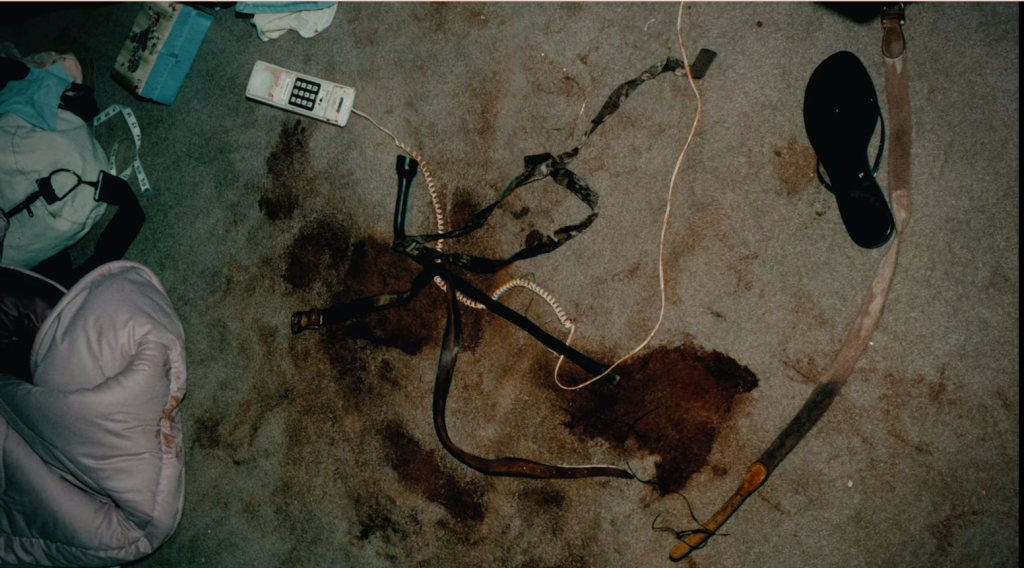
A tyre iron on the floor, in a pool of blood.
Blood on the curtains, carpet and bed and a sash.
A gloved handprint on the windowsill.
Blood on the windowsill.
Severed telephone cord; phone placed on the windowsill.
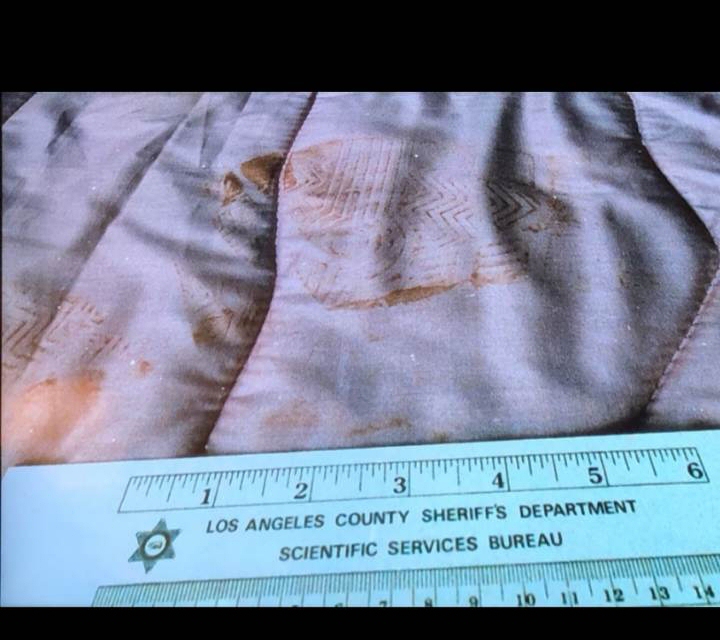
Two partial shoe prints on her comforter.
A pubic hair.
Jewellery box was moved and two rings missing.
Did Any Evidence Tie Ramirez to the Bennett Crime Scene?
The blood on the curtain sash contained antigens that were not from Whitney Bennett, nor were they from Ramirez. This blood was Type A. Ramirez was Type O – the same as Whitney Bennett. It could be that, as the attacker was slashing Bennett, the slippery blood caused the knife to slice through his gloves, cutting his fingers. This blood could have been spread to the curtain as the suspect escaped via the window.
The blood evidence does not seem to have been discussed at length at trial, and Philip Carlo’s book revealed that the defence’s ‘special master’ was unable to obtain the samples for this case from the prosecution. The 2008 Habeas Corpus petition does not mention this, but if it is true that the prosecutor withheld blood samples, this is a clearBrady violationand the defence should have filed a Brady motion – but failed to do so. Blood that did not match Richard Ramirez was found at the home of another Night Stalker victim, Mary Cannon. The samples were tested by the same criminalist, Giselle LaVigne, but no further tests seem to have been carried out to determine whether the blood at both crime scenes matched.
The pubic hair was similar to Ramirez’s but there was nothing unique about it; it was a common type and without the benefit of modern testing, is inconclusive. The prosecution argued that bloody glove prints on the windowsill matched some gloves found in Ramirez’s locker at the Greyhound Bus Depot, but fabric is incapable of yielding identifiable prints, and is not usually admissible. Ramirez’s defence failed to raise an objectiondue to incompetence. If Ramirez’s own gloves were used at Bennett, they would surely have been blood-stained and torn.
The blood alone could have eliminated Ramirez as the suspect and the charge might have been dropped. But because of the presence of the ubiquitous Avia shoe prints, the prosecution pressed ahead with it, despite no proof that Ramirez wore such footwear.
Those Bloody Avia Prints – Literally
There were two partial shoe prints found on Whitney Bennett’s bed: one was a herringbone pattern and the other was from an Avia sole, that aside from its missing heel, was near-perfect, with no smudging or marks of wear, such as nicks or dents.
Because the herringbone pattern (chevrons or ‘zigzags’) is universal across brands, a second perpetrator in a different type of shoe cannot be ruled out. The defence failed to argue this and simply half-heartedly told the jury that Ramirez was not currently wearing Avias and had never been seen wearing them.
The prosecution argued that all shoeprints were made by a black Aerobics model 445B. The shoe forensics expert for the Habeas Corpus petition, Lisa DiMeo agreed that this print was made by an Avia but disagreed with prosecution expert witness, Gerald Burke, that it was a particular model. With Avias, the heel area must be visible to determine whether it is an Aerobics, Basketball or Coach/Referee type – and that was not present on the blanket.
This means at least thirteen different models of Avia could be in the frame. DiMeo could only conclusively eliminate Coach model 552R. While the distinctions between Avia shoe models may seem technical, they are crucial to understanding the evidentiary flaws in this case.
“Found at the scene was a partial shoeprint – ball area – in apparent blood on a fabric comforter. This was consistent with an Avia athletic right shoe that exhibited similar class characteristics to the Aerobics model. Only the Avia Referee /coach model 552R can be eliminated as the source of the print based upon the break between the dam element and flex joint. A second partial print on the comforter in apparent blood exhibited herringbone elements, but no further description could be determined.”
– Declaration of Lisa DiMeo, Document 7.19.
In her supplemental declaration, DiMeo was critical of Gerald Burke’s testing methods.
“The receiving medium is a plush fabric comforter. The comforter is a yielding surface, and caution should be used when comparing and interpreting a transferred impression. There is no evidence that Mr. Burke created test transfer impressions on a similar yielding surface before concluding that the impression was an Avia Aerobic size 11-12.
– Supplementary Declaration of Lisa DiMeo, Document 7.20.
Furthermore, DiMeo stated that Burke’s measuring techniques were not of the standard used by forensic examiners. Burke determined that the print on Whitney Bennett’s comforter was an Aerobics model in size 11½ because there were ten chevrons below the parallel lines (called a flex-join). Basketball models only had nine chevrons. However, he contradicted himself by admitting that sizes 12 and 13 also have ten chevrons – 13s have a partial eleventh chevron. This meant that a number of shoes could have caused the print pictured above.
Burke made this assessment without bothering to check sole sizes 5-9½ to see if his ‘ten chevrons on Aerobics’ models was truly correct. There are also many variations of the same sole design released in the early 1980s, but detectives insist Avias were brand new and therefore rare shoes.
“A qualified analyst would not state an absolute without collecting all the available data.”
– Supplementary Declaration of Lisa DiMeo, Document 7.19.
DiMeo’s opinion was that if a shoe’s print submitted as evidence and associated with a known shoe, jurors will be more likely to believe the analyst’s testimony that it is indeed that particular shoe. Had the jury known thousands of shoes may have created this print and they were not unique like the police claimed, the evidence might not have been so compelling.
This is why counterevidence from a professional shoe forensics expert was imperative, but Ramirez’s lawyers failed to retain experts, because they had no money. This was because they lacked the necessary qualifications to enable them to be funded by the court.
Curiously, the Avia prints were not initially discovered when the police first entered the crime scene. The blanket was bundled in the corner of the room and was later unfurled by Giselle LaVigne who called the detectives to look. This was the point when Sergeant Salerno began to believe Detective Carrillo’s serial killer theory. They are keen to emphasise that they remained outside Bennett’s bedroom when LaVigne found the Avia impression.
The pink comforter can be seen bottom left
Why Was Ramirez Convicted of the Bennett Attack?
Another reason was that Whitney Bennett was a sympathetic survivor, who was just sixteen at the time of her attempted murder. She had been asked to testify at the trial, despite the fact she was unable to remember anything and did not see the attacker. While likely distressing for Bennett, her testimony added little evidentiary value, as she could not identify her attacker. Its inclusion may have risked inflaming juror emotion rather than aiding deliberation.
The prosecution attempted to link the Bennett Incident to Mary Cannon’s murder on the basis of its proximity, as well as Bell and Lang. All three were close to the same hills and canyons (3.5 miles by road, but just a mile as the crow flies). This is a fair argument – the modus operandi is also similar – but the forensic inconsistencies raise serious doubt that Richard Ramirez was the perpetrator in any of these cases, and the defence should have argued this.
These three attacks, and possibly the Nelson Incident – although that was much further away – might have been carried out by the same perpetrator. However, this does not mean all of the ‘Night Stalker’ attacks were connected, regardless of whether Avia prints were found – their models were inconclusive. This is why the Night Stalker cases should have been divided into categories and separate trials. However, the court denied the defence’s motion. A joinder between the crimes caused a lengthy trial, and combined with the constant false reiteration that Ramirez had owned Avias, it had a cumulative effect on the jury.
This post serves as a fast and basic explanation of the Night Stalker case – from our perspective. It is a kind of ‘masterpost’, if you will. It has an approximately 15mins reading time, so make a drink and sit down!
Excessive Focus on Okazaki and Yu
Detective Gil Carrillo excessively focuses on the 17th March 1985 murders of Dayle Okazaki and Tsai-Lian Yu. They dominate true crime podcasts who feature Carrillo as a guest, as well as the Netflix documentary. These cases are the least ‘Night Stalkerish’ of all the crimes, with their simple hitman-style random shootings, lacking in the gruesome aspects of the July bludgeonings, any satanism or even robbery. But they were where Carrillo’s serial killer theory was born – really early on in the case.
There was nothing wrong with investigating a connection between the two. They were seemingly randomly gunned down within an our of each other, just four miles apart. Both women were in their 30s and Asian. The weapons in each case were believed to be .22-calibre revolvers. But it should quickly have become apparent that there was no connection. Maria Hernandez, the survivor of the Okazaki attack said the man was around 5’10”, maybe taller, with dark hair, a moustache and beard. He was possibly an olive-skinned white man or a light-skinned Hispanic. A witness to the Yu case, Joseph Dueñas, said the killer was short (5’7″) and possibly Asian.
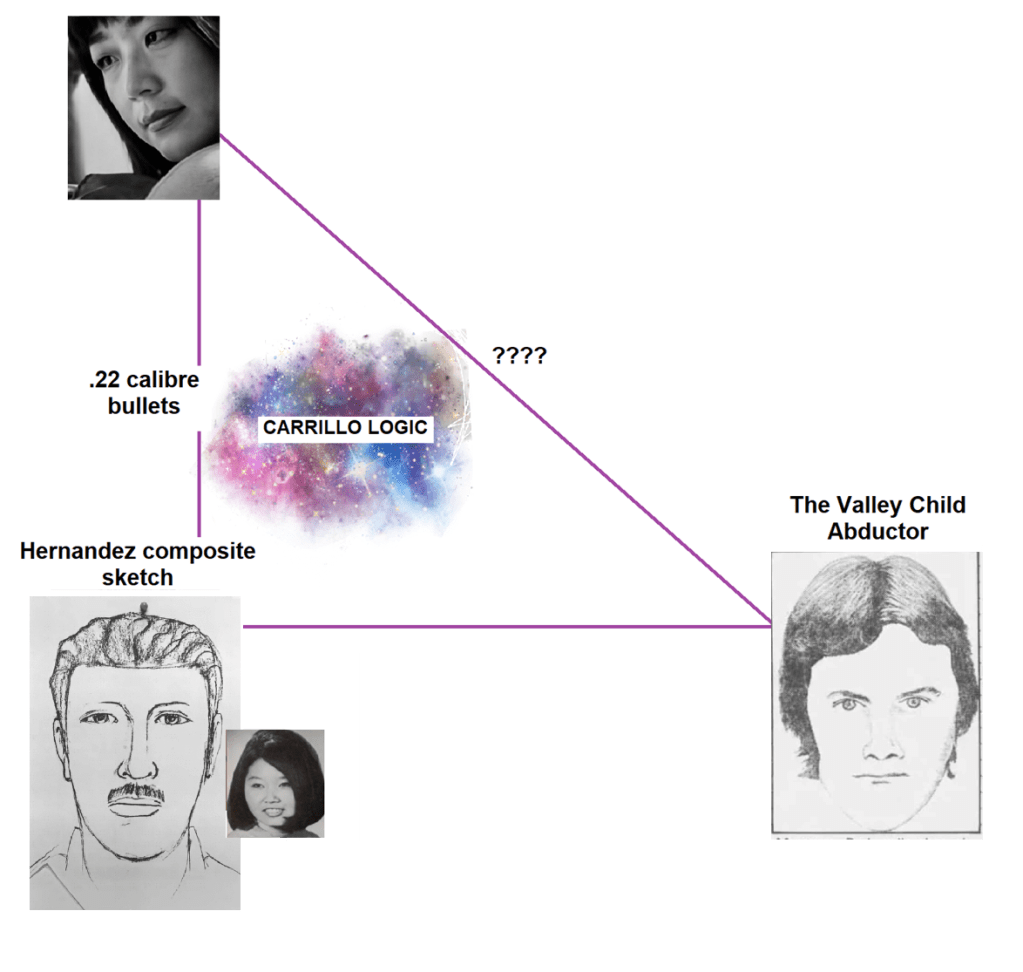
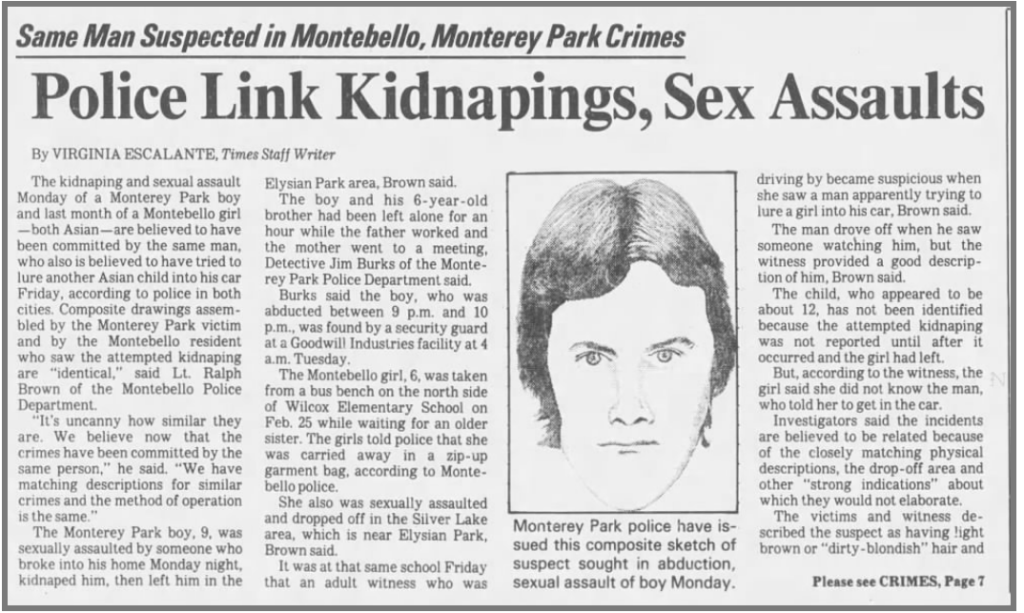
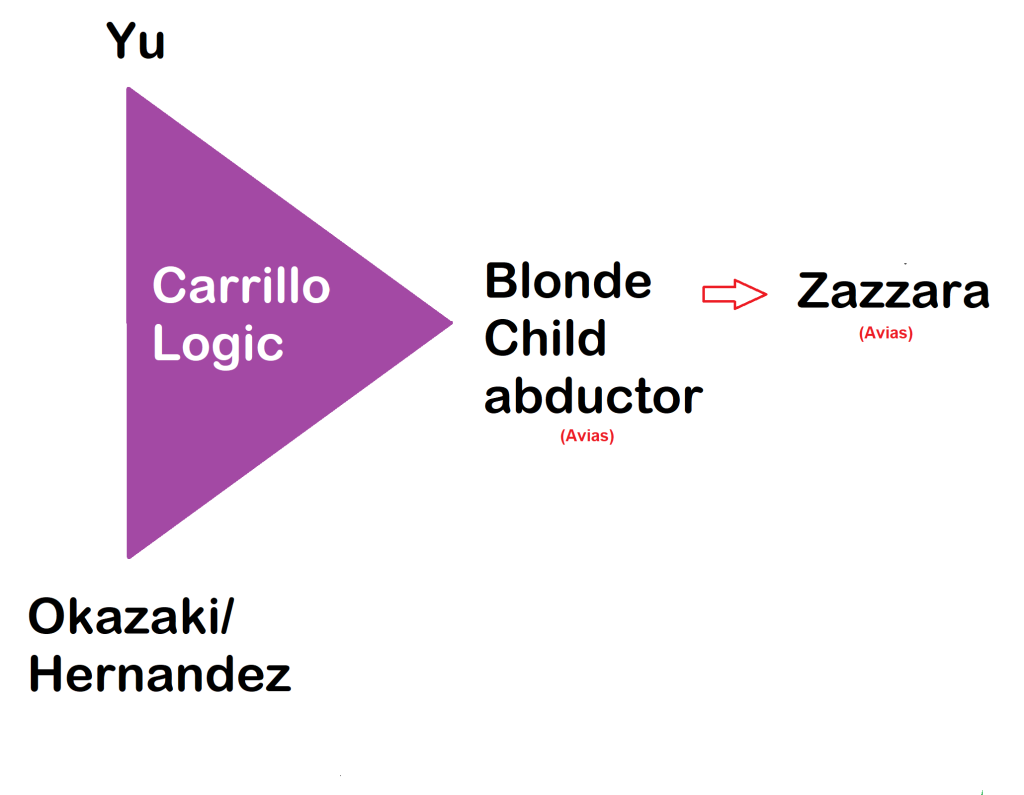
Gil Carrillo had other ideas. He showed Maria Hernandez’s composite sketch to the Monterey Park PD officers working the Yu case. One, Anthony Romero, said the drawing looked similar to a sketch of a man who had been abducting and sexually abusing children in the San Gabriel Valley suburbs. Carrillo decided that Dayle Okazaki was killed by the local paedophile. An absurd triangle manifested in Carrillo’s mind: both murder victims were killed with a .22 revolver. The molester looked vaguely similar to the Okazaki suspect (debatable of course), therefore, the paedophile must also be Yu’s killer. And to hell with the witnesses’ descriptions.
Digging through newspaper archives reveals this outrageous falsehood. Carrillo maintains this nonce claim to this day – and he is believed.
Utter Nonce-sense
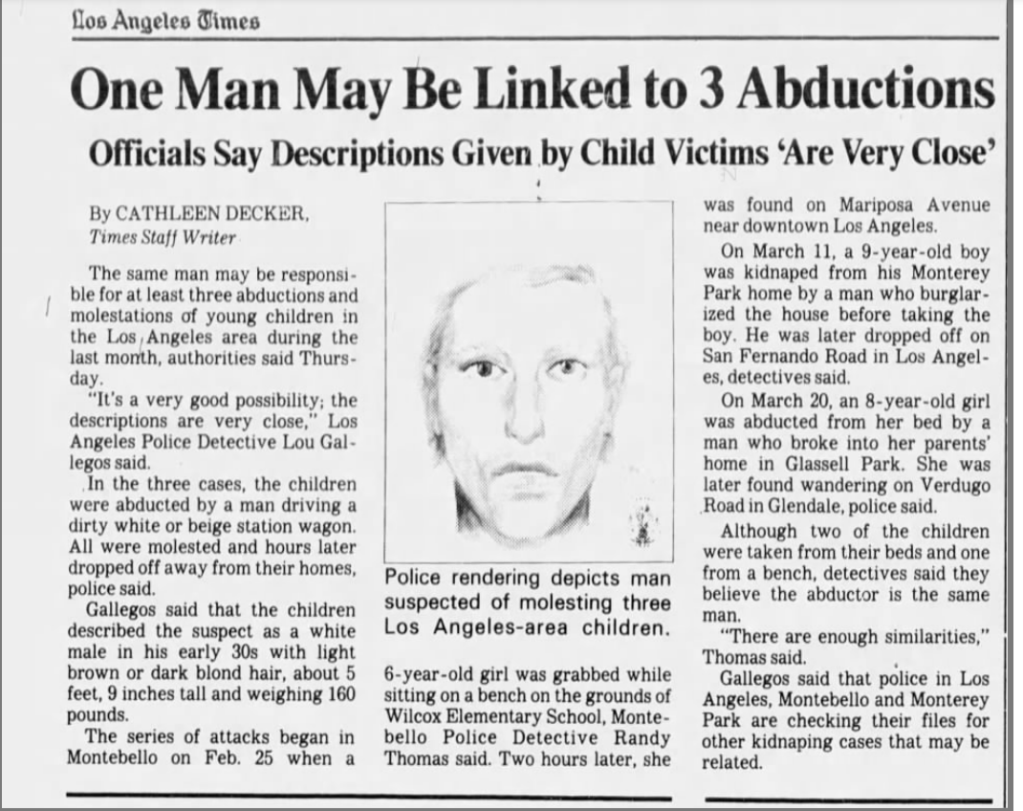
On 14th March 1985, the Los Angeles Times reported that a little boy was abducted from his Monterey Park home late at night and sexually abused and abandoned. A similar kidnapping happened with a little girl in Montebello – but she was taken from her school. Days later, an adult witnessed a man trying and failing to lure a 12-year-old into his car. The article revealed he had “dirty-blondish hair”.
This one is from 29th March 1985. “Dark blond hair, about 5 feet 9 inches tall.”
Fear in their Eyes
In addition to the bullets and the questionable police sketches, Detective Carrillo created his ‘eye-contact theory.’ He believes that in both the Okazaki and Yu cases, the killer wanted to see fear in the victim’s eyes and that he took steps to make them face him. This hypothesis does not stand up by the time of the third incident, nor the four rape attacks as explained in this post(more details will be given in our book).
That third incident was the Zazzara double murders. Maxine Zazzara infamously had her eyes removed. Carrillo was not assigned to this case, but other detectives showed him the shoeprints at the scene. They appeared to be similar to prints found at the location where a child victim had been abandoned, nine days earlier. Carrillo was already developing a link between Okazaki, Yu and the paedophile. This only cemented his belief. This is confirmation bias.
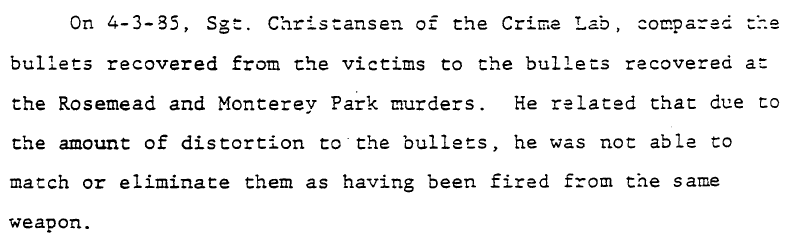
Somebody from the Los Angeles County Sheriff’s Department (LASD) asked a firearms officer to compare projectiles fired at the Zazzara scene to those extracted from Okazaki and Yu.
From the Affidavit, Document 7.4
The guns could not be conclusively linked. But note the date: 3rd April 1985. This is very early to be attempting to link very different crimes. This demonstrates how Carrillo was creating a serial killer narrative from the start despite the lack of modus operandi.
Arturo Robles
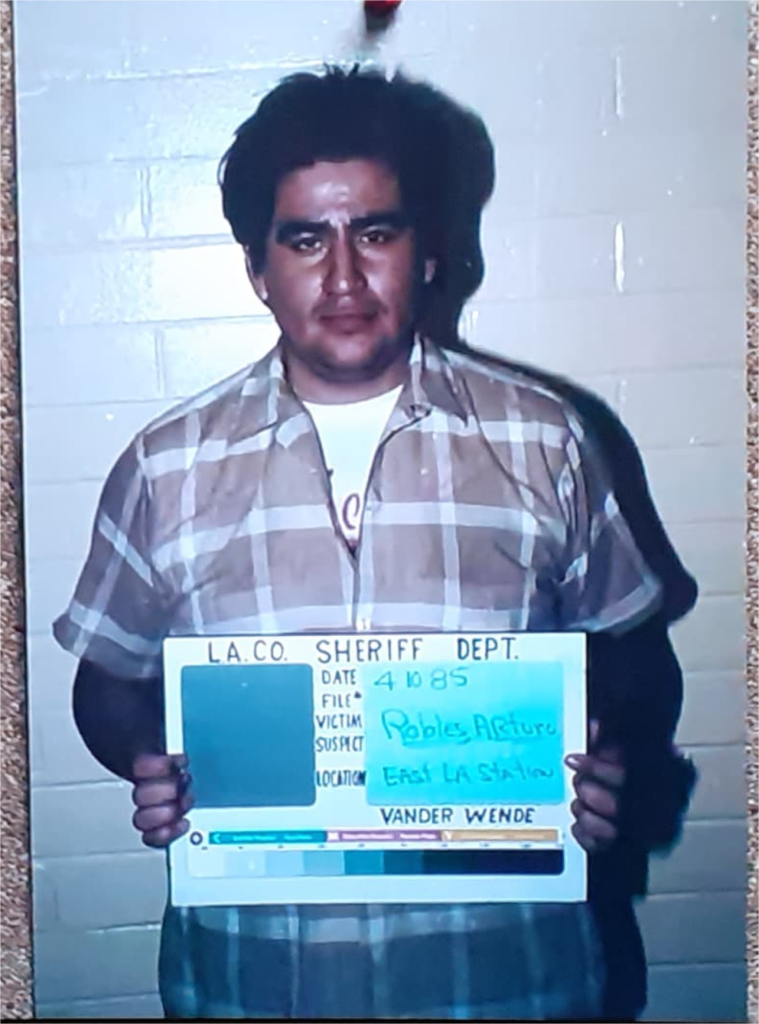
Arturo Robles was an early suspect. Carrillo was looking for a sexual deviant wearing exclusively black clothes even though one of the Yu witnesses said the killer wore light blue and Maria Hernandez told him her shooter wore a white shirt. Hernandez thought the killer was wearing a Members Only brand jacket and Robles owned one. He was a South Korea veteran who knew how to shoot. He collected adult magazines and had been cautioned by police for following young women.
Arturo Robleswho looked nothing like Hernandez’s shooter
When Robles was taken to a police line-up, he heard someone uttering the words “serial killer”. According to author Philip Carlo, the Yu witnesses also had to view Arturo Robles at the line up – as did the kidnapped children. It was 10th April 1985 – before the main serial killer spree had started. None of these crimes shared characteristics and it was completely unreasonable to assume they had one perpetrator. Robles was released but Carrillo refused to drop the matter and he showed his mugshot to another victim in July – Sophie Dickman.
The Dois were attacked on 14th May. Because they lived in Monterey Park, they were attended to by the local police department. According to Philip Carlo, Monterey Park detectives made Gil Carrillo feel unwelcome because nobody had called the Sheriff’s Homicide Bureau. Shoe prints at this scene looked similar to those at the Zazzara house. One must ask why Carrillo was interfering at crime scenes that had nothing to do with him.
‘Richard Mena‘
On 30th May 1985, Mabel Bell and Florence Lang were badly beaten and pentacles were drawn on the wall and on Bell’s leg. On 15th June, Richard Ramirez was pulled over by police after jumping a stop sign near the Glendale Freeway ramp. When the officer turned to retrieve his citation book, Ramirez scarpered, but not before drawing a pentacle on his stolen car. Unbeknownst to him, this would make him a suspect. According to Philip Carlo, Gil Carrillo was studying police teletypes and read about this rather innocuous traffic incident. He believed the driver was on the run from another child abduction a few miles away. Again, this was confirmation bias. This is where Carrillo’s ‘man in black’ theory takes form.
The stolen car was impounded, and left in an LAPD lot in the baking June sun which melted any fingerprints away. A dental appointment card was found inside which revealed the driver was called ‘Richard Mena’. Both his name and address were fake and led nowhere. But now detectives had access to what they believed were the killer’s dental records. Stakeouts at the dentist’s surgery failed when the alarm malfunctioned. One has the impression that Carrillo and Salerno (LASD) have never forgiven the LAPD for this.
More Child Abductions
On 5th June, another child was abducted outside a school in Rosemead. Her description was sadly too vague to offer leads, but he was possibly Latino and dark-haired. However, on 27th June, another child was coaxed out of her bedroom, kidnapped, sexually abused and released wearing items of the rapist’s clothing. That girl was Anastasia Hronas from the Netflix documentary who said her short kidnapper had a Native American headdress tattoo on his arm. Carrillo corrected her and said she saw a pentagram. Ramirez did not have any tattoos.
The Spree: Late June to Early July
On 27th or 28th June, Patty Higgins was killed by slash wounds to her throat. Around this time, Gil Carrillo was partnered with a senior detective, Sergeant Frank Salerno. On 2nd July, Mary Cannon was beaten, stabbled and strangled and the Arcadia Police department, dealing with both attacks, gave it away to the LASD. An Avia print was found – although this is highly questionable. It was only when Whitney Bennett was almost strangled and beaten to death – and another Avia print was discovered – that Salerno began to believe Carrillo’s serial killer theory. However, with two victims dead and a third badly concussed, there was no suspect to report. Nonetheless, the media was starting to suspect there was a serial killer because Carrillo and Salerno were turning up all over the place.
On 7th July, there were two attacks in Monterey Park. Joyce Nelson was strangled and stomped to death in an horrific manner. A mile away, Sophie Dickman was robbed and sexually attacked. The inclusion of Dickman to the Night Stalker cases makes no sense, but because Sophie Dickman said her attacker had curly hair, he was assumed to be ‘Richard Mena.’
A composite sketch was released. The newspapers mistakenly labelled the rapist as the suspect in the Nelson murder. The suspects described in the Okazaki, Yu and Doi cases were fading away, soon to be replaced with the tall, curly-haired, pentagram-drawing car thief Richard Mena. The fact that Sophie Dickman reported a man of just 5’8″ to 5’9″ did not seem to matter. Facts were being altered to fit Carrillo’s serial killer theory, just as they had been since March 1985.
The Dickman Rapist, labelled as the Nelson killer, Los Angeles Times, 13th July 1985.
The Transfiguration of the Suspect
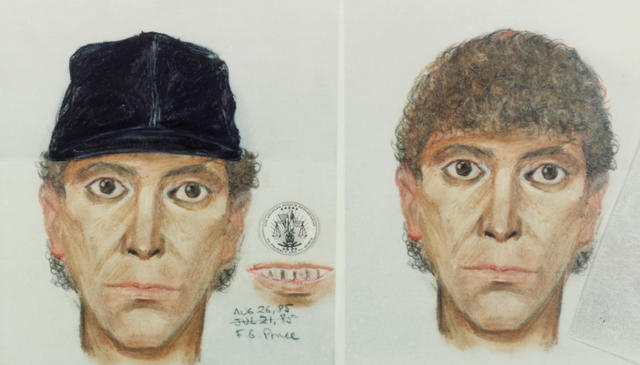
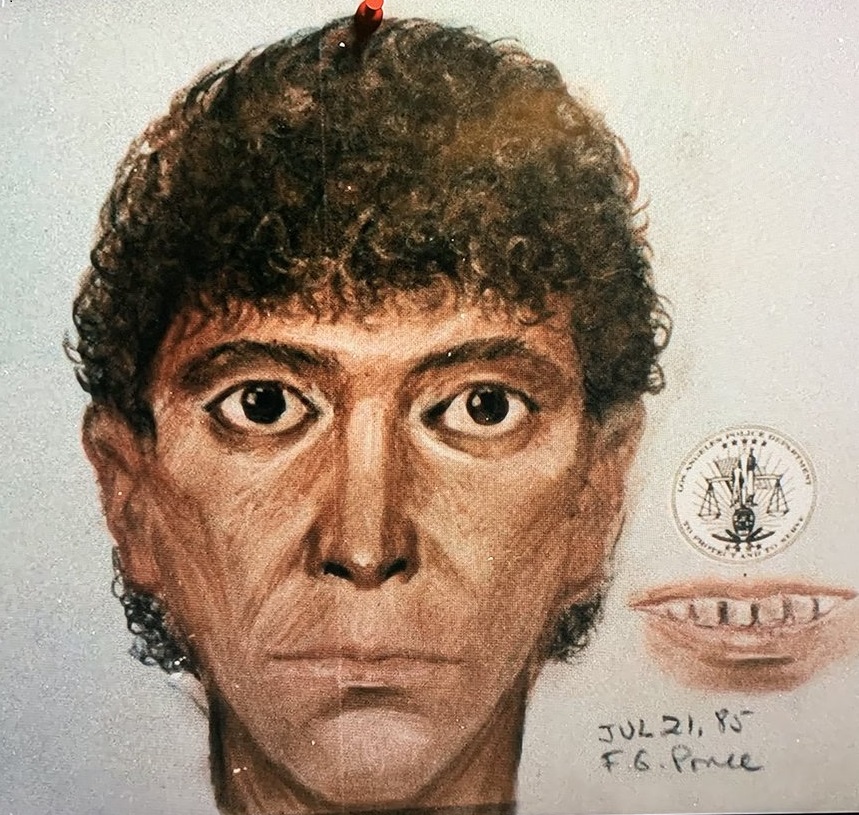
On 20th July, Maxson and Lela Kneiding were shot, and their throats cut. Then, 15 miles away, between 5 and 6:30am, Chainarong Khovananth was shot dead and his wife, Somkid, was raped and their son beaten and possibly molested. Somkid Khovananth gave a description of a light-skinned “Mexican” with stained, gapped teath. This is what the police were hoping for – somebody vaguely describing the mysterious ‘Richard Mena.’ Later, under cross-examination, Khovananth was compelled to admit she had previously described the killer as having a “brown face” or “dark skin.” She provided details for a police sketch and detectives made this image the definitive Night Stalker and claimed every victim had encountered somebody fitting this description.
The infamous drawing by Fernando Ponce
Richard Ramirez was out in Los Angeles, living in stolen cars, clumsily burgling in the afternoon, selling stolen goods in a pool hall by night and shooting up cocaine, completely oblivious to the fact he had been implicated in a whole range of different crimes, just because he was in the wrong car at the wrong place at the wrong time. All police needed was his real name.
Chameleon Killer
On 6th August, in Northridge, Virginia and Christopher Petersen survived a shooting by tall man with dark curly hair combed back from his face. Then on 8th August, an attack similar to the Khovananth Incident took place in Diamond Bar. Survivor Sakina Abowath gave a description of a dark-blonde, curly haired white man between 6’2”-6’4” with a concave chest and “wide front teeth.” After the police asked her if his teeth had gaps, she replied that she did not remember. The next time the Night Stalker Task Force officers spoke to her, Abowath said they were “crooked and stained”, that his hair was changed to brown, and he now had “Latin features.” It suggests she was being led by police to say he matched the Khovananth composite. Abowath helped with her own drawing that has not been made public.
Pan and Carns
Two more crimes in San Francisco (17th or 18thAugust) and Orange County (25th August) were thought to be the work of the Night Stalker or ‘Richard Mena’ because of Satanic aspects. At the Carns house, rape survivor Inez Erickson claimed the attacker ordered her to say she loved Satan, similar to the Abowath Incident. At the Pan scene, a pentagram was carved into the wallpaper along with “JACK THE KNIFE.”
Ultimately, Ramirez was not tried for either case. However some circumstantial evidence was used to tie him to the Carns scene: a supposed partial fingerprint on an orange Toyota stolen – and found – in Los Angeles. However, as explained in this post, the car was seen more than a mile from the murder scene and there is no proof it was the same car. Inez Erickson did not see her attacker’s face and identified Ramirez from his walk. The Pan link will be discussed later in this post.
A Hypodermic Needle in a Festering Haystack
One might ask how – with all these differing descriptions and M.O.s – did the police link the crimes to Ramirez? Surely it was not simply the 15th June incident with the traffic violation and the pentagram? How did police find him if it was not him? After all, Los Angeles is teeming with criminals.
Our answer is that the police engineered the Night Stalker’s appearance. If police erase eyewitness descriptions and replace them all with their own theoretical suspect description – which was later confirmed by just one victim (Khovananth) – there is confirmation bias. Then they only have to convince vulnerable victims that they were mistaken, and the victims will change their description – possibly in deference to authority. This occurred with all victims and eyewitnesses in the Ramirez case.
An example of this is how the Night Stalker’s shadowy appearance is described by Carrillo: that he wore a black jacket, black trousers and black “rare, unique” shoes to conceal dried blood (which was never found on any clothes in Ramirez’s possession). Yet in the police reports, the suspect wore a range of clothes: a blue and multi-coloured shirt with brown pants, blue jeans, blue pants and a matching blue shirt, a mesh shirt, a brown and black checked shirt and a white top. The Night Stalker’s ‘kill kit’ and clothes are discussed here.
Informants in the North
By engineering the suspect’s description and disseminating a poster that misinformed the public that every survivor saw that person, it caused a snowball effect by which Ramirez’s acquaintances in two separate cities became police informants. This included the Greggs from Lompoc – Earl Gregg, an old roommate of Ramirez had received stolen goods from his mother-in-law, Donna Myers. (Read about the San Francisco friends here). These had come from a burglary in San Francisco on 15th June, three days before Peter Pan was found murdered. A fingerprint purportedly tied Ramirez to this burglary and so the SFPD insisted this separate crime proved he committed the murder. No fingerprints were found at the murder scene.
Ramirez’s ‘friend’ Armando Rodriguez gave up his name after being punched by SFPD Inspector Frank Falzon. Rodriguez attempted to give Ramirez an alibi, stating he had already left the city when Pan was killed and had been visiting San Francisco when the Los Angeles attacks occurred.
Informants in L.A.
Meanwhile, in Los Angeles, one of Ramirez’s associates, Alejandro Espinoza, reported his friend ‘Rick’ to the police. He said ‘Rick’ was a burglar, and sometimes sold to a fence named Felipe Solano. Combined with the reports of ‘Rick the burglar’ from Earl Gregg and his family, the police had a strong lead. (Read about these first informants here).
Ramirez was on the lowest rung of the criminal hierarchy there, and due to his lack of burglary skills and impulsivity, he was expendable; a liability. When Ramirez was named as the prime suspect, his friend Cuba became an informant, naming a few others. As covered in this post, felon Jesse Perez preposterously claimed Ramirez had confessed to a murder, but by this time, there was a financial incentive to report him – the two cities were offering financial awards, and snitches were offered immunity from prosecution.
Then finally, Felipe Solano had several stashes of stolen property, and claimed Richard Ramirez had given him all of it. Solano was possibly beaten by police to give up Ramirez’s name (according to the testimony of fellow burglar Sandra Hotckiss, covered in Philip Carlo’s Ramirez biography). Immune from prosecution, Solano was proven to have lied in court – he had received stolen property from others – but it made no difference to Ramirez’s convictions.
Police were unable to prove the chain of custody of any stolen item. No Ramirez fingerprints were found on any of the items. Nobody could prove he wore a pair of Avias to a murder scene.
After Ramirez’s arrest, he was charged with two more attacks – the throat slashing of Jennie Vincow on 28th June 1984, and the rape of Carol Kyle on 30th May 1985. Kyle assisted two artists with the creation of sketches. Her description of her attacker’s teeth did not match Ramirez. Moreover, her attack occurred at the same time as Bell and Lang’s – the aforementioned clock stopped at 05:29. The duration of Kyle’s attack was between 4 and 6am.
Hadsall and the Dropped Abduction Cases
To return once again to the child abduction cases, they were eventually dropped, with Ramirez’s defence claiming they were bogus and used to manipulate him into confessing. The prosecution and detectives claimed it was too harrowing for a child to relive their trauma. But the tenuous link between Okazaki to the rest of the crimes was all about the suspect’s facial similarity to the abductor, which in turn connected the shoeprints to the rest of the crimes. This was now broken. They needed another way to put the Avias on Ramirez’s feet.
Instead, the prosecution connected Okazaki to the Kneiding attack (with faulty ballistics evidence) and came up with a Monrovia burglary to link Ramirez to the Avia shoes – a full handprint was allegedly found close to the shoeprint.
This ‘Uncharged Incident’ is repeatedly referred to in the Petition. The witness, Clara Hadsall had conveniently passed away shortly after Ramirez was imprisoned, so there was nobody left to question. The Hadsall incident is questionable in itself and is covered here.
This is why Carrillo focuses on Okazaki and Yu so much – it was the paedophile’s link to the Avias. One could be forgiven for thinking Carrillo has grasped this idea with both hands and is still holding onto it as if it is his pension (which his ‘Killer Catcher’ fame technically is) – but the allegation that Richard Ramirez was the San Gabriel Nonce as well as the Night Stalker is ludicrous. How can anybody think a man who cannot even create an alias without using his own names was ever a criminal mastermind? But the concealment of Ramirez’s mental incompetence is a story for another day.











 Expendable For A Cause.
You must be logged in to post a comment.