
“The world has been fed many lies about me..”
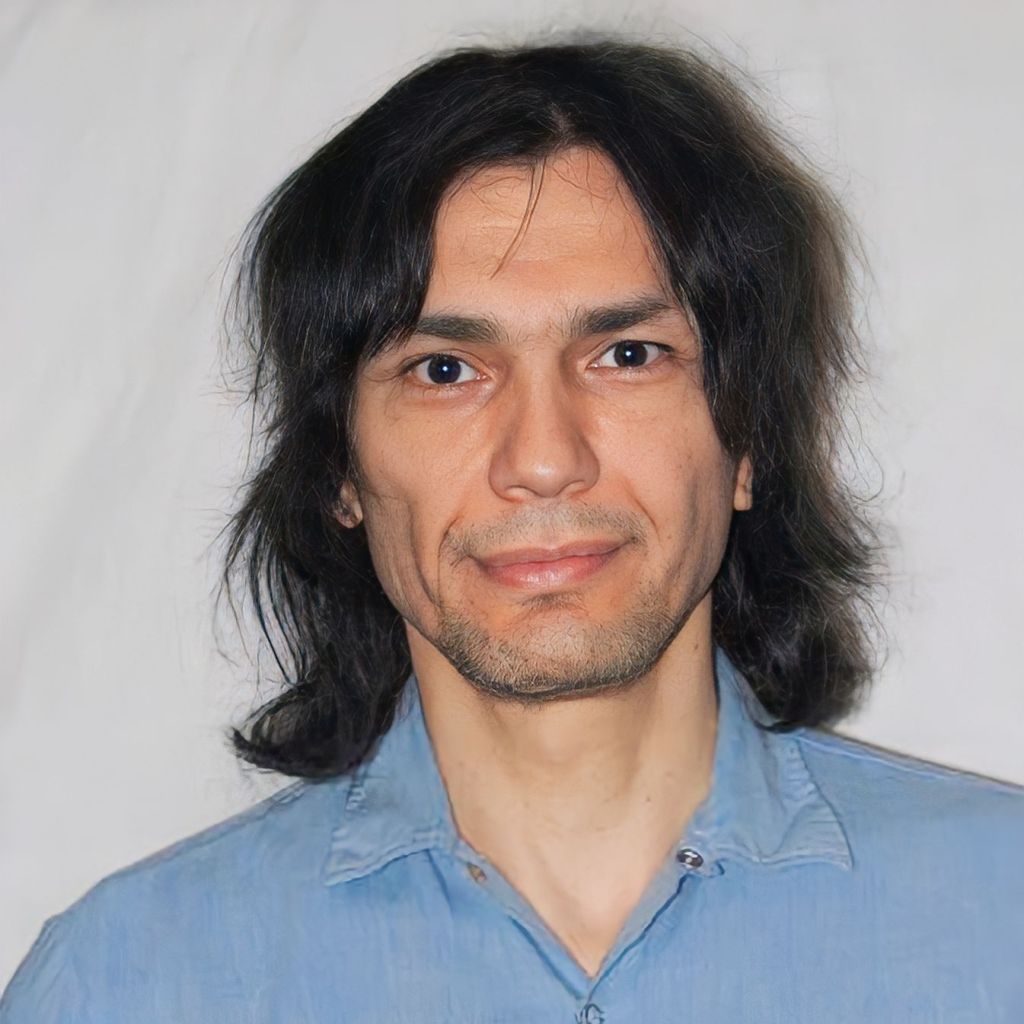
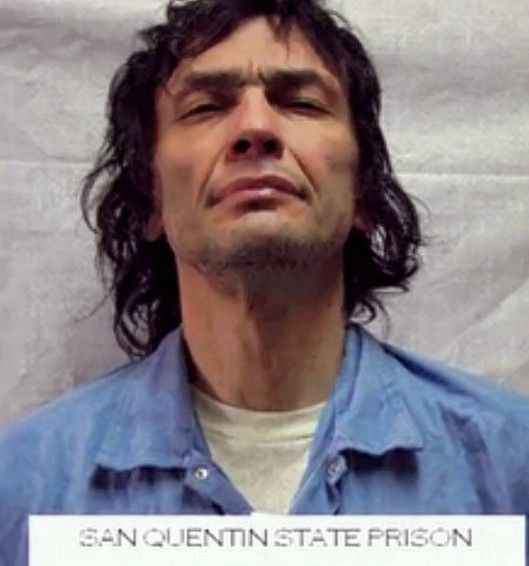
Richard Ramírez
Now available, the book: The Appeal of the Night Stalker: The Railroading of Richard Ramirez.
Welcome to our blog.
This analysis examines the life and trial of Richard Ramirez, also known as The Night Stalker. Our research draws upon a wide range of materials, including evidentiary documentation, eyewitness accounts, crime reports, federal court petitions, expert testimony, medical records, psychiatric evaluations, and other relevant sources as deemed appropriate.
For the first time, this case has been thoroughly deconstructed and re-examined. With authorised access to the Los Angeles case files, our team incorporated these findings to present a comprehensive overview of the case.
The Writ of Habeas Corpus
The literal meaning of habeas corpus is “you should have the body”—that is, the judge or court should (and must) have any person who is being detained brought forward so that the legality of that person’s detention can be assessed. In United States law, habeas corpus ad subjiciendum (the full name of what habeas corpus typically refers to) is also called “the Great Writ,” and it is not about a person’s guilt or innocence, but about whether custody of that person is lawful under the U.S. Constitution. Common grounds for relief under habeas corpus—”relief” in this case being a release from custody—include a conviction based on illegally obtained or falsified evidence; a denial of effective assistance of counsel; or a conviction by a jury that was improperly selected and impanelled.
All of those things can be seen within this writ.
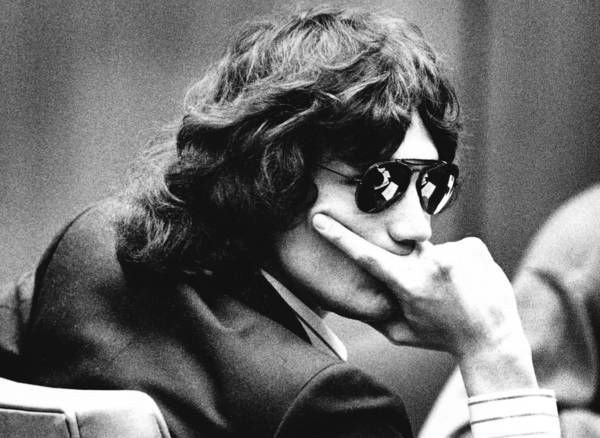
The Writ of Habeas Corpus is not a given right, unlike review on direct appeal, it is not automatic.
What happened was a violation of constitutional rights, under the 5th, 6th, 8th and 14th Amendments.
Demonised, sexualised and monetised.
After all, we are all expendable for a cause.
- ATROCIOUS ATTORNEYS (4)
- “THIS TRIAL IS A JOKE!” (8)
- CONSTITUTIONAL VIOLATIONS (9)
- DEATH ROW (3)
- DEFENCE DISASTER (7)
- INFORMANTS (6)
- IT'S RELEVANT (17)
- LOOSE ENDS (15)
- ORANGE COUNTY (3)
- POOR EVIDENCE (16)
- RICHARD'S BACKGROUND (7)
- SNARK (12)
- THE BOOK (4)
- THE LOS ANGELES CRIMES (22)
- THE PSYCH REPORTS (14)
- THE SAN FRANCISCO CRIMES (5)
- Uncategorized (5)
-
You, the Jury
Questioning
The word “occult” comes from the Latin “occultus”. Ironically, the trial of an infamous occultist and Satanist is the epitome of the meaning of the word itself: clandestine, secret; hidden.
We’ve written many words; a story needed to be told, and we created this place to enable us to do just that.
Here, in this space, we intended to present the defence omitted at Richard Ramirez’s trial in violation of his constitutional rights. Our investigations have taken us down roads we’d rather not travel along, but as we did so, we realised that there was so much hidden we could search for a lifetime and still not see the end of it. Once we’d started, there was no turning back; we followed wherever it led.This was never about proving innocence; that was never the intent or purpose. We wanted to begin a dialogue, allowing this information to be freely discussed and for us to verbalise the rarely asked questions. We asked, and we’re still asking.
We can’t tell you, the reader, what to think; you must come to your own conclusions, as we did.
And so
We’ve said what we came here to say; with 114 articles and supporting documents, we’ve said as much as we can at this point.
This blog will stand as a record of that, and although we will still be here, we intend to only update if we find new information, if we suddenly remember something we haven’t previously covered, or to “tidy up” existing articles and examine any new claims (or expose outrageous lies) that come to light. The site will be maintained, and we’ll be around to answer any comments or questions.
What Next?
We will focus on the book being worked on; we’ve also been invited to participate in a podcast. When we have dates for those, we’ll update you.
The defence rests? Somehow, I sincerely doubt that; ultimately, we’re all “expendable for a cause”.
~ J, V and K ~
-
Launie Dempster Strikes Three – The Doi Incident
The attack on William Doi and his wife, Lillie, occurred during the early hours Of May 14th, 1985.
Monterey Park police dispatcher Darlene Boese received a 911 call at approximately 5:00 a.m. The system showed the address to be 1586 Trumbower Street (according to official reports, however, it’s “avenue” not “street”) A male voice repeatedly said, “Help me.” An ambulance was dispatched, and the call terminated. A second 911 call from the same address was made a few minutes later. A male voice again asked for help. By that time, a fire company arrived on the scene.
Monterey Park firefighter Norman Case arrived at the Doi residence at approximately 5.04 am, where he found the front door open, the lights on, and Mrs Doi in her nightgown, near the hallway. She was incoherent, and in shock; her face swollen, a thumb cuff dangled from her left hand.
Her husband, William, was found sitting in a chair in the den, unconscious, and was taken by ambulance to Garfield Hospital.
Monterey Park Police Officer Michael Gorajewski was the first police officer to arrive. He observed that rooms in the house were ransacked, drawers open, and clothes thrown about.
Mrs Doi was also taken to hospital, where her daughter, who had received a call at 5am, one assumes, from the police, was able to talk to her mother, who had suffered a stroke in 1982, and sustained speech impairment as a result. With her daughter’s help, Lillie Doi could put together a description of her attacker – she described a man with short, light brown hair, about 5ft 10, aged 30 -40 years old.
The Doi’s daughter, Linda, said she had visited her parents the day before, and they both appeared well, the house in order.
At Garfield Hospital, efforts to revive Mr Doi failed, and sadly, he died from a cardiac arrest, brought on by a gunshot wound to his head.
Richard Ramirez received the death penalty for the murder of William Doi, but no charges were brought against him for the attack on Lillie, one can assume, as she could not testify. Or was there another reason? Was it perhaps because her description and the composite she helped to create did not sound like Ramirez at all. In fact, she seems to have indicated to her neighbours that she didn’t believe it was him.
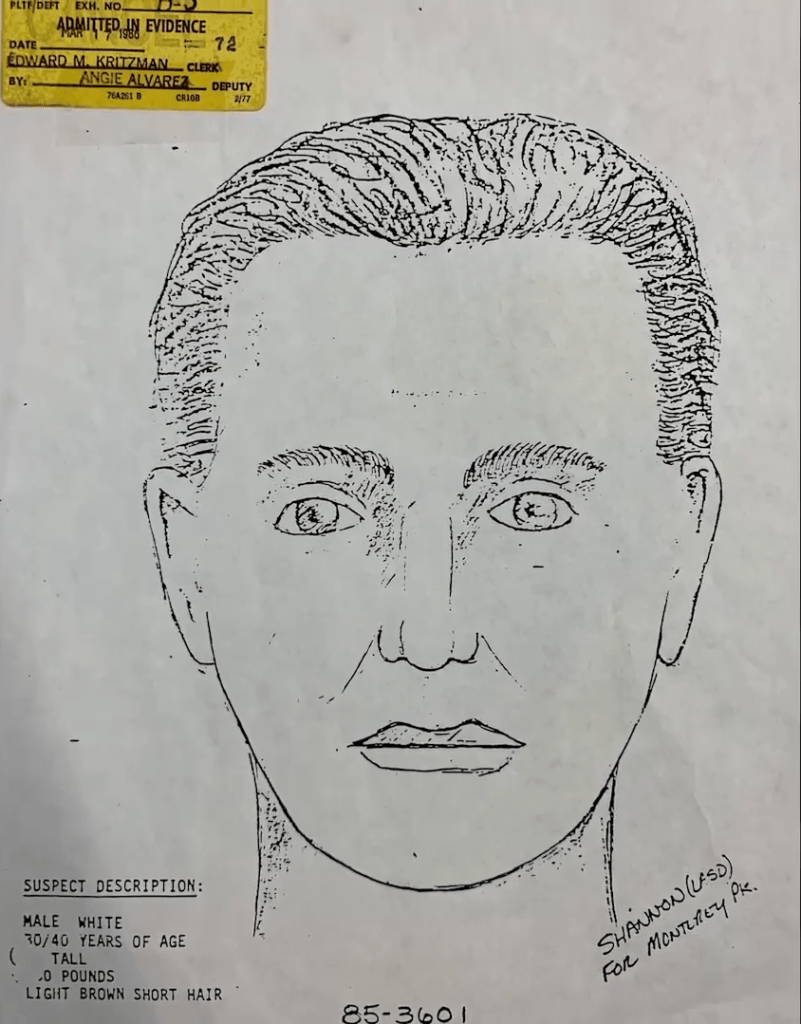
The image Lillie Doi helped to create with the assistance of her daughter. 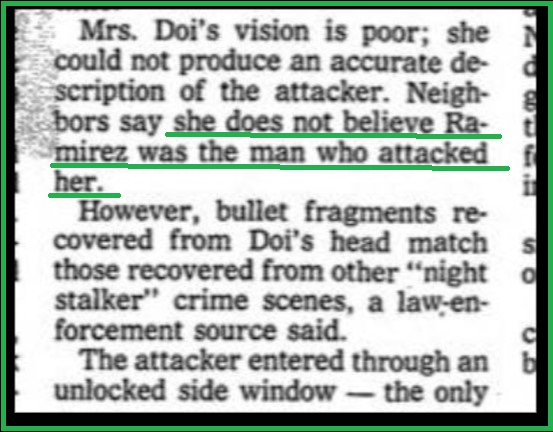
A description that doesn’t match “their” man is put down to being short-sighted. I wonder if her eyesight would have been questioned if she had described a 6ft 1 Hispanic man with very dark hair. The bullet fragments are discussed further down. (From the Orange County Register, September 1985) The following is from Access World News, March 21st, 1986 and can be found in petition supporting document 17-14:
“In the Doi case, defense attorneys, Daniel and Arturo Hernandez, are questioning the use of a composite sketch that was based on Mrs. Doi’s description of her husband’s killer. According to the description, the intruder was a male caucasian between 30 and 40 years old, about 5 feet 10 inches tall, weighing 160 pounds and having short, light brown hair. Ramirez, who has remained in custody since his Aug. 31 arrest, is a 26-year-old hispanic more than 6 feet 1 inch tall, whose hair is nearly black.”
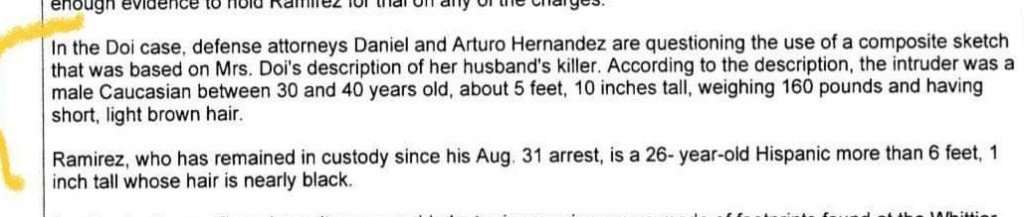
So how did they tie this horrible crime to Ramirez?
Physical Evidence
At about 6.30 am, Monterey Park Police Sergeant, Paul Torres arrived at the Doi home. He found:
- Shoeprints in the dirt underneath the front bedroom window. Two different types, a jogging shoe and combat boots.
- A screen had been removed from the bathroom window.
- Master bathroom had been ransacked.
- A bloodstained pillowcase in the bathtub.
- Blood smeared on the tub and walls.
- Mr Doi’s bedroom ransacked, boxes found on the floor.
- A bloodstained pillow at the head of the bed.
- Bloodstains in the hallway.
- A small .22 calibre cartridge casing found on the hallway floor.
Forensic serologist Joseph Snyder collected evidence and drew a sketch of the scene, he made casts of two shoe prints by the front bedroom and bathroom. He did not make casts of the muddy shoe impressions observed in front of the house. On speaking with officers at the scene, Snyder determined that an investigating officer – probably Officer Jiron – had made the muddy impressions with his boots. Snyder did not check other shoes worn by the various personnel at the scene.
Identification of Recovered Property.
Linda Doi-Fick, the daughter of William and Lillie, made a list of missing items from her parents’ home. She attended a police property line-up on September 5th, 1985, and identified items belonging to her parents, including a watch that her father never removed. Other items taken from the Doi residence were never recovered.
Eye Witness Identification
This is where it starts to get a little bit more convoluted, for the eyewitness identification in this case, has a slight overlap with another incident. Some of the timings and dates are questionable, as are the sightings of the suspect.
I made a little map, because sometimes visualising things can help them become clearer.
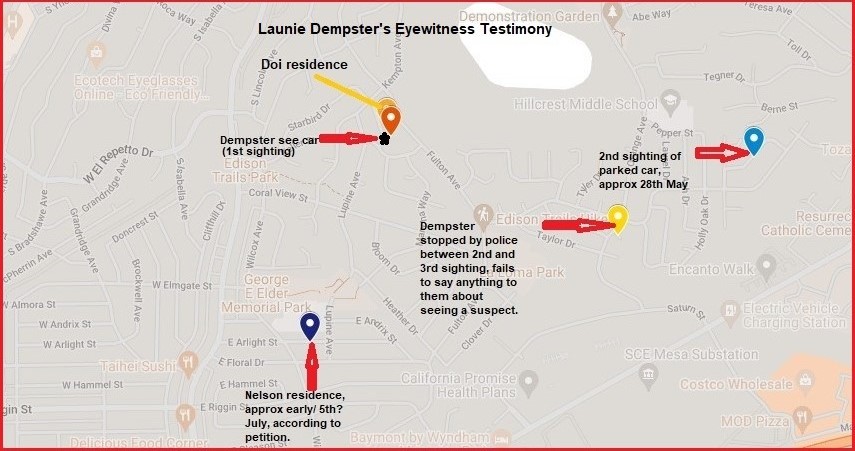
Locations and approximate dates Launie Dempster saw the suspect.
Launie Dempster
Ms Dempster gets a lot of air time in this post because this incident, like many others, relied on eyewitnesses to get a conviction.
Launie Dempster delivered newspapers around Monterey Park; her daily route was between 2am and 5am. She also worked as a security guard. At approximately 3.30am, while on her round in early May 1985, Dempster saw a man sitting in a car on Trumbower Street, opposite the house at 1594 Trumbower Street. She was driving, and it was still dark, but she said she saw a “young Mexican male” inside the car, which had a dark interior.
On returning an hour later, Dempster saw an ambulance in the driveway at 1586 Trumbower Street. The timing isn’t quite right here, as the call to 911 was made at 5am when she was finishing her route, but time passed can distort memories, making things harder to recall. She learned later that there had been a break-in at the address, and someone had died.
Two weeks later, at about 3:15 a.m., Dempster saw the same man in the neighbourhood, on San Patricio Drive, in the same car. She described the car as a brownish-green, older American model, like a Chevrolet, with black tyres and a dark interior. At a later date, when she was shown photos of cars matching her description, the cars didn’t match the car she saw.
This is Richard’s car; it’s in a bit of a state and doesn’t look like it’s been driven for a while. It has a flat tyre, and the tyres are rimmed white, not black. It also has a pale tone at the back. If she can see into a dark car, in the dark, and see a young “Mexican male”, you would imagine she could also see the light colouring at the rear of the car.
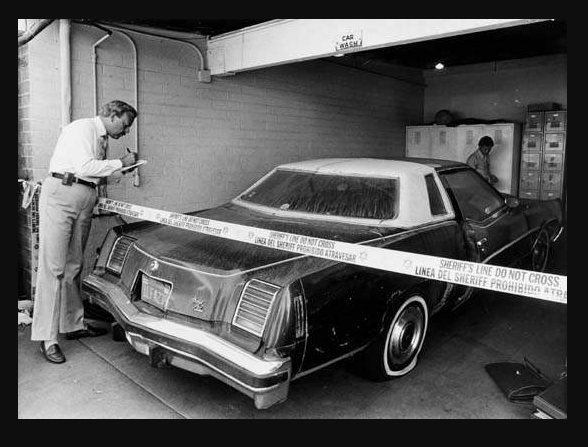
“His car had black tires, but she [Dempster] did not notice if it had hubcaps. She described the man as Mexican or Mexican-American based solely on his features.”
– Habeas Corpus pg. 60.
Ms Dempster says she saw the same man in the same car. Whose car? It wasn’t Richard’s by the sound of it. Can we surmise that “Richard” stole and returned the vehicle? Only to steal it again two weeks later? Then again, six weeks later? The same man, in the same car…
No firm date is given when this sighting took place, but two weeks later would make it around 28th May, which makes this very interesting. Even if the dates Dempster states she saw him are out by a couple of days on either side, it puts an entirely different slant on it, and it should have been challenged. THIS POST examines his movements around this time, so I won’t repeat it here.
Anyway, back to Dempster and her lurking Mexican. She goes on to say that the second time she saw the suspect sitting in the dark, in a dark car, with a dark interior, he “shouted a few words at her,” but as she had her radio on, she couldn’t hear what he was saying. How strange that this man, who was hiding in the shadows, and, as he was plotting nefarious deeds, didn’t want to draw attention to himself, decided to draw attention to himself by yelling out of the window to someone driving past him.
Third Strike
The third time Launie Dempster saw her Mexican male was approximately six weeks after the second sighting. Six weeks later makes this early July, during the first week.
According to the prosecution, it was 5th July 1985.

Habeas Corpus page 451
As ever, it’s a bit vague, as some sources state the 5th, which then changed to “early”, probably because on the 5th of July, during the early hours, an attack on Whitney Bennett occurred in Sierra Madre. He cannot be in two places at once, can he?
This time she says she saw him in a parked car on Arlight Street between 3 am and 4.30 am. He apparently walked from the back of his car to the driver’s side, and she didn’t notice anything about him, apart from he was wearing a black, short-sleeved T-shirt, a dark jacket, and dark pants.
How she could see through his jacket, to know he was wearing short sleeves, is a mystery.
Arlight Street is the residential location of another “Night Stalker” murder victim, Joyce Nelson. She was killed on July 7th, and the incident is the sad subject of another post, not this one. In court Dempster was to change her story to say that she had seen the suspect on the 7th.
Betwixt and In Between
Between her second and third sightings of the mysterious, dubiously parked “Mexican,” Launie Dempster was pulled over in a traffic stop by an undercover law enforcement officer assigned to the Night Stalker task force. She told the officer, William Reynolds, that she was delivering papers but does not seem to have said to him that she thought she had seen the suspect, although she later indicated that she did. Officer Reynolds did not recall that she gave any description of the man and made no notes of the conversation he had with her. Another paradox for how likely is it that an officer would ignore the information concerning the person they were trying to apprehend? He’d have been straight off to tell his superiors.
We are in the dark, like Launie’s suspect, and possibly like Ms Dempster, too, because she stated that she saw a composite of the suspect but told the police that that wasn’t the man she had seen.
“Dempster saw Petitioner’s [Ramirez] face on television after his arrest. She told her boss that the man on television was the same person she had seen on her route. She recalled that the man was 6 feet to 6’1″ tall, thin and lanky. In 1986, she had further contact with a police officer and told him about her observations. At this police officer’s insistence, Dempster contacted Sheriff Detective John Yarbrough [Night Stalker Task Force member]. Dempster gave Yarbrough a route list that was current for April 1986. The route had changed only slightly from Dempster’s route in 1985.”
– Habeas Corpus pg. 59
Ahh, now she’s had a good look at him on the TV. She made no mention of height before that.
It wasn’t until after the arrest of Ramirez, that Dempster, seeing him on TV and in the newspapers multiple times, told a colleague that this was the man she had seen on her route. Suddenly, she “recalled that the man was 6’ to 6’1” tall, thin and lanky”, after stating that she did not notice anything about him, on viewing him outside the car, other than his clothing. It is interesting to note that the papers she delivered every day, used the word “lanky” over and over, in describing him. How many times did she see his face in those papers?
Launie Dempster did not attend the live line-up on September 5th, 1985. She first identified Ramirez in court.
The Bias of a In-Court Identification.
The following is from Dr Kathy Pezdek a psychologist with an expertise in eyewitness identification.
“An in-court identification is not a fair and unbiased identification procedure because the eyewitnesses are not given a set of similar looking individuals from which to select the perpetrator. There is also the suggestion in court that the defendant must be guilty because he is there. All in-court identifications at the Preliminary Hearing and the Trial would have suffered from this bias. In addition, two witnesses identified Mr. Ramirez for the first time in Court. Launie Dempster first identified the defendant at the Preliminary Hearing having not attended the live lineup.“
– Declaration of Dr Kathy Pezdek document 16.7.
With a specific analysis of Dempster’s identification, she said:
“Launie Dempster testified that while she was delivering newspapers very early in the morning in the Monterey Park area, she saw the same man on three different occasions. She was shown a composite drawing by the police, but it did not depict the same person that she saw. She testified that she saw Mr. Ramirez’s picture on the television news the day before he was arrested. After he was arrested, she saw his picture in the newspaper paper and kept up with the news for about a month. At the trial and at the preliminary Hearing, she identified Mr. Ramirez in court. She did not attend the live lineup.”
– Declaration of Dr Kathy Pezdek document 16.7.
Under cross-examination, Dempster said, “The man she had seen did not resemble the composite drawing; his face was different, his hair was dark, longer, and not as curly.” Was this after she had seen him on TV? In the papers? Or at the defence table?
The Defence Fails Again
The defence did retain an expert witness regarding eyewitness identification; what they didn’t do was adequately prepare the expert, Dr Elizabeth Loftus, with the particulars about each individual incident. She was, therefore, unable to provide expert witness testimony regarding the background of each case, allowing her to identify important factors that would have been relevant. She failed to present the facts. Giving a general, non-specific testimony meant the jury was less likely to link the substance of what she was saying, making it seem unrelated to the case.
“One example is that many witnesses had seen Petitioner on television or in the newspaper before they identified him at the line-up or in court. Because the witnesses had previously seen Petitioner in the media, there was a high probability that the witnesses’ memories were suggestively influenced before they identified Petitioner at the line-up or in court, at the preliminary hearing or the trial. (See id., pp. 134-35). Although Dr. Loftus testified regarding the effect of “post event information” on the memory of the witnesses, trial counsel never explained to the jury what the term meant with respect to Petitioner’s case, and why it would call into question the reliability of the identifications in this case”.
Ex. 71, Declaration of Dr. Kathy PezdekPost-event information is as it sounds when an eyewitness is influenced by what they see and hear in the media before giving an identification, either in court or at a line-up. Basically, it means their testimony is, in all probability dubious, at best, meaningless or unsound, at worst.
.” . . I was not asked to render an opinion about the facts and circumstances of eyewitness identification. If I had been asked, I would have rendered an opinion based on the following:
- Procedures employed during preparation of composite drawings prepared by law enforcement, with the assistance of eyewitnesses.
- Inconsistencies in physical descriptions of the suspect given by eyewitnesses.
- Massive publicity following Petitioner’s arrest on August 31, 1985, including extensive television coverage of Petitioner’s face
- The impact of post-event information on eyewitness identification, including September 5th, 1985, pretrial live line-up and simultaneous property line-up, and multiple viewing of Petitioner in court, which had the potential to alter, supplement, or contaminate the witnesses’ recollection.
In my opinion, expert testimony pertaining to the above facts and circumstances was important for the jury to consider in assessing the credibility of eyewitness identification evidence”. (Declaration of Dr Elizabeth Loftus)
Trial counsel failed to competently challenge the testimony of Launie Dempster related to the Doi and Nelson incidents. There were unusual circumstances surrounding her identification since Ms Dempster delivered newspapers early in the morning when it was still dark. Photographs were taken to show the poor viewing conditions, and a simulated drive-by was photographed. How easy is it to identify someone seen quickly passing by in the dark? This should have been challenged vigorously.
She failed to report her possible sightings of a suspect but later identified Ramirez after seeing his face on television and in the papers she delivered daily. There was no adequate defence examination of her sightings, the opportunities to view his face, or the basis for identification, including the length of time to see the person’s face or the features. Trial counsel should have challenged her on why, if she was sure she had seen the suspect when the killings were happening, did she fail to report it?
There was no defence examination concerning the individual depicted in the composite drawing and lack of independent grounds for the in-court identification.
The defence should have questioned the accuracy of the date concerning the 5th of July sighting. How could Richard be parked up on Arlight Street in the early hours when he is accused of being in Sierra Madre, attacking Whitney Bennett simultaneously? More should have been made of that as it gives grounds for reasonable doubt. “Around the 5th of July” is simply not good enough. On the 5th? The 4th, perhaps? Independence Day, surely she would have remembered that? The viewing around the 28th of May is also questionable in what, according to the counsel for the prosecution, was a hectic week for the accused. This is important! Nothing further seems to have happened where that is concerned.
Her testimony, and thus her credibility, both flimsy and unreliable, should have been disregarded.
“The defense failed to challenge the physical evidence or impeach Dempster about her sightings and eyewitness identification.”
– Habeas Corpus, pg. 432.
Avias
Criminalist Gerald Burke, from the crime lab, examined the shoeprint findings; astonishingly, he had neither training nor qualifications to do so nor to give an opinion. He determined that the shoeprint impression could only be made by one pair of shoes in California: those infamous Avia Aerobic 445b’s. The problem here is that it simply wasn’t true. In THIS post, the shoeprint saga is thoroughly examined, so I will not repeat everything.
Richard’s defence counsel did make a half-hearted attempt to challenge the prosecution by bringing to attention the fact that no Avia sneakers had been found or ever seen on him (There is no evidence to suggest that he threw them off the Golden Gate Bridge, whatever you’ve heard, seen, or read)
They introduced no expert witness of their own.
Here are the findings of Forensic Specialist Lisa DiMeo, expert witness in countless federal and state trials; her field of expertise is shoeprint impressions, blood spatter patterns and tyre treads. Retained by the federal habeas counsel, she examined the shoeprint evidence for this writ.
“Doi:
Photographs and casts were taken of two partial shoe impressions at the scene. Concentric circles were noted on the impressions. However, the questioned impressions were too poor to make any meaningful comparison. It was not possible to include any Avia Aerobics, Basketball, Referee/Coach or All Court Sport model, which exhibited a similar design to the partial questioned impressions.”– Declaration of Forensic Specialist Lisa DiMeo
Not so unique then. Here is an image of the Doi shoe impression.
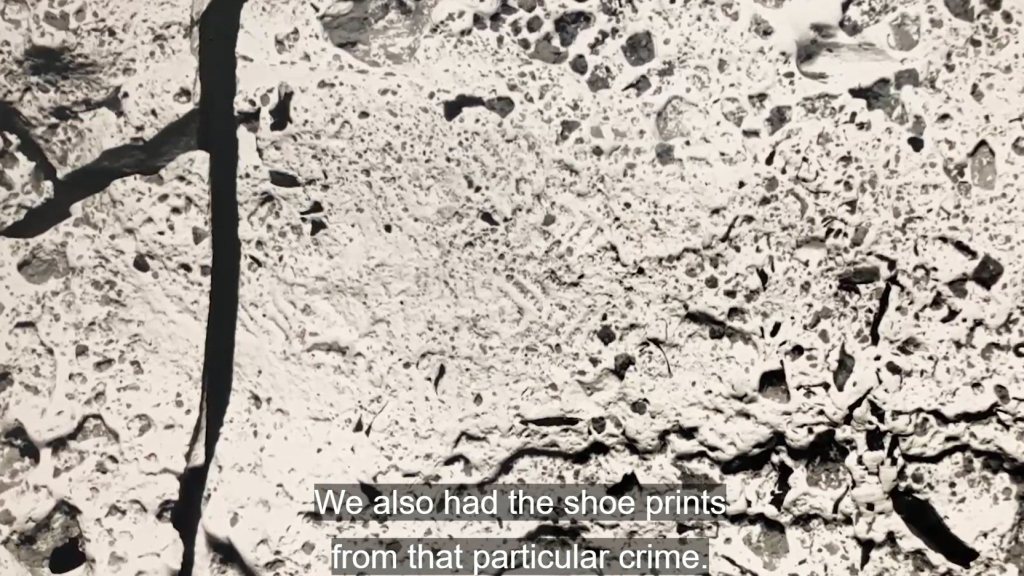
The government refused the request of the forensic specialist to have a deeper dive into the shoeprint evidence. Why? I will leave you to make up your own mind.
Who Had the Stolen Items?
Well, not Richard. None of the items stolen from the Doi residence were discovered in his possession. The Doi’s had been the target for an earlier burglary, no inventory of this property was taken.
The person who had the items was Felipe Solano, a fence and associate of Richard’s. This person of interest and his associates is discussed further in the highlighted post. This is too large a subject to fall within the scope of this post.
Felipe Solano first testified at the preliminary hearing and, at trial, was granted immunity from prosecution for receiving stolen property. The prosecution told the jury, in closing, that to prosecute Solano, for having the stolen property, they would have to release the accused.
This fence, was allowed to take part in the tainted lineup, to identify someone he clearly already knew, and to go into the next room, to identify property he was familiar with, because the police had got it from him in the first place!
Solano lied to the police, he told them that he had received the stolen goods from Richard alone, which was untrue, and it later transpired that he had deliberately deceived the court and law enforcement. He had to admit he had received property from others, namely Eva Castillo aka Rosa Solis, “Monje”, and “Cuba”. In short, he committed perjury to take the heat off his mates and to point his sticky finger at Richard Ramirez.
This self-server commented that he was only protecting “a lady” and friends. He would rather throw someone else under the bus and not care that the person concerned was now facing the death penalty.
When you’re so bad at your job the prosecution tells you how to do it…
“The prosecution contended that trial counsel Daniel Hernandez was incompetent because he failed to properly review prosecution discovery and conduct defence investigation”.
From the Writ of Habeas Corpus page 124
No investigation of these people was ever done, even though the tables in the identification room were laden with items sold to Solano by others, as well as Richard, who was, according to his unsavoury associates, a rubbish burglar.
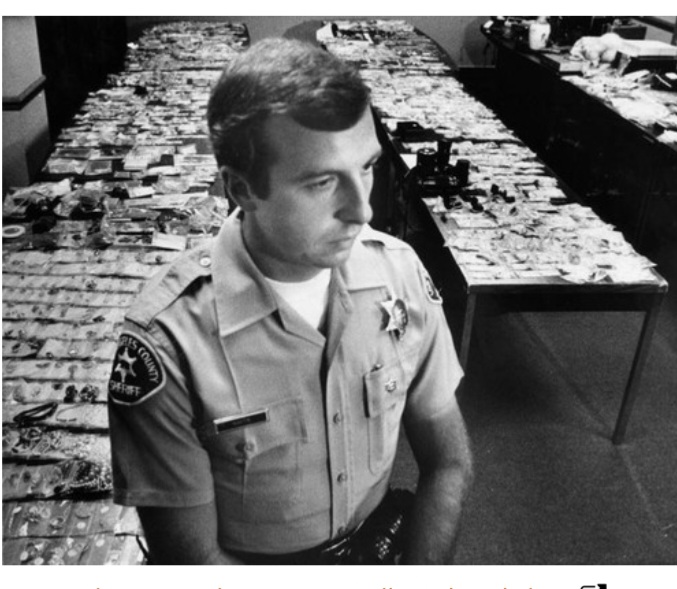
Solano’s stash. Photo from the Herald Examiner Collection. That Ramirez stole and participated in some shady stuff isn’t in doubt or up for debate; however, the lying testimony of Felipe Solano did not prove anything other than he perjured himself, and his specious testimony was worthless. He could not be believed.
The Ballistics and The Jennings
William Doi sadly died from cardiac arrest arising from a gunshot wound to his head. The autopsy report shows the shot was fired at close range, a bullet was recovered during procedure. A bullet casing was found at the crime scene.
Deputy Sheriff Edward Robinson determined that the weapon used was a .22 calibre Jennings Semi-automatic pistol, the gun was not recovered from Richard, there is no proof he ever owned or used the gun in question, other than the testimony of a convicted criminal, Jesse Perez, who testified that he bought the gun from Ramirez and received $13000 as his reward for doing so.
What Jesse Perez seems to have forgotten was that he had originally told the police that he had received the gun in question around six to nine months before the May attack on the Dois. When pressed on this during cross examination, Perez said he was “senile” and couldn’t remember.
The Jennings pistol was given to the police on 30th August 1985, three months after the incident. The chain of custody of the Jennings has been fully covered, again, I urge you to read the post, to avoid repetition here.
The prosecution, it must be stressed, used three examiners for the firearms and projectile testing, Officers Robinson, Hawkins and Christansen. It should come as no surprise that they only called Robinson to testify because, out of the three, his report was the only one that matched the outcome the prosecution wanted to see. The other two reports did not agree with the findings.
Did Richard’s attorneys jump in with their own firearms expert? Well, they thought about it, and then didn’t bother to give the expert witness the material he needed to do his job. Yes, as I have mentioned before, counsel for defence did not furnish the expert firearms examiner with the evidence, and so, they never presented a challenge to the ballistics report. A full breakdown of the ballistics reports can be found in this link.
“In 1986, I was hired by Daniel Hernandez to conduct examination of ballistics evidence in the Los Angeles case, People v. Richard Ramirez, A771272. However, my work was terminated because counsel failed to communicate with me after I requested to be provided with the physical evidence, or that counsel make arrangements for me to view the evidence at the Sheriff’s lab. As a result, I was unable to reach any conclusions or findings about the evidence.”
–Ex 35 Declaration of expert witness, Paul Dougherty.
They conceded, without even trying. Ray Clark gave his response: “You have to assume that the ballistics evidence is correct.”
Firearms expert, Paul Dougherty, who was properly retained by counsel for habeas corpus, discovered in his preliminary findings that far from being conclusive, that law enforcement work was inaccurate and inadequate. In reviewing the work performed in this case, he found that:
“Based on my review of the materials, it is not possible to rely on photographs of the ballistics evidence. There are problems with the quality and quantity of the photographs that make it impossible to say with certainty whether the findings testified to my Mr Robinson [the prosecution’s expert witness] are accurate. Also, there are internal conflicts in the written reports with regard to the testing conducted, such as the condition of the bullets.”
– Ex 35 Declaration of Paul Dougherty, dated 12th June 2004 from the Writ of Habeas Corpus
In Dougherty’s opinion, all ballistics evidence should be retested, as it was scientifically unsound.
In Conclusion
- No fingerprints found belonging to Richard
- Exact model or size of Avia shoeprint not determined, second print ignored.
- Wounds not unique
- No inventory of property stolen from earlier burglary was done
- Trail of stolen property not investigated or questioned
- Could have been more than one person
- Chain of custody of the Jennings unproven
Richard Ramirez was found guilty and sentenced to death in the face of unreliable evidence, faulty ballistics testing, a debatable and unbelievable eyewitness testimony, the lies of a fence, and the word of a convicted criminal who received money for it.
-
The Petersen Incident
“Injustice anywhere is a threat to justice everywhere. ”
– Martin Luther King Jr.
Prosecutor Philip Halpin managed to convince a jury that Richard Ramirez attacked Virginia and Christopher Petersen in their home in Northridge on the 6th of August 1985. What does the evidence from that night tell us? The Petersens lived in Northridge, a neighborhood in the San Fernando Valley region of Los Angeles. Virginia Petersen stated that on the night of August 5, 1985, she went to bed around 9:00 p.m. and was awakened in the middle of the night because she heard footsteps in the hallway near her bedroom. She saw a man enter her bedroom, and she yelled, “Who are you? What do you want? Get out of here!” She attempted to shield Christopher, who was on the opposite side of the bed, and the man shot her on the left side of her face by her nose. The gunman then shot Christopher close to his ear.
He managed to jump out of bed and chase the attacker who fired multiple shots through the house, leaving bullets in the wall and expended casings on the floor. When the shooter escaped, Virginia collected her daughter from her bedroom and called 911. Unable to wait for the ambulance, Christopher drove them to the hospital. Images below are taken from Night Stalker: The Hunt for a Serial Killer on Netflix.
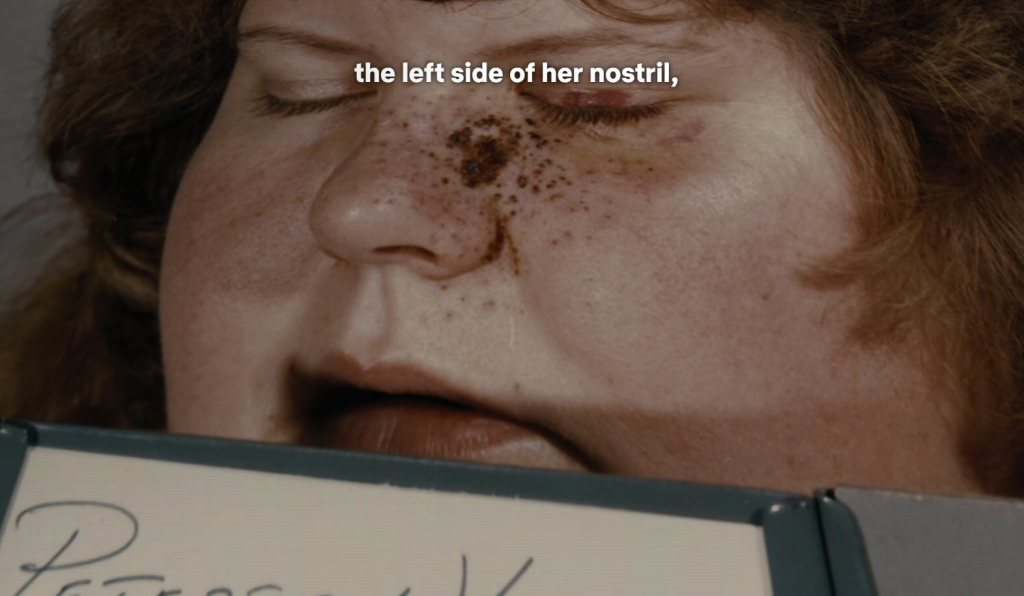
Virginia Petersen 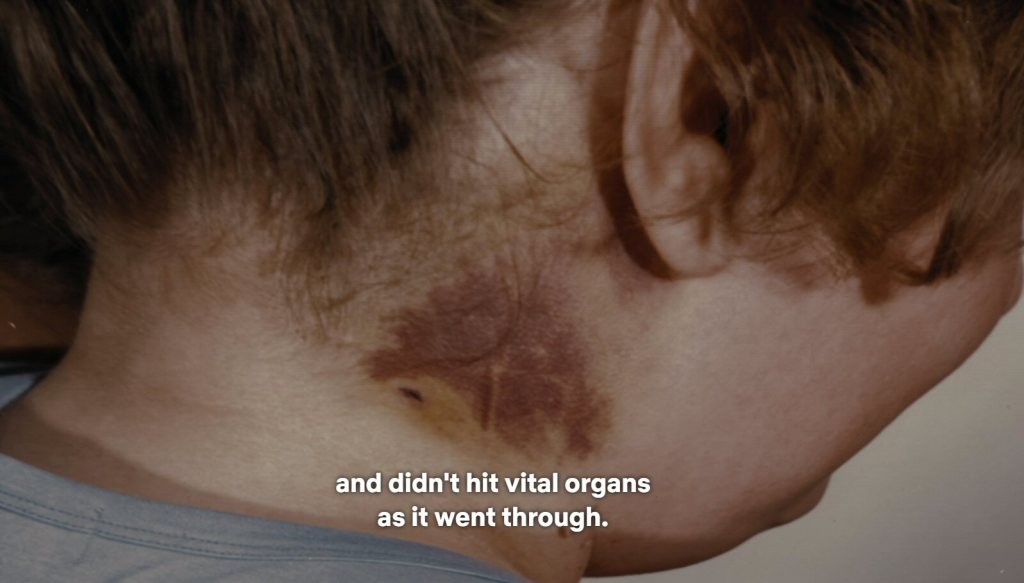
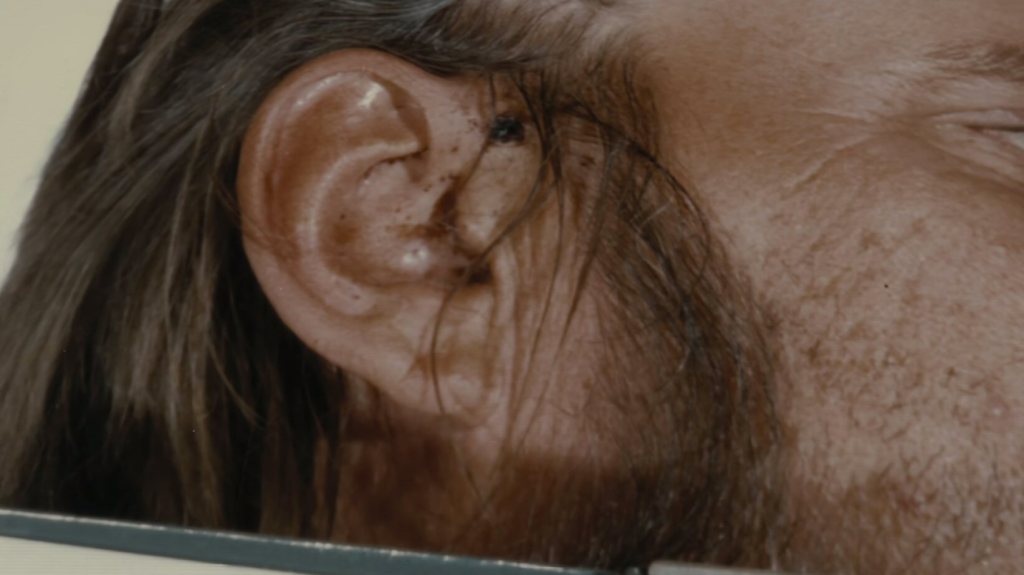
Christopher Petersen In a statement given to police, Virginia Petersen described her attacker as “male, light-complected, athletically thin, and tall.” She said his hair was dark, curly, or wavy and combed back from his face.
Hand identification:
First, she stated that he had a strong demarcation between his hands and arms suggesting he wore gloves but added that he had clean, well-manicured fingers. How did she see his hands in such detail if she had been uncertain whether he wore gloves? Glove prints were found in the house, so he must have been wearing some.
From Document 20.3 In court, she testified that the suspect’s hands were long and thin, and they were “more like an artist than a construction worker.” Conveniently, she insisted that she could see him because of a TV on in her child’s bedroom. Later, she changed her testimony and said a 100 watt light had been on in the living room.
Face identification:
Virginia identified Ramirez in the line-up on September 5, 1985. Christopher could not ID him despite chasing the gunman through the house. However, the line-up was rigged with deputies using hand signals to direct witnesses to choose Ramirez. This is shown in the video below.
Hair Identification:
Virginia Petersen also changed her description of the suspect’s hair. Where it had once been combed back, it was now wild and “shaggy” and he had a “diabolical grin” as he laughed maniacally at the foot of their bed. It just so happens that by the time the trial began in 1989, Ramirez’s hair had grown out quite a bit, and some might call it shaggy. However, that was not how his hair looked in August 1985. He also had a propensity to laugh inappropriately in court and he liked to doodle. Perhaps this inflenced her description of “artist hands” and crazed laughter.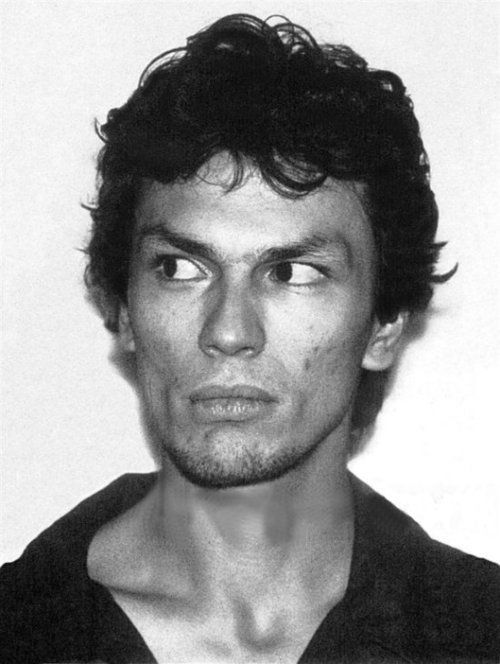
Ramirez upon his 1985 arrest 
Ramirez in court While Petersen’s description did share some attributes with Ramirez, such as an angular face, this is a clear example of embellishment. While the Petersen case fell under LAPD jurisdiction, the LASD (the County Sheriff’s Department) were leading the Night Stalker case and became involved. Could they have influenced Petersen’s description changes? Could the prosecutor have guided witnesses on what to say? Did the media sensationalism and ‘Satanic’ hysteria encourage her to make her attacker sound more insane?
Our memories do not improve with time. They become faded, distorted, and less distinct. Virginia would not have had a better recollection of her attacker four years after the event. Was it the countless images of Ramirez in the newspaper and on television? Virginia Petersen admitted during her testimony that she had seen Ramirez ‘s photograph in the newspaper and on television multiple times. She stated she first saw his photograph on television the night before he was arrested, but she did not contact the police to inform them that their attacker was the Night Stalker.
A highly qualified eyewitness identification psychologist, Dr Elizabeth Loftus, was brought in to explain the effects of media contamination, but the defence did not brief her on specific cases, so she lost the attention of the jury.
However, for the appeals, Dr Kathy Pezdek made the following analysis in her declaration:
“Virginia Petersen first identified Ramirez at the live lineup and then subsequently in court at the Preliminary Hearing. At the trial, she again identified Ramirez and testified that she had seen his picture on television and in newspaper at least 6-7 times before attending the lineup. However, although she recognized him as the man who attacked her, she never called the police to tell them.”
– Declaration of Dr Kathy Pezdek (habeas corpus document 16.7).
Bizarrely, Christopher Petersen argued with and chased the gunman, but he did not identify Ramirez at the line-up nor did he testify in court. The killer had run into the living room during the escape. If the light was on as Virginia claimed, then why was Christopher unable to identify him?
The Evidence
- Prints from gardening gloves on the sliding door and window screen.
- Bullet casings and expended slugs in the bedroom and wall.
Detectives determined the bullets were from a .25 caliber automatic gun, but they never recovered the weapon. The casings and slugs bullets contained red primer. When the Abowaths were attacked two days later (and 57 miles away) bullets at that scene had the same “old stock” red or pink primer so the Night Stalker task force believed the same person committed both crimes. When Ramirez was arrested on August 31, law enforcement searched a locker used by Ramirez at the Greyhound bus station and found a selection of .25 bullets in his bag. Three of them contained red primer. The prosecution alleged that this made them unique but is this really true given the size and population of Los Angeles?
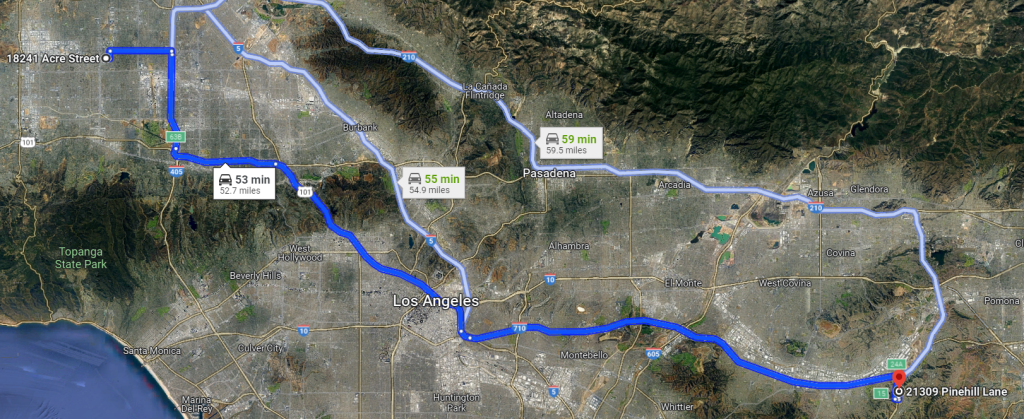
The huge distance between two crime scenes involving red primer bullets 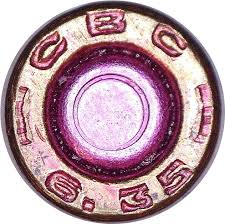
What red/pink primer looks like Bullet Lead Analysis – What We Now Know
From the 1960s to the early 2000s, the FBI crime laboratory used comparative lead bullet analysis to tie suspected criminals to crime scenes. In 2004, research conducted by the National Academy of Sciences showed the science behind lead bullet analysis relied upon for nearly 40 years was extremely flawed and had no scientific basis or support. As a result, in 2005, the FBI stopped using these tests and uncovering the flaws of this science led to the discovery of wrongful convictions.
Forensic ballistics involves the examination of evidence from firearms that may have been used in a crime. When a bullet is fired, the gun leaves microscopic markings on the bullet and cartridge case called toolmarks. When investigators recover slugs or casings from a crime scene, examiners test-fire a suspect’s gun to compare the toolmarks on the expended bullets to those from the scene. If the marks are similar, the examiner may conclude they were fired from the same gun. This was impossible in the Night Stalker case, because the 25-caliber weapon was not recovered, yet the firearms examiner claimed there were identical toolmarks.
After a thorough review of the research, the National Academy of Sciences concluded there is no evidence to support the theory behind lead bullet analysis. Originally, it was assumed that a box of ammunition produced in one factory, at the same time, under similar conditions would have identical lead composition and chemical makeup. Therefore, if a slug from a crime scene contained the same lead composition as live ammunition in a box owned by a suspect, there was physical evidence linking the suspect to the crime scene. However, this is not the case and has led to many wrongful convictions.
Ramirez’s defense attorneys conceded the ballistics evidence, neglecting to send the evidence to firearms expert, Paul Dougherty. In 2004, Dougherty revealed that the law enforcement “work up” was “inaccurate and inadequate” and found there were “internal conflicts in the written reports with regard to the testing conducted, such as the condition of the bullets.” In fact, he believed the firearms evidence needed retesting in all cases involving guns (Federal Writ of Habeas Corpus, pg. 418). For an analysis on the ballistics in the Night Stalker cases, see this post.
KayCeeDec 26 2022
-
Three Duff Lawyers, One Dodgy Trial.
“Justice will not be served until those who are unaffected are as outraged as those who are”.
Benjamin FranklinTo begin with, this post had the working title of “Ray Clark was a Bit of a Twat”, you’ll probably understand why when you reach the end.
For any who may be interested in the processes involved in a capital trial, here’s some info.
I admit I write a lot about the trial, the truth is there is so much to say, so many facets, so many failings, so much that was wrong; one could go on for weeks, and still uncover more horrors. Many assume that Ramirez had his day in court, got a fair hearing, and was found guilty on all counts, due to the overwhelming evidence against him.
They are wrong.
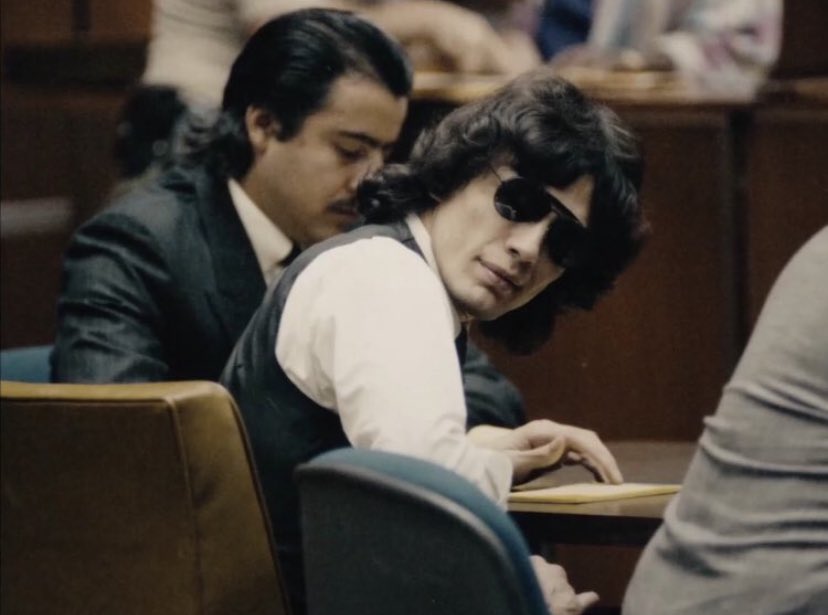
Richard Ramirez, pictured with paralegal Richard Salinas. Throughout this post I will show some declarations from the jury, taken after the trial. Why were they not shouting from the rooftops about what they could see happening? Worse, how could they see and still vote death? How is this justice?
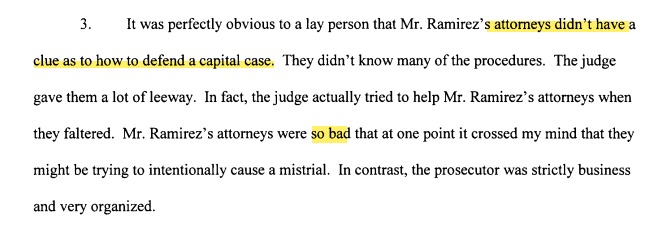
Declaration of juror Hernease Dabney
His trial was a mess from beginning to end, with falsified evidence, “expert” prosecution witness deliberately misleading the jury. A string of constitutional violations and unethical practices. It starts and ends with his defence.
Here we are again with another instalment of Clown Central, or in other words, the charade that passed for the trial of Richard Ramirez.
I’ve discussed how unqualified the defence counsel was, and how a conflict of interest led to his mental impairments being covered up for profit. Here, I am going to talk about something else.
What was the point of Ray Clark?
That’s a question I ask myself, and even now, I am unsure of the answer. To give the veneer of, “We’re doing our best, and honestly, this trial isn’t a joke.”? Possibly. To account for his mid-trial appointment, I must back track a little, and refer to incidents already mentioned in previous posts. Forgive me, but it is important to include them again here; briefly.
Ramirez was unlucky enough to land himself with what could possibly be the worst defence team in history, and through no fault of his own, was effectively denied the assistance of counsel, which was a violation of his constitutional rights.

Declaration of juror James Muldrow. In other words, “We knew the eye witness testimony wasn’t right, but hey, we found him guilty anyway!”
By March 1989, Daniel and Arturo Hernandez were not doing so well, Daniel was often ill and Arturo had effectively given up bothering to attend court sessions, which landed him in serious trouble with trial court. He was fined, and eventually did jail time for being found in contempt. Oh, the irony, he was held within the same jail as the client he’d more or less abandoned.
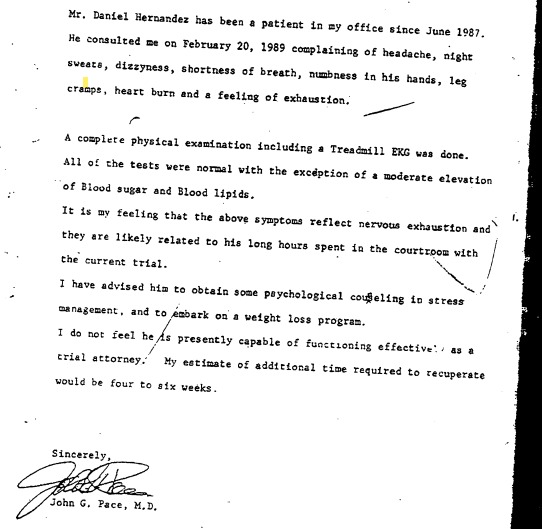
Daniel Hernandez was clearly feeling the strain. Daniel Hernandez submitted a letter from his doctor, he was suffering from stress, and needed a month or so off, to recuperate and asked the court for additional support, to help him “carry the load”. At this point, seeing that the defence had effectively ceased to function, they should have called a halt to the proceedings. The court found no legal reason to do this. I wonder if they would have arrived at the same conclusion, had it been the prosecution who had crumbled? Somehow, I doubt it.
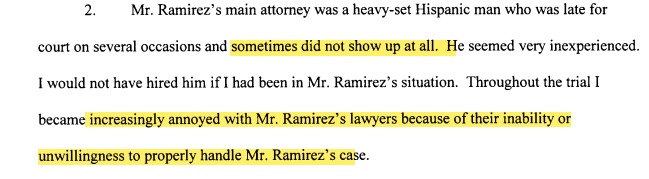
Declaration of juror Janice McDowell This is what happens when you allow people to do a job that they are not qualified to do. This was a trial for someone’s life, not a jaunt in a park!
On March 1st 1989, the court appointed Ray Clark to assist the defence counsel, pursuant to § 987.2 (penal code), He was a retained attorney, and his qualifications were accepted under the State Bar of California, therefore, he was paid by the state, receiving $100 an hour, unlike the Hernandez’, who were receiving nothing.
So did they stop the trial at this point, to allow Clark to investigate, prepare and come to court armed with the defence Richard so desperately needed, and by law, was entitled to? No, of course not.
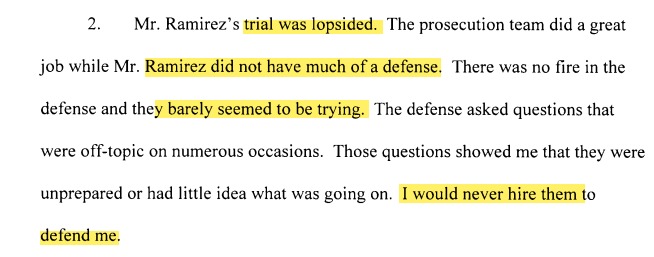
Declaration of juror Max de Ruiter
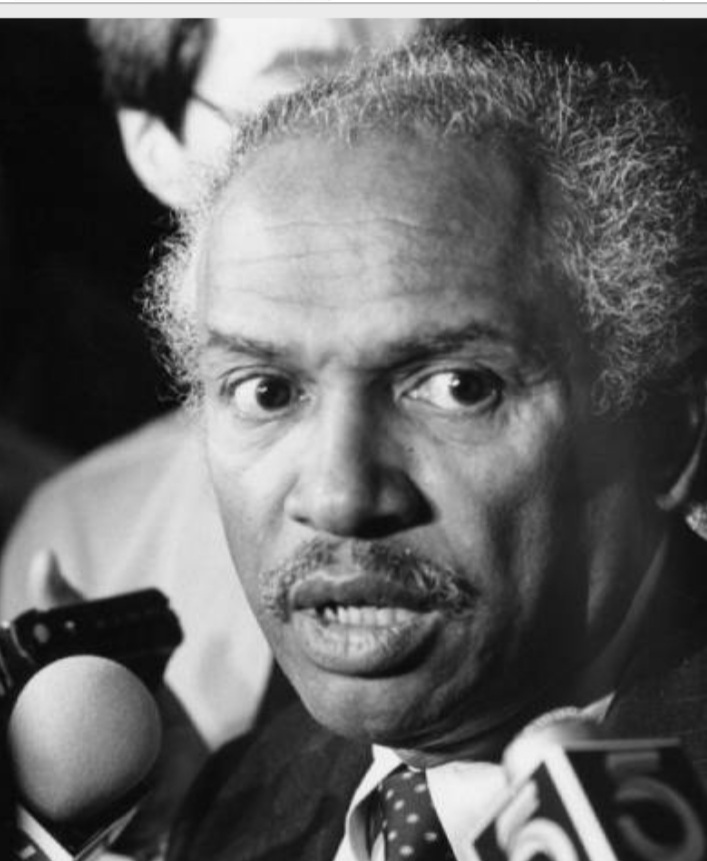
Ray Clark. Photo from the California Public Library
As Clark was also experienced in the defence of capital crime, one might think that this was good news for Richard. Unfortunately that wasn’t the case, as his appointment, mid-trial, meant that he had not had the time to review the case, or to determine much (if anything) about Richard, his family, his background, or to insist that he had a full mental competency check, once it became apparent that Ramirez was unable to assist with his defence, or to fully comprehend what was happening.
To Clark, so it would seem, this was blatantly obvious, given his rather unprofessional assessment of Richard in his statement, and yet he did nothing to call attention to the problem. One more lawyer who failed to do his duty and look out for the best interests of his client.
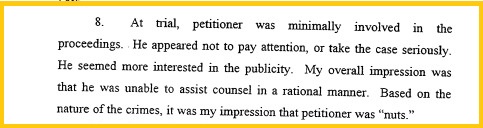
He thinks Ramirez is “nuts” but did nothing to pursue that trail. “I had no time to prepare for the trial due to the fact that I was appointed when the case was in trial. I had no opportunity to review any discovery or defence reports, prior to my participation in the trial. However, I was able to review police reports and other records throughout the trial”
Declaration of Ray Clark, doc 7-4, from the Writ of Habeas Corpus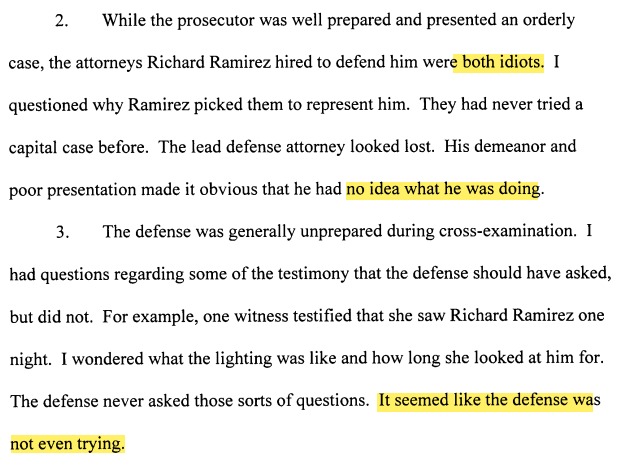
Declaration of juror Fernandez Sandejas Trial court, by refusing to stop the trial to give the defence team’s new appointment the time he needed to catch up, to review, to do his job, again denied Richard the assistance of counsel. What is the point of a defence attorney who doesn’t have the material he needed to fight the case? Are you beginning to see at pattern here?
Clark goes on to say:
“I handled cross-examinations of prosecution experts without advance preparation, because expert testimony is largely generic, and requires technique, more than anything else”.
Ray Clark declaration. doc 7-4Such a pity that “technique” didn’t seem to manifest itself in court, because the so-called expert witnesses, used by the prosecution, were not particular “experts”. For example, Gerald Burke, the prosecution’s shoe-print expert wasn’t even trained in shoe-print impressions, deliberately misleading the jury during his testimony, the fire arms experts that couldn’t agree on the ballistics reports, and finger print evidence that should have been challenged as scientifically unreliable. Had Richard’s defence had their own experts to give evidence, such as Lisa DiMeo, Forensic Specialist in shoe-print impressions, Paul Dougherty, firearms expert, who they did hire, but then didn’t provide him with the evidence he needed, and criminalist and specialist in crime patterns, Steve Strong, they would have been able to counter the evidence put before the court. Instead of conceding at every turn.

Prosecutor Halpin on Clark, from the Writ of Habeas Corpus.
“To my knowledge, a mental state defence was not developed by Daniel Hernandez for the guilt trial. To my knowledge, there was very little discussion about petitioner’s mental state or background, at least when I was on the team”.
Ray Clark declaration. Doc 7-4And yet they knew that something was seriously wrong with Richard Ramirez!
As discussed in my previous post, there was another reason why Ray Clark did not pursue an investigation into the mental impairment of Richard, that being that he also was blighted by his own conflict of interest. Feeling somewhat beholden to Daniel Hernandez for his being retained by the court, he stayed with the strategy already in progress, and a different course of action wasn’t considered. As we have mentioned frequently, his mental state is a huge subject, and one which we will be covering in-depth, in the future. It is a vast and tragic topic, reaching back years, something that has been lied about, covered up and swept aside, in favour of calling him “manipulative” and “doing deals with the D.A up in San Francisco”.
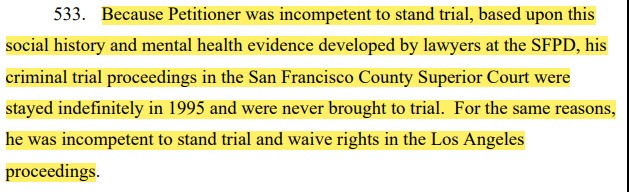
San Francisco, where the necessary evaluations were carried out, and followed through, thanks to competent lawyers. You can discount what a certain detective is spouting in yet another podcast. What happened in San Francisco is a matter for a future post.
Over to Ray Clark in Los Angeles..
So how was he doing? The defence hadn’t done too well during the guilt phase so far, where they had expected to win, without producing any of the necessary counter evidence to do so. (I wish I could insert a rolling eye emoji here) With neither Hernandez present in court during closing argument, how on earth was Ray going to swing this all on his own? Like an avenging angel, swooping in to save the day? You already know the answer to that.
This was one reporters view of him and Daniel Hernandez, as a “key players”. In true media style the prosecution (victorious) are given positive mention, the defence, not so much, unsurprisingly. Arturo Hernandez isn’t mentioned at all, again, no one is surprised.
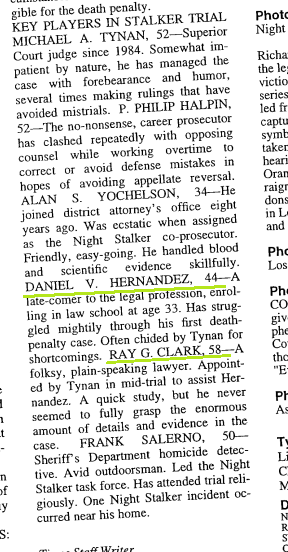
Someone is missing from the list, aside from Arturo. Who could it be?
Guilt Phase Closing Argument
Capital trials come in phases, first comes the guilt trial, which as it sounds, is where guilt or innocence is proven. In capital offences, guilt must be proven beyond a reasonable doubt.
In law you are innocent until proven guilty, but the prosecution had, in this case, flipped it around, citing Richard’s own unproven admissions, through coercion, hearsay, and trial court’s refusal to grant the motion, to render this inadmissible, as proof of his guilt. (yes, we will do a post about this) Now the responsibility of defence counsel was, horrifically, that they must prove his innocence.

Reporter transcript. Read it.
“You know and I know there’s no evidence anywhere that he confessed to any of the murders”.
Judge James Nelson
This is not helpful!
The physical evidence was very little, the eyewitnesses unreliable, the footprint evidence falsified, fingerprints arguable, the hair and serological evidence pointed to someone other than Ramirez being responsible for the crimes, and yet they got it badly wrong. Conceding points, failing to provide counter argument, failing to get their own testing done, failing to retain their own expert witnesses, and struggling to cross examine the witnesses for the prosecution. The list is endless and shocking.
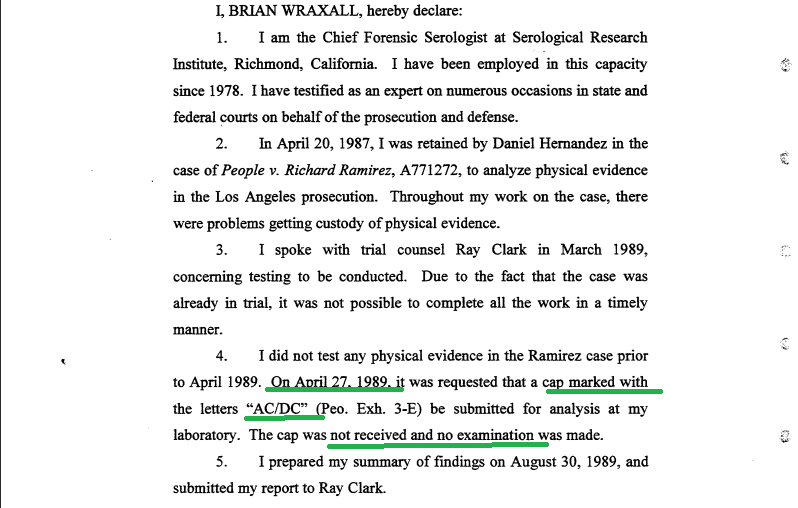
Declaration of serologist Brian Wraxall. The above image shows that the infamous AC/DC hat (which every aspiring Satanist-come-heavy-metal-fan clearly must own) was never submitted for testing by either the prosecution or the defence. The hat can never be conclusively tied to Ramirez and should have been disregarded as evidence if no one bothered to get it tested.
It was not about proving guilt beyond a reasonable doubt. It was because they failed to prove his innocence.
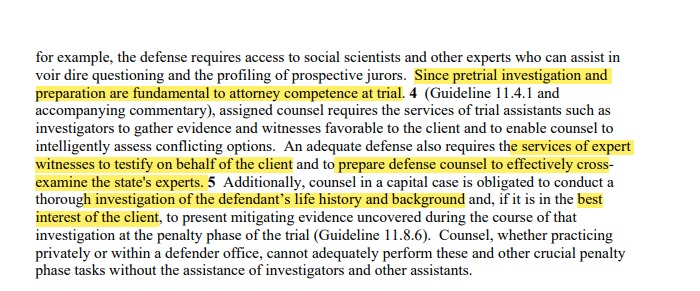
If it is in the best interest of the client. Californian Law Association rules. And for that, they tried to point the finger at Richard, stating that he had waived his right to defence, so as a team, had decided to put on a limited defence. Why? Richard had been despondent and distraught, saying that it “would do no good”, knowing he was already judged and condemned. His defence deferred to his wishes, even though they knew he wasn’t competent to give such instructions, and even so, they could have overruled this, if it was in his best interests to do so, and as his lawyers, they owed him a duty, a duty to fight for him.
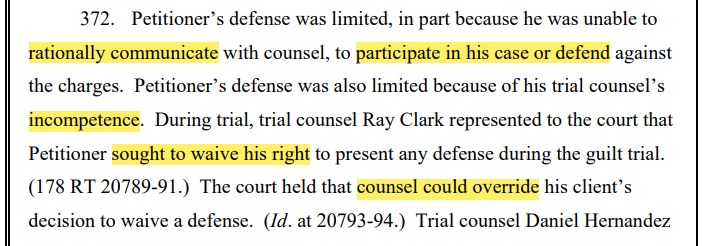
Could have. Should have. From the Writ of Habeas Corpus.
Clark Addresses the Jury
In his closing argument for the guilt phase, Clark did try to impress upon the jury points for consideration, not very convincingly, it should be said, as he meanders around, referencing the Salem Witch Trials, Watergate and Abraham Lincoln. For a man of experience, as Clark was, it seems very vague, I can only put this down to the lack of preparation and team strategy. Oh, and incompetence. Telling the jury to “get over the blood and gore”, whilst sensible, as they are supposed to be weighing up facts, not getting bogged down with emotions, they had just had two weeks of Halpin and Yochelsen describing Richard as “evil personified”.
Trial reporters’ transcripts are unavailable, so I have had to find news articles to discover what was said. This is from the LA Times; you may need a desktop to view this image.
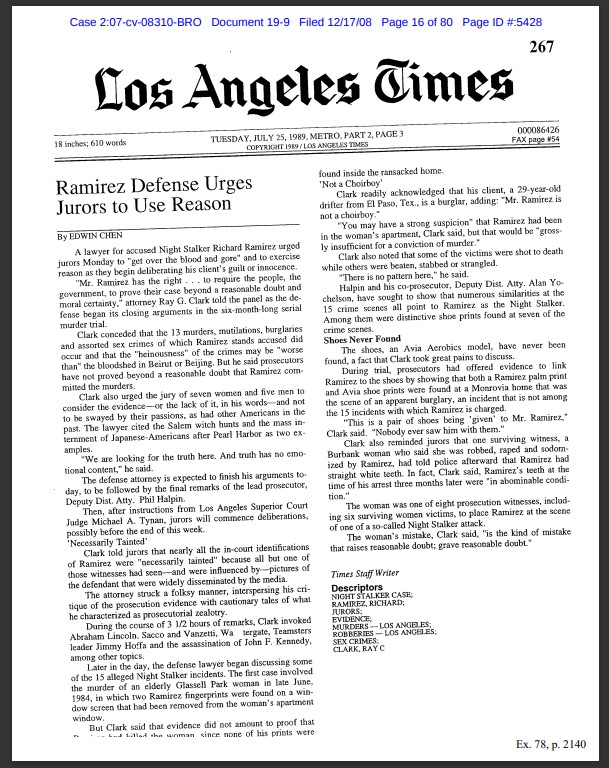
At least he mentioned the unreliable witness identification.
The jury began deliberation, in the middle of which, something happened. One of their number, Phyllis Singletary, juror no.8, was murdered.

Declaration of juror Lillian Casselli “The jury was not told by the trial court what happened to Juror Singletary on Monday, August 15, 1989. Instead, they were sent home. As the trial court predicted, news of the juror’s murder inundated the county. Rather than from the court, the media’s inflammatory and sensational reporting about the jurors’ murder were the first the jury heard about their fellow juror’s murder”
From the Writ of Habeas CorpusThe media speculated that it had something to do with Ramirez, and the non-sequestered jury members, sucking it all up, like sponges . With one, Cynthia Haden (yes, THAT Cynthia Haden) making the panicked suggestion that he was going to bump them off, one by one.
“My first thought was that we were all going to be picked off, one by one. Who’s next?”
Cynthia Haden(Cynthia “Cindy” Haden became quite well known as the “juror who fell in love with Richard Ramirez”. More on that lady HERE)
Quite how Richard was going to “pick them off” whilst locked up is a mystery. In any event, the murderer wasn’t the shape-shifting, devil-worshipping Ramirez, locked up in his cell; it was the boyfriend of Ms Singletary. Too late, for how could the jury not be infected by media bias.
Trial court then added to the fear of the jury by stating:
“I want to emphasise it has, as far as we are able to determine, and I’m sure, has nothing to do with this case.”
Judge Tynan, making things worse.At this point, a mistrial should have been declared, and defence put forward a motion, not unreasonably, for that to happen. Judge Tynan denied it. Richard declared that the decision was “fucked up”. Not an unreasonable assumption.
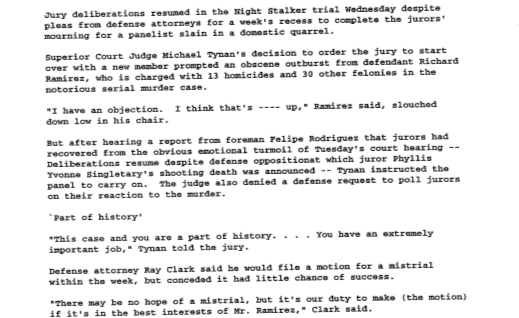
Mistrial. They found him guilty on all counts. It’s truly unbelievable.

Declaration of alternate juror Bonita Smith, who believed he was railroaded, and questions the eye witness testimony about the blonde haired attacker.
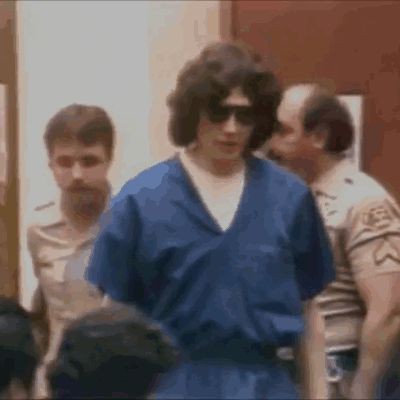
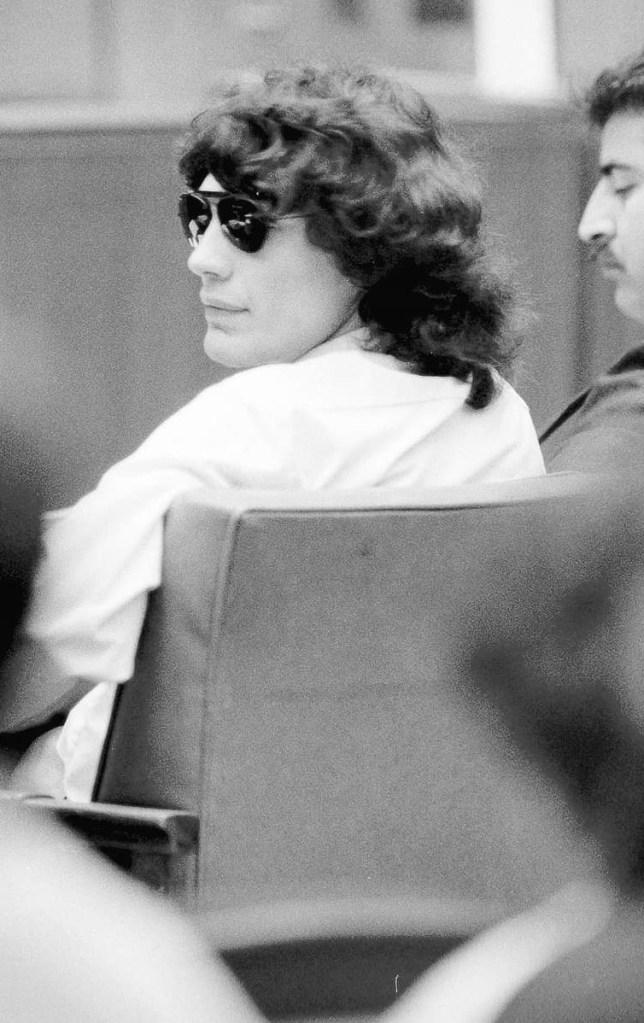
Richard Ramirez on the day he was sentenced to death. The Appalling Closing Argument of Ray Clark
At the penalty phase in a capital trial, the defendant has been found guilty beyond a reasonable doubt. (Well, supposedly, anyway) What remains is the form of punishment. There are two options: death, or life without hope of parole. It is at this stage that defence counsel must use everything at their disposal, every shred of evidence about their client’s life, mental health, family history, history of abuse and trauma to plead for mercy. This is mitigation. Richard, who was not mentally fit to participate in his own defence, was purportedly adamant that he would not plead for his life. His defence should have overridden this, as it was in his best interest to do so. But Ray Clark did not. Instead, he gave what must be one the worst closing arguments in mitigation ever heard.

Writ of Habeas Corpus
After the waiving introduction of aggravating evidence, the prosecution gave closing argument in the penalty phase. Noting the number and gravity of the crimes, and the lack of any mitigation evidence, the prosecution concluded that Ramirez was:
“The personification of evil and if anyone has ever earned the death penalty, Richard Ramirez has.” (217 RT 24833).
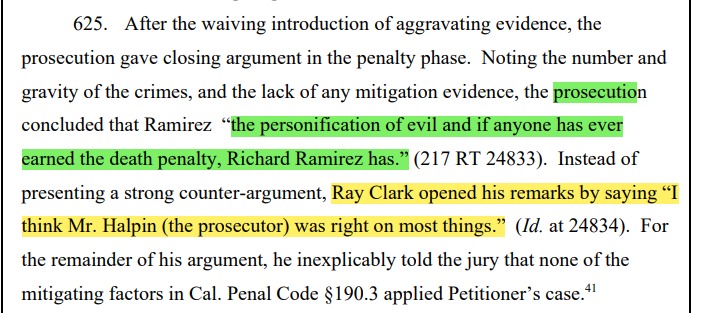
Prosecution at penalty phase, from the Writ of Habeas CorpusInstead of presenting a strong counter-argument, Ray Clark opened his remarks by saying
“I think Mr. Halpin (the prosecutor) was right on most things.” (Id. at 24834). For the remainder of his argument, he inexplicably told the jury that none of the mitigating factors in Cal. Penal Code §190.3 applied Petitioner’s case.
As to Richard’s mental state at the time of the crimes, counsel told the jury:
“What possessed Mr. Ramirez to do this we will not know soon. Psychiatry is in whatever state it is in. What possessed [Petitioner] to permit Ms. Kyle to live, I will never know.”
He said, “I think it is inescapable that something was wrong [with Richard Ramirez] and that we don’t know what it was. Even if we knew what it was, I’m not sure that would change your task any.” (Id. at 24853). Later he added, “There is a lot we do not know about [Ramirez], about his behaviour, which we will not know probably in our lifetimes, which man will never know about the man.” (Id. at 24857)
If they had done their job correctly, IF they had not turned a blind eye to Richard’s mental impairments, in case they de-valued his marketability; what was wrong with “Mr Ramírez” would have become apparent. That is your task, as counsel for defence, to KNOW these things.
Later, he bizarrely added more and said that even if they had known, and disclosed to the jury mitigating circumstances, it would not have impacted the jury’s decision. That is untrue, as several jurors statements clearly show.
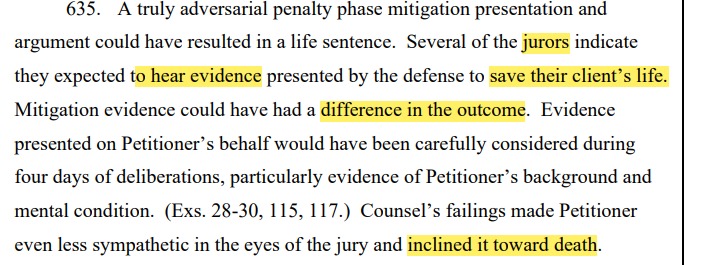
Writ of Habeas Corpus
When discussing the possibility of abuse in Richard’s upbringing, counsel told the jury:
“There is inferential evidence here that (sic) is not the kind of home from which Mr. Ramirez came.” (Id. at 24841.) He even suggested that there was no evidence of the reverse—of Petitioner’s redeeming qualities– noting “There is not a lot to be said here as to—as to he was a good boy, he did this, he went to this school or that school. Obviously don’t even consider that. That wasn’t presented and I don’t know what school he went to.”
Why didn’t he know? It is his job to know everything about his client’s background and life!
Even when discussing the only factor that was apparent without the presentation of evidence, Mr. Ramirez’s age, counsel said it did not apply:
“He is a young man. . .. but there is nothing, absolutely nothing, not even close to anything that would justify in any fashion whatsoever a single one of these 43 counts.” Id. at 24854
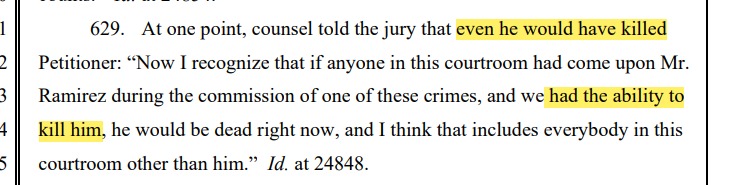
What the hell is this? Yes, you read that correctly. That statement is astounding, astounding in its shameful hostility. Ray Clark was being paid to defend Richard, and to try and save his life. He would’ve killed his client? Since when does defence counsel act as the prosecution?
On the back of that horrendous argument, the jury returned recommendation that he be given the death penalty, having heard NOTHING to make them think anything else. They were given nothing of his traumatic life, or mental deficiencies. Instead, they had to listen to this waffle:
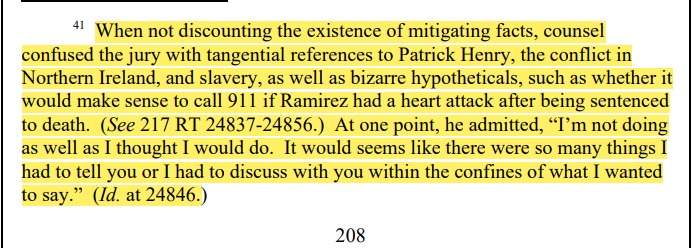
Call 911? The defence of Richard Ramirez was so riddled with constitutional violations, errors, so as to render it completely ineffective. His defence was no defence, and he was failed badly at every step.
Richard was sentenced to die in the gas chamber of California, the jury had a party, and Ray Clark stepped outside the courtroom to face the cameras. What did he have to say? He rambled on about Hitler and then said he didn’t know whether Richard was guilty or not.
“I never asked”. Oh…
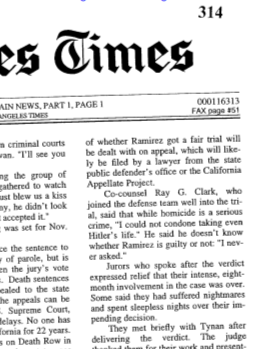
Perhaps he should have said something like this instead:
“Petitioner was incapable of understanding what he was entitled to before, during, and after his trial. Petitioner did not understand how the court functioned or how his attorneys should be functioning. He could not understand that he had a right to a strong and vigorous defence in a trial where his life was at stake. Petitioner’s counsel failed to protect his interests throughout their representation of him, a four-year period. In so failing, counsel prejudiced Petitioner’s rights, including his purported waivers of his right to wear an unobtrusive leg brace; his refusal to remove his sunglasses at the court’s direction; his inability to present a proper defence at trial; his waiver of his presence at the guilt verdicts; and his purported waiver of his right to present any mitigation evidence at the penalty trial. Petitioner lacked the mental competency and knowledge to remedy the repeated and glaring abuses in his case.”
Writ of Habeas Corpus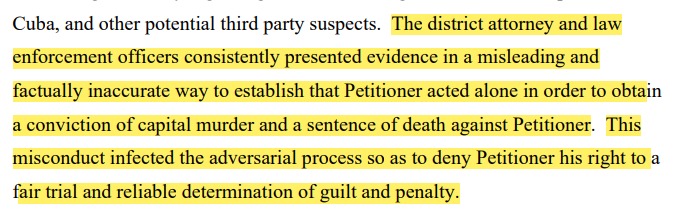
Do you still think this trial was fair?
~ Jay ~
23rd December 2022
-
The Vincow Incident: What’s in a Fingerprint?
On the afternoon of June 28, 1984, between 1-2 p.m., Jack Vincow proceeded to his mother’s apartment in Glassell Park. He found Jennie Vincow lying on her bed with her throat slashed, covered with a blanket.
She had numerous stab wounds – one had severed her jugular vein. Jennie had aspirated blood. There were seven stab wounds in all and the coroner believed that four were lethal. It is often stated that Vincow was raped. There was no physical evidence of sexual assault. However, her girdle was pulled down and her dress partially lifted. (Richard Ramirez’s 2008 Federal Habeas Corpus, pg. 411).
The apartment had been broken into and ransacked. The window next to the front door was open, and the door was unlocked. The window screen had been placed inside the house.
Physical Evidence:
- Blood spatter in the living room, bath and bedroom and on a portable car top in the bedroom closet.
- Blood smudges in the bathroom sink and on a lamp table.
- Ransacked apartment, drawers open.
LAPD fingerprint technician Reynaldo Clara arrived at 5pm and lifted five latent fingerprints. Four were from the window screen and one was from the interior of the living room window. Two prints looked identifiable. Clara could not determine how long the prints had been on the screen.
Per the coroner’s report, it was estimated, based on liver temperature, that Vincow had been killed within 2-3 hours of when her body was discovered (at 2 p.m.). Jack Vincow told law enforcement he had last seen his mother alive the previous day between 1-2 p.m. This might suggest that Jennie was murdered in the morning and not during the previous night, making this case deviate from the Night Stalker’s modus operandi.
The Vincow murder was unlike any of the other crimes attributed to the Night Stalker. Jennie Vincow was an elderly woman that lived alone and was killed in the middle of the day. She lived in an apartment building surrounded by numerous other tenants. Despite the ransacking, nothing seemed to have been stolen from her apartment.
Jennie Vincow’s Sons:
Jennie Vincow had two sons, Manny and Jack. Jack was a pharmacist who lived above her in their apartment building. Manny, had been hospitalized multiple times for mental health disturbances and was rumored to have been both physically and emotionally abusive to his mother. He lived in a mental institution in Brooklyn, New York.
Jack Vincow testified that he initially thought his brother might have been responsible for their mother’s death. This was because Wanda Doss, the manager of the apartment block, thought she saw Jack inside Jennie’s apartment on the morning of the murder. Wanda Doss did not testify at trial. This information comes from Philip Carlo’s biography, pp. 258-259. Per Jack, his brother Manny bore a strong resemblance to him.
Jack Vincow engaged in some odd behaviors after the death of his mother. After discovering his mother had been brutally murdered in her apartment, Jack took the time to open the curtains and the windows in the living room and the kitchen before having the apartment manager call the police. (Habeas Corpus, pg. 43).
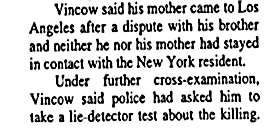
LAPD Detective Jesse Castillo thought Jack’s behavior was suspicious, prompting him to follow him in his vehicle on one occasion. He was asked to take a lie detector test, which he refused. Lie detector tests are not admissible so this is reasonable. Law enforcement tried to interview Jack several times, and he was uncooperative, leaving in the middle of one.
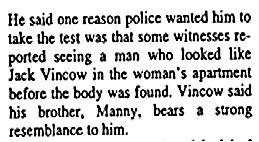
“He said one reason police wanted him to take the test was that some witnesses reported seeing a man who looked like Jack Vincow in the woman’s apartment before the body was found. Vincow said his brother, Manny, bears a strong resemblance to him.”
– Los Angeles Times (Southland Metro) March 4, 1986.
Fingerprint Evidence:
Ramirez’s alleged fingerprint was the only evidence that tied him to the Vincow murder. There were no links to the other Night Stalker cases apart from the home invasion aspect.
On Jennie Vincow’s window screen, four fingerprints were found. Only two had potential to be identified, according to techician Reynaldo Clara and Darnell Carter who examined them. There were other prints on the screen that were unidentifiable.
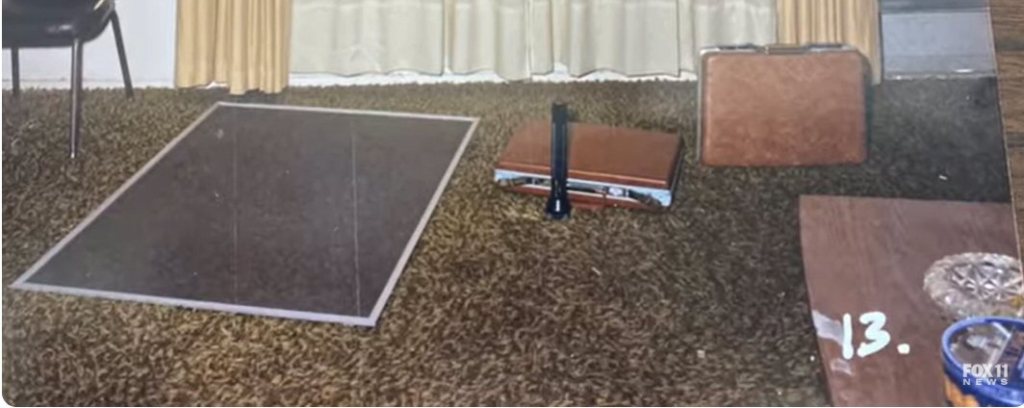
The window screen on the floor This was before AFIS (Automated Fingerprint Identification System) so they were unable to match it to a criminal record. When Richard Ramirez was captured, the Los Angeles Police Department and Los Angeles County Sheriff’s Department looked through cold cases to see if any matched the Night Stalker’s M.O. (the police simultaneously argued that he did not have an M.O.). Jennie Vincow’s murder case was raised and the LAPD gave the Vincow case to the LASD.
It was the LASD’s Deputy Sheriff Hannah Woods who examined the fingerprints, as well as Richard Ramirez’s belongings. Woods manually examined the prints and concluded that they belonged to Ramirez. Because Ramirez’s defence were incompetent and had no money, they failed to retain a fingerprint expert to examine the Vincow fingerprints and the prosecution’s evidence was left unchallenged. They lacked the funds because they were not sufficiently qualified to take the case and the judge refused to pay them.
Instead, they conceded the fingerprint evidence and argued that the jury should acquit Richard of the Vincow charge because his fingerprints were not found inside the apartment. This was an incredibly weak argument – but one the jury considered. Incredibly, juror Donald McGee actually stated that he would have voted for acquittal had Vincow been a standalone case. (Habeas Corpus document 20.8)
The Unidentifiable Prints:
During deliberations, the jury questioned the unidentifiable fingerprints and posed this question to the court:
“What is the legal definition of an unidentifiable fingerprint? Is it because there is not enough of a print to make an I.D. or because the print is not a part of the records the police have with which to make a comparison?”
– Federal Writ of Habeas Corpus, pg 414.
At this point, the defense should have explained the significance of unidentifiable fingerprints and argued that they had not come from Ramirez. If this wasn’t bad enough, the prosecution failed to preserve them.
Ramirez’s attorneys were supposed to object to the prosecution for losing evidence in their closing argument. Because they failed to do so, the prosecutor, Philip Halpin, shifted the burden of proof onto the defense. In other words, they had to prove the prints were not Ramirez’s – impossible when they no longer existed.
The California Government Refused a Review of Ramirez’s Fingerprint Evidence
In 2008, fingerprint examiner Ron Smith was retained by federal habeas attorneys to review the fingerprint evidence introduced against Richard at his Los Angeles trial; however, the state refused to release the fingerprint exhibits.
“Fingerprint examiner, Ron Smith, has been retained by federal habeas counsel to review the fingerprint evidence introduced against Petitioner at trial; however, he requires the release of the fingerprint exhibits to his care in order to do so. Petitioner has filed a request with the Superior Court to release the exhibits to Mr. Smith’s care; the government has opposed Petitioner’s request.“
– Habeas Corpus, pg. 413
What were they afraid of? What don’t they want us to know? If the state’s evidence is valid and reliable, then why do they not want anyone else to examine it? Is it because they know their evidence will not hold up to scientific scrutiny? Do they fear if a competent, independent fingerprint examiner looks at the evidence, it will quickly crumble, showing substantial reasonable doubt?
A young man’s life and liberty depended on the authenticity of this evidence. Yet, the Hernandez’s didn’t bother with contesting it, the state lost the unidentifiable prints and would not release the prints for independent analysis.
Fingerprints Case Study:
For as long as I can remember, I was taught no two fingerprints are alike, that they are distinct, like DNA. Well, that’s not quite accurate. Fingerprinting is not an exact science, and contrary to widespread belief, not every set of fingerprints is unique. The science of fingerprinting varies from one law enforcement agency to the next, and each agency determines its own protocols for examining fingerprint evidence. The science of fingerprint evidence is based on two key assumptions: That fingerprint reading is objective and that every person has completely unique fingerprints. Neither of these assumptions is 100 percent correct. To be considered scientifically valid, an instrument or testing procedure must be proven beyond a reasonable degree of scientific certainty to be accurate, valid, and replicable.
Unlike DNA testing, the fingerprint industry is not held to these standards. Since 1911, when prosecutors first introduced them as evidence, U.S. courts have consistently accepted fingerprints, and juries have considered them incontrovertible evidence. But unlike DNA evidence, fingerprinting was adopted before the United States Supreme Court decided attorneys and expert witnesses must prove that evidence is scientific and reliable. Matches become even more difficult when law enforcement finds only a partial fingerprint.While prosecutors rely heavily on fingerprint evidence in criminal cases, and juries often take fingerprint evidence as proof beyond a reasonable doubt of a defendant’s guilt, fingerprint evidence has been known to implicate the wrong person. And this is because matching fingerprints is not an exact science.
Fingerprint comparison is highly subjective, and even proficient forensic scientists can make mistakes when it comes to reading and comparing fingerprints. As such, it’s important for a jury to understand that not all fingerprint evidence is reliable, and a competent attorney should know how to cast doubt on fingerprint evidence so the jury realizes it’s not foolproof.
A prime example of fingerprint misidentification occurred after the train bombings in Madrid in 2004. Spanish authorities found fingerprints on a bag that held explosives. They sent the fingerprint evidence to international authorities for further comparison. Three FBI experts matched the prints to Brandon Mayfield, an Oregon lawyer. The FBI claimed the match was 100 percent accurate, and Mayfield was detained by federal authorities. Spanish authorities eventually found that Mayfield had not left the United States for several years and the fingerprints matched an Algerian national. So how is it that supposedly infallible fingerprint evidence can incriminate a man who hadn’t left the country in a terrorist attack halfway across the world?
Unfortunately, many people may receive wrongful convictions based on unreliable fingerprint evidence if they don’t have a defense attorney handling their case that knows how to successfully dispute fingerprint evidence.
Kaycee
Dec 22 2022
Further reading:
-
Inflammatory Images
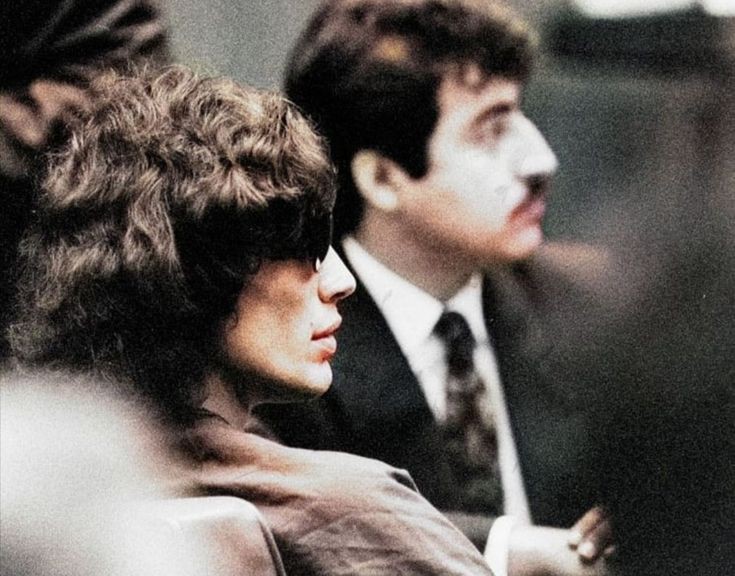
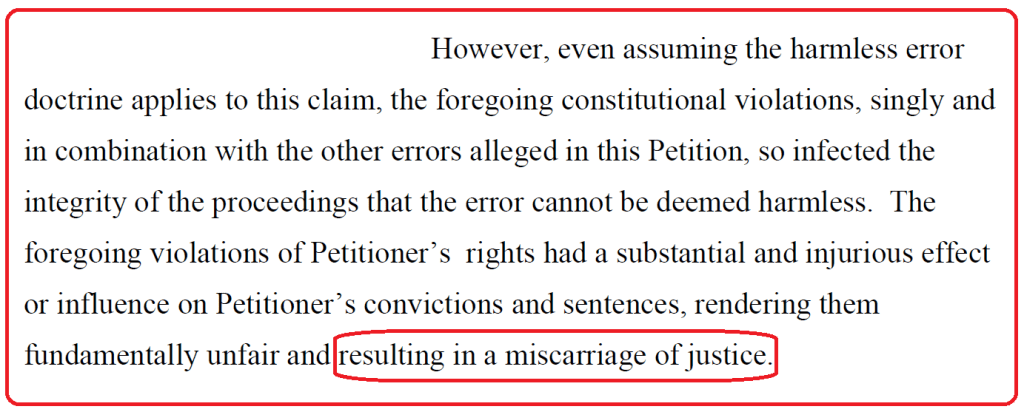
The purpose of this blog is not just to demonstrate how Richard Ramirez was wrongfully convicted of each individual crime, but also to reveal that he was a victim of multiple miscarriages of justice, due to repeated violations of his constitutional rights. Even if he was absolutely guilty of some of them, these arguments still stand.
Richard’s Habeas Corpus Petition was not only based on refuting the crimes themselves: his team of public defenders was filing 42 separate claims against his illegal incarceration, each constituting a miscarriage of justice in its own right.
This post will focus on Claim 23, that the trial court violated Richard’s constitutional rights by admitting inflammatory photographs. This means that unnecessarily disturbing images were shown to the jury, which essentially traumatises jurors into hating the defendant, making them more likely to find them guilty. It makes them partisan when they are supposed to begin from a neutral and open-minded standpoint.
The petition states,
“It has long been held to be an abuse of discretion for a trial court to admit explicit autopsy photographs or photographs of post-mortem examinations where the victim’s body is badly decomposed or disfigured.”
The prosecution introduced inflammatory images in fifteen unrelated incidents, both taken at the scene and during autopsy. The court accepted these images, deciding that they were relevant to the time and manner of death and that they were not “unduly gruesome” – however, this is untrue.
For Jennie Vincow’s murder, the issue was not how she was killed (her throat was slit), but the time of death. Images of the body were not probative – they did not assist the jury to ascertain the time of death – to do this, they only needed information on body temperature and lividity, gleaned from reading autopsy reports or listening to the testimonies of pathologists.
During their closing argument, the prosecution was allowed to urge the jury to consider the photograph of Vincow’s gaping throat wound as evidence of a “signature mark”, but this makes no sense – none of the other victims was murdered in the same way as Jennie Vincow. Richard Ramirez is the only serial killer in history whose modus operandi is ‘not having a modus operandi’. None of the Night Stalker attacks demonstrated any kind of pattern. The petition states that these photos should have been excluded under the Evidence Code § 352.
Images were shown of Dayle Okazaki’s body on the floor of her kitchen, as the prosecution attempted to speculate the motive of the killer, in comparison with other killings. However, this told the jury nothing, except that a woman was shot in the head. No motive could possibly be established from this, especially as no robbery took place. Other images of the home only served to have a cumulative effect on the jury – the more blood they saw, the more their opinions were influenced and prejudiced against Richard.
The petition cites other cases, for the purpose of contrast: in People v. Scheid, the crime scene photos bolstered the witness’ credibility, and in People v. Frank, the photos were highly relevant evidence. This was not necessary for Okazaki because the witness, Maria Hernandez, did not see Dayle Okazaki being shot. The nature of death was not being questioned.
For Tsai-Lian Yu, the jury was shown horrifying images of her with mechanical devices and intubation down her throat. Not only is it undignified for the victim, but it also does not tell jurors who killed her. The only purpose it served was upsetting them and prejudicing them against Richard, who – also unconstitutionally – was chained like a monster. Contrast this with People v. Taylor, where the jury was able to see the victim face down but close-ups were inadmissible.
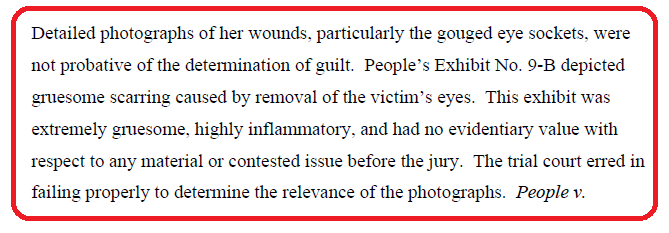
The Zazzara case was particularly chilling, with Maxine Zazzara’s eyes removed. However, the judge simply acknowledged them as “unpleasant” and admitted them anyway. The jury knew the nature of the murder and did not need to see graphic images but the prosecution’s excuse was to show ligature marks in comparison with those in other killings. Even the ligature mark images were unnecessary, as there was nothing unique about them to suggest a pattern.
Similar to the Yu case, William Doi’s autopsy images were also shown, again with a breathing apparatus in his mouth. A further image of Lillian Doi showing her facial bruising was admitted despite the fact that Richard was not charged with the murder of Lillian, who survived. This had a prejudicial effect on the jury and outweighed any probative value under Evidence Code § 352. Again, this is compared to People v. Frank.
Trial counsel, on Richard’s behalf, objected to Mary Cannon’s gory neck wound photos, but the court admitted not one, but two.
Two photos of Lela Kneiding’s mutilation wounds were also admitted, which were unnecessary, for her cause of death was not being questioned.
The Spillover Effect
The ‘Night Stalker’ attacks should have been divided into categories, not just to reduce the length of the trial, but also to prevent stronger evidence for more violent incidents influencing the jury to accept weaker evidence in less violent incidents. This will be discussed in a future post.
Compartmentalisation is particularly important in the Ramirez case as inflammatory photographs were used to link serious crimes with weaker evidence at other crime scenes. The prosecution created a ‘prejudicial spillover effect’ in which the jury was unable to group similar crimes together. This caused a violation of Richard’s right to a fair trial, to a fair and reliable determination of guilt, to have every element of the charge proven beyond reasonable doubt and to due process and fundamental fairness under the Fifth, Sixth, Eighth and Fourteenth Amendments.
The petition lists some cases in which death judgements had been reversed when found to be violating the rules relating to photographs:
Spears v. Mullin, 343, “Photographs so infected the sentencing proceeding with unfairness as to render the jury’s imposition of the death penalty a denial of due process.”
People v. Love, (1960) “[photographs] served primarily to inflame the passions of the jurors … and probative value was more than adequately conveyed by the doctor”
United States v. Sampson: “[photographs] excluded to protect the defendant’s due process right … to a fundamentally fair [penalty] trial”
Beck v. Alabama: “The trial court’s abuse of discretion in admitting this photograph also violated Petitioner’s right to due process and made his trial fundamentally unfair.”
The petition concludes: For these reasons, Petitioner’s death sentence must be reversed.
Inflammatory images alone were enough to warrant the overturning of Richard’s death sentence – this is without including the other 41 claims against his incarceration.
-VenningB-



 Expendable For A Cause.
You must be logged in to post a comment.