
“The world has been fed many lies about me..”
Richard Ramírez
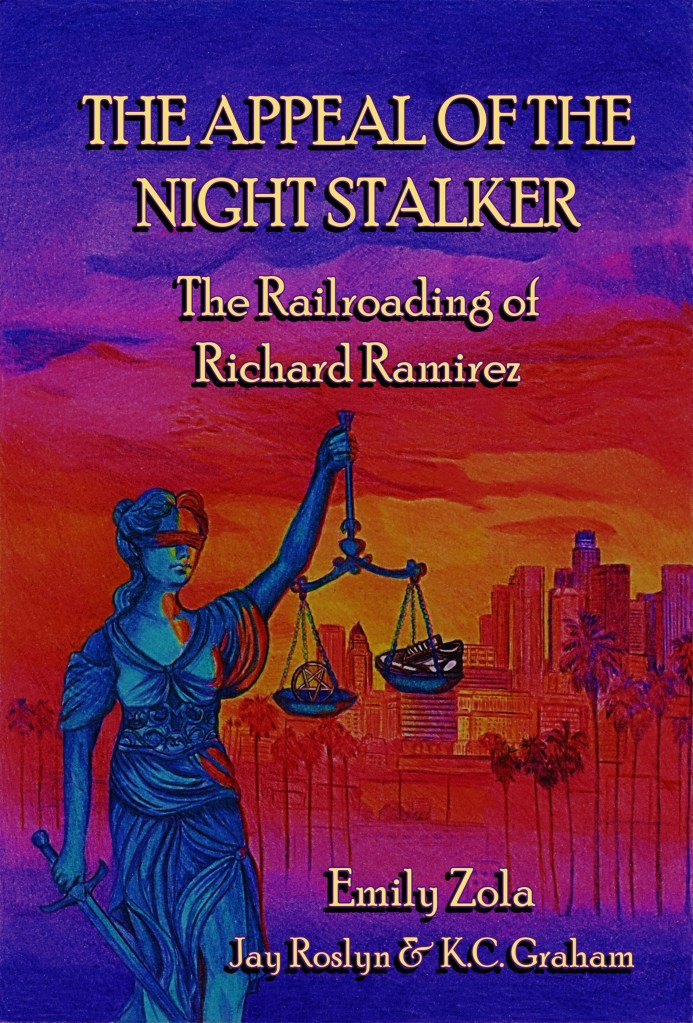
Now available, the book: The Appeal of the Night Stalker: The Railroading of Richard Ramirez.
Welcome to our blog.
This analysis examines the life and trial of Richard Ramirez, also known as The Night Stalker. Our research draws upon a wide range of materials, including evidentiary documentation, eyewitness accounts, crime reports, federal court petitions, expert testimony, medical records, psychiatric evaluations, and other relevant sources as deemed appropriate.
For the first time, this case has been thoroughly deconstructed and re-examined. With authorised access to the Los Angeles case files, our team incorporated these findings to present a comprehensive overview of the case.
The Writ of Habeas Corpus
The literal meaning of habeas corpus is “you should have the body”—that is, the judge or court should (and must) have any person who is being detained brought forward so that the legality of that person’s detention can be assessed. In United States law, habeas corpus ad subjiciendum (the full name of what habeas corpus typically refers to) is also called “the Great Writ,” and it is not about a person’s guilt or innocence, but about whether custody of that person is lawful under the U.S. Constitution. Common grounds for relief under habeas corpus—”relief” in this case being a release from custody—include a conviction based on illegally obtained or falsified evidence; a denial of effective assistance of counsel; or a conviction by a jury that was improperly selected and impanelled.
All of those things can be seen within this writ.
The Writ of Habeas Corpus is not a given right, unlike review on direct appeal, it is not automatic.
What happened was a violation of constitutional rights, under the 5th, 6th, 8th and 14th Amendments.
Demonised, sexualised and monetised.
After all, we are all expendable for a cause.
- ATROCIOUS ATTORNEYS (4)
- “THIS TRIAL IS A JOKE!” (8)
- CONSTITUTIONAL VIOLATIONS (9)
- DEATH ROW (3)
- DEFENCE DISASTER (7)
- INFORMANTS (6)
- IT'S RELEVANT (17)
- LOOSE ENDS (15)
- ORANGE COUNTY (3)
- POOR EVIDENCE (16)
- RICHARD'S BACKGROUND (7)
- SNARK (12)
- THE BOOK (4)
- THE LOS ANGELES CRIMES (22)
- THE PSYCH REPORTS (14)
- THE SAN FRANCISCO CRIMES (5)
- Uncategorized (5)
-
You, the Jury
Questioning
The word “occult” comes from the Latin “occultus”. Ironically, the trial of an infamous occultist and Satanist is the epitome of the meaning of the word itself: clandestine, secret; hidden.
We’ve written many words; a story needed to be told, and we created this place to enable us to do just that.
Here, in this space, we intended to present the defence omitted at Richard Ramirez’s trial in violation of his constitutional rights. Our investigations have taken us down roads we’d rather not travel along, but as we did so, we realised that there was so much hidden we could search for a lifetime and still not see the end of it. Once we’d started, there was no turning back; we followed wherever it led.This was never about proving innocence; that was never the intent or purpose. We wanted to begin a dialogue, allowing this information to be freely discussed and for us to verbalise the rarely asked questions. We asked, and we’re still asking.
We can’t tell you, the reader, what to think; you must come to your own conclusions, as we did.
And so
We’ve said what we came here to say; with 114 articles and supporting documents, we’ve said as much as we can at this point.
This blog will stand as a record of that, and although we will still be here, we intend to only update if we find new information, if we suddenly remember something we haven’t previously covered, or to “tidy up” existing articles and examine any new claims (or expose outrageous lies) that come to light. The site will be maintained, and we’ll be around to answer any comments or questions.
What Next?
We will focus on the book being worked on; we’ve also been invited to participate in a podcast. When we have dates for those, we’ll update you.
The defence rests? Somehow, I sincerely doubt that; ultimately, we’re all “expendable for a cause”.
~ J, V and K ~
-
One More Time..
*some images are best viewed on a desktop, due to size*
“I don’t need to hear all of society’s rationalisations. I’ve heard them before, and the fact remains that what is, is.”
Richard Ramirez
Why?
We did not wake up one morning and decide to start writing about this case, it was a slow realisation that, after months of reading, researching, trawling through news archives, and asking questions, there was something dreadfully wrong with the “Night Stalker trial”. The books, the ridiculous documentaries, the endless podcasts, they wallow around in blood, embellishments, and inaccuracies, and they all have one thing in common – apart from seemingly revelling in the gore, and not caring about facts. No one seems to want to acknowledge the obvious; the trial was unfair.
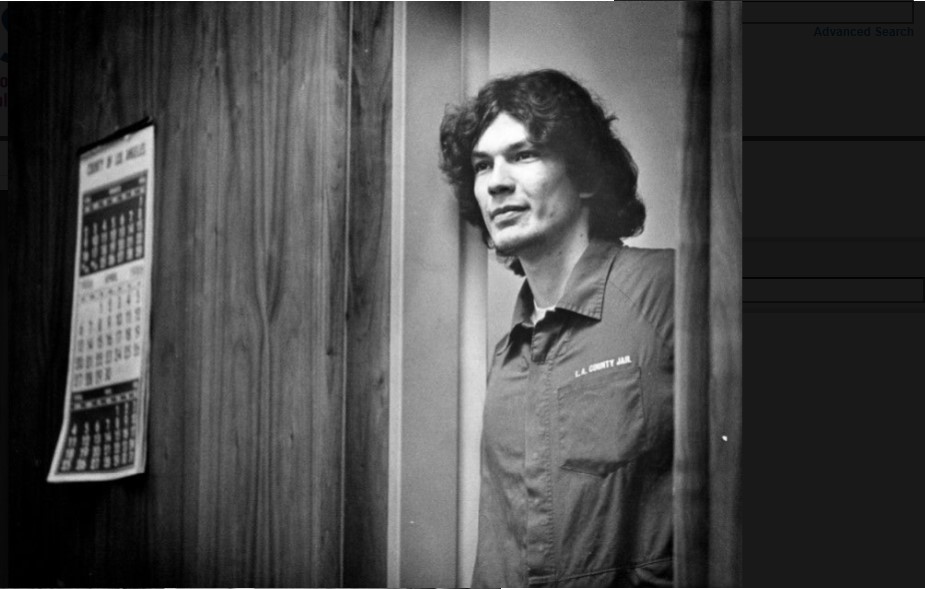
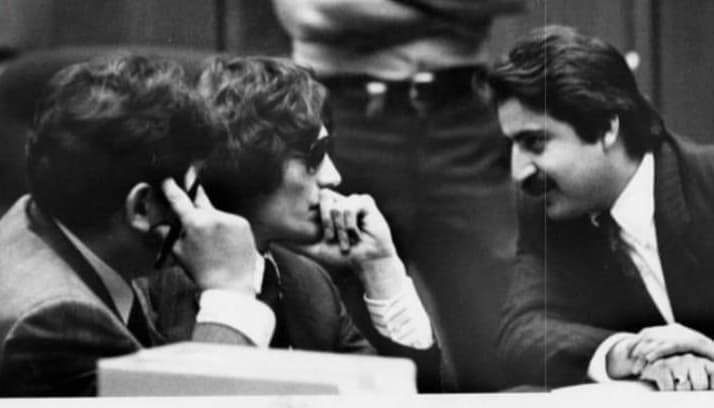
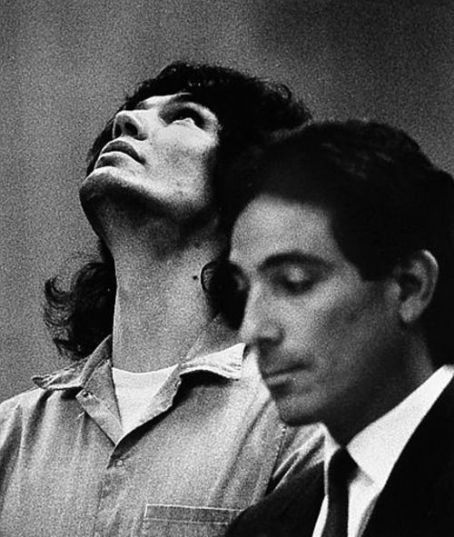
Photo from the Herald Examiner Collection, dated September 20th 1989. Credit: Mike Mullen
There are two sides in every argument, two sides in every case — the prosecution and the defence. Pretty obvious, right?
The biggest, most infamous, media-soaked trial of the 1980s was a joke. A bad one, and no one is laughing.
What’s the point, he’s dead!
As if we didn’t know, but seeing as Richard was filing status updates two weeks before he died and had scheduled a meeting with lawyers for August 2013, it evidently mattered to him.
I will repeat this one more time, although it has been explained on the home page. The Federal Petition of the Writ of Habeas Corpus is not about guilt or innocence. That is not their purpose. Neither are they automatic, unlike review on direct appeal. Their purpose is to investigate whether a person’s incarceration is lawful under the US Constitution.
The most common ground for relief (release from custody, in the case of habeas corpus) being whether a conviction was based on:
- Illegally obtained or falsified evidence. Below is one such example.
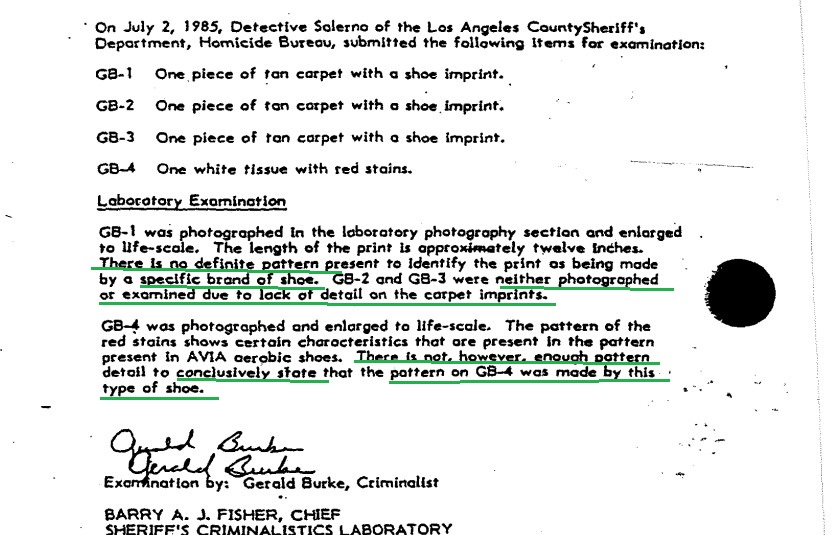
Crime lab report from Gerald Burke, expert witness for the prosecution. He says quite plainly that he cannot identify the shoeprints found at the Cannon incident, neither on the carpet or the tissue. Yet in court, he stood up and did just that, wrongly. He lied, and it went unchallenged as the defence did not retain an expert witness. In effect, they conceded.

Declaration of Lisa DiMeo, forensic specialist, retained by Richard’s lawyers for the habeas corpus writ. Doc 7-20
Ms DiMeo explains how the prosecution tricked the jury into believing there were discernible shoeprint impressions, underneath a transparent overlay of an Avia sole, attached to a photograph on the in-court display.

- Denial of effective assistance of counsel, which we have covered on more than one occasion.
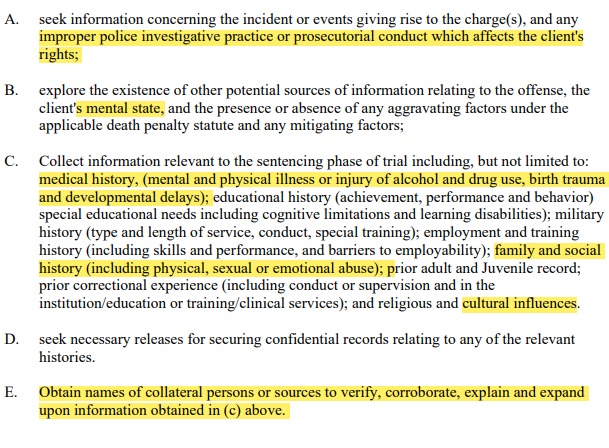
California Law Association rules. Not applicable in the Ramirez case?
“When the courts are not likely to provide proper enforcement of the rules sua sponte, attorneys must seek to enforce the rules else their clients will die.
Californian Law Association.
- Conviction by a jury improperly selected and impanelled.

Declaration of alternate juror, Bonita Smith.

Declaration of juror James Muldrow
That is a just two juror declarations; there are more. Regular readers will know that we have provided examples of court violations throughout this site.
“You’re not the FBI!”
Yes, we know; we’ve never made that claim.
Every defendant brought to trial is supposed to have an effective assistance of counsel, that is (funnily enough) how it works. Or how it’s meant to. Defence counsel are duty bound to investigate and develop strategy to fight prosecution charges. For Richard Ramírez none of this happened he had no defence to speak of, leaving him virtually undefended in a trial that culminated in him receiving nineteen death sentences.
A proper defence team would have been able to show how flawed and inaccurate the evidence against him was, and how weak. A conflicted defence team ignored his mental impairments, as it devalued his marketability, and the trial court, fully aware of this, did nothing to stop it.
In this blog, we have merely presented and laid out the defence as developed by his habeas lawyers, the defence he should have been given in 85-89, but because he was poor, and his lawyers at trial, hopeless, inexperienced, and downright rubbish; a defence he never received. Later, some of the jurors and alternates made statements in which they, too, questioned the fairness, and lack of defence. That in itself, is shocking, especially as they returned the “guilty” verdict knowing this.
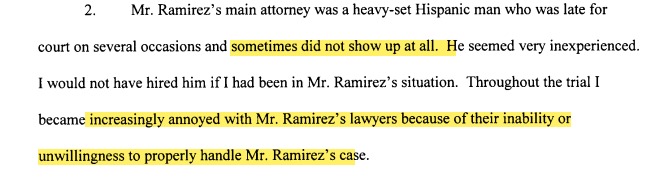
Juror Janice McDowell
Richard’s case is a famous one, but this miscarriage of justice is not limited to only him. Carlos DeLuna, another Hispanic man, poor, with a shoddy defence team, was horrifically executed for a crime he did not commit. One glance at the Innocence Project tells us that this is happening all too often. Law enforcement, the courts, do this all the time, through coercion and false evidence. The system is broken.
In the trial of Richard Ramirez, bizarrely, the onus was never on the prosecution to prove guilt, the media had already done its work, and the denial of a change of venue, coupled with a non-sequestered jury, resulted in the problematic reality of a case where the defence had to prove his innocence, which they catastrophically failed to do, through their own incompetence. These are themes that we return to time and again, and remain at the heart of this blog.
- Unqualified, incompetent defence
- False and misleading evidence
- Failure to investigate mental competency
- Failure to challenge evidence
- Denial of venue change
- Denial of motion to sever charges
- Media influence
- Non sequestered jury
- Unreliable eyewitness testimonies
- Failure to defend charges
- Hiding of possible exculpatory evidence
For some, Richard Ramirez and this trial, have provided (and continue to do so) a meal ticket, fame, and a never-ending round of media appearances.
When weighing up evidence, there is a choice.
“The State, in its zeal to convict the petitioner, presented evidence that was false and unreliable”
Writ of Habeas CorpusYou decide what you believe.
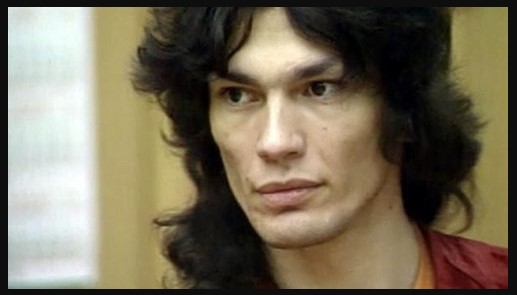
(Originally written and published 27th February 2023)
~ Jay ~
-
Richie
This article explores how Richard Ramirez’s extensive history of head trauma and a mismanaged seizure disorder likely shaped his neurological and psychological development, influencing his behavior long before he was labeled the “Night Stalker.”
On February 29, 1960, at 2:07 a.m., at Providence Memorial Hospital in El Paso, Texas, a dark-haired, dark-eyed baby boy entered the world at a healthy 9 pounds, 6 ounces. Ricardo Munoz, as he would be called, was the fifth and youngest child of Julian and Mercedes Ramirez.
Below is a medical chart detailing his health after birth.

* Ramirez was reportedly born on the 29th of February; however, all legal documents give his date of birth as February 28th. Richard Ramirez, affectionately known to his family as Richie, grew up in a close-knit bilingual home and was doted upon by his big sister, Rosa. By all reports, he was a happy, healthy baby and toddler.
“Richard was a happy and healthy child. He loved music and animals. He was sweet natured.”
– Declaration of his mother, Mercedes Ramirez, document 20.5.
He loved music and dancing, so much so that at the age of two, he climbed on a dresser to reach a radio, and the dresser fell on top of him, causing a large cut to his head and a concussion. This would be the first of several head injuries Richard would sustain as a child and an adolescent.
Timeline of head injuries
- When he was five, Ramirez was at a local park and walked in front of a swing, was hit, and knocked unconscious.
- At the age of ten, he suffered a blow to the head while playing in a football game and concussed.
- Age 14: Richard fell from a moving train and was knocked unconscious; The fall exacerbated the ongoing headaches he was already experiencing.
- Age 18: Richard was thrown from a horse and admitted to the hospital for broken ribs, a fractured wrist, and a head injury.
- Age 19: Richard got into a fight while employed at the Holiday Inn. He received severe injuries to his face and head and his eyes were swollen shut.
- Age 25: On the day he was arrested, Ramirez was repeatedly beat over the head with a metal pipe causing more trauma and necessitating multiple stitches to his head.
It’s quite clear from his history he suffered several brain injuries, all during a time in which the human brain undergoes significant development. As a direct result, Ramirez started having seizures at the age of ten. The seizures would have a direct impact on his functioning.
Below is his school report showing good grades.

Below: Richard Ramirez’s certificate showing excellent attendance. He would later become a truant.

“Richard was something of a loner from the time he was a little boy. He was more likely to play alone than to play with other children. Richard was a very quiet boy and never a trouble maker in his early years. He was more likely to tell on his brothers and sister than to get into any trouble.”
– Declaration of Mercedes Ramirez, document 20.5.
Epilepsy Diagnosis
Many years later, after his arrest as the alleged Night Stalker, Richard was examined by multiple specialists that determined he suffered from a seizure disorder specifically known as temporal lobe epilepsy. This seizure disorder contributed to many of the symptoms Richard experienced since he was a child and a teenager, such as headaches, insomnia, and depression.
“Beginning at age ten, close in time after he sustained a concussion playing football, Petitioner [Ramirez] began to suffer epileptic seizures. He suffered at least three convulsive epileptic seizures at school … and numerous other epileptic seizures outside of school. Petitioner was twice hospitalized at Hospital Hotel Dieu following seizures: once in 1970, at age 10, and once in 1972, at age 12.
In 1972, doctors diagnosed him with epilepsy and prescribed Phenobarbital to control the seizures. EEGs administered at the time revealed abnormal results, which confirmed a diagnosis of epilepsy or seizure disorder.
Petitioner suffered at least serious convulsive epileptic seizures and continued to experience such seizures until he was seventeen years old.”– Declaration of Marilyn Cornell, exhibit 103.
He also suffered from absence seizures from the age of ten.
“From the age of ten on, he experienced partial or absence epileptic seizures – characterized by brief periods of staring into space, unaware of his surroundings – multiple times a day.”
– Declaration of Marilyn Cornell, exhibit 103.
The Phenobarbital Ramirez was prescribed had several adverse effects, such as nausea, vomiting, confusion, dizziness, irritability, depression, severe drowsiness, and sedation. He took the drug for approximately 18 months.
In the 1970s, there weren’t as many treatment options for seizure disorders as there are today. Still, there were others with fewer adverse effects, so we aren’t sure why phenobarbital was selected. Phenobarbital is no longer used as a first-line seizure treatment because of its adverse effects.

The phenobarbital caused Ramirez to have difficulty staying awake at school, affected his ability to complete schoolwork and prevented him from playing football. Around the age of 13, he stopped taking medication because of the side effects and began to experiment with drugs, specifically marijuana. His drug usage started as a means to self-medicate symptoms of the seizure disorder. Ramirez would later say marijuana helped alleviate the headaches and insomnia he experienced.
Before the onset of seizures, Ramirez had been a good student and did not get in trouble at home or school. He had a good attendance record and received good grades. It was after the seizure disorder began that he began to struggle both in school and at home. With the onset of seizures began a constellation of symptoms that Ramirez would suffer with for the rest of his life.
Brief overview of temporal lobe epilepsy (TLE)
To understand the full implications of Ramirez’s neurological symptoms, it’s important to examine the nature of his diagnosis.
During both normal awake and sleep states, our brain cells produce electrical activity. If the electrical activity in many brain cells becomes unsynchronized, a seizure can occur. If this happens in one area of the brain, it’s called a “focal seizure.” A temporal lobe seizure is a “focal seizure” that originates in the temporal lobe area of the brain. There are many causes of temporal lobe seizures and one of those causes is traumatic brain injuries. Temporal lobe epilepsy can cause many neurological and psychological complications, including behavioral changes.
Ramirez’s sister described his behavior as follows:
“After the seizures began, I noticed changes in Richie’s eating and sleeping habits. Richie stopped sleeping at nights. Instead, he stayed up all night. He began drinking Coke and eating candy and cookies obsessively. If he could not find Coke or candy in the house, he would go out on his bike to the store, even late at night, to get some. He no longer seemed to care about school. Around this time, his grades began to drop, and I often saw him smoke marijuana. Richie told me that he smoked marijuana to get rid of his headaches and that it helped him sleep because otherwise he couldn’t sleep.”
– Declaration of Rosa Ramirez, document 20.5.
Symptoms of TLE
- Anxiety
- Depression
- Memory impairments
- Vivid hallucinations
- Hyper-religiosity
- Blank stare or “staring into space.”
- Compulsions
- Headaches
- Insomnia
- Paranoia
- Fetishes
After Ramirez started having seizures, he experienced every one of these symptoms at some point in his life. Several of the problems he experienced were directly or indirectly a result of the untreated/improperly treated seizure disorder he experienced. The seizures not only caused physical ailments, like headaches and insomnia, but they also caused many other issues, such as depression, anxiety, paranoia, and delusional thinking. As a result, Ramirez began using drugs for relief. In other words, he “self-medicated.”
After moving to California at 19, Ramirez began using cocaine. Cocaine is highly addictive and causes stimulation of the central nervous system. As such, it will cause the user to experience an elevated mood. Given his history of depression (this will be discussed in a future article), it makes sense that this would become the drug he abused the most throughout his life. He was attempting to alleviate the depression symptoms through the use of cocaine and became addicted.
This is not to make excuses for Ramirez’s drug use but merely an attempt to show that he began using drugs to treat physical and emotional pain (this will also be addressed in future articles).
“Rarely do we find people who willingly engage in hard, solid thinking. There is an almost universal quest for easy answers and half-baked solutions. Nothing pains some people more than having to think.”
– Dr. Martin Luther King, Jr.
“Not all addictions are rooted in abuse or trauma, but I do believe they can all be traced to painful experiences. A hurt is at the center of all addictive behaviors.”
– from In The Realm of Hungry Ghosts by Gabor Mate.
Kaycee
-
Night Stalker: The Mysteries Surrounding Bell and Lang
By Venning
In this article, we examine the tragic attack on Mabel “Ma” Bell and Florence Nettie Lang – two elderly sisters brutally assaulted in their Monrovia home in late May 1985. Although Richard Ramirez was later sentenced to death for the crime, a closer look reveals serious evidentiary gaps, weak forensics, and questionable timelines that cast doubt on his guilt. Most of our information comes from Ramirez’s 2008 Federal Habeas Corpus petition and its supporting documents.
In birth and death records, Florence’s name is given as “Florence Nettie Lange” – Lang seems to be a mispelling. Because her name is given as Lang in all appeals documents, the media and books, we stick to “Lang” to avoid confusion.
83-year-old Mabel “Ma” Bell and her disabled sister Florence Nettie Lang, 79, were discovered comatose in their Monrovia bungalow on 1st June 1985. It is likely that their attack occurred in the early hours of 30th May, due to dated evidence at the scene: a TV guide had been turned to a page showing late night on 29th, to noon on 30th and Mabel Bell’s diary had been filled in for the 29th. The emergency room doctor, Michael Agron MD believed the injuries were two days old, when observing the sisters on 1st June (Habeas Corpus pg.63). During the trial, Sergeant John Yarbrough testified that the sisters’ clock was stopped on 30th May at 05:29 (Philip Carlo pg. 373).
The sisters were discovered by Charles Valenzuela, their gardener. Two newspapers were left in their driveway, perhaps from 30th and 31st May (the Petition does not say). Mabel Bell was lying on the floor, comatose, with a table on top of her chest, her head severely beaten to the point that brain tissue protruded. She had lacerations and a blistered burn mark below her right breast, thought to be an electrocution injury. A pentagram had been drawn on her leg.
Florence Lang was unresponsive on her bed, and like her sister, in a coma. Her hands had been tied behind her back with electrical cord and her ankles were bound with electrical tape. A pentagram was drawn on the wall above her bed. She too had sustained head injuries and ligature marks. It appeared that she had been sexually assaulted with an object, possibly with a hammer that was used to beat them.
Physical Evidence
- Rape kit taken.
- A bloody hammer on the dressing table.
- Electrical tape on the victims.
- Severed wires used as ligatures.
- Hair on the electrical tape and hammer.
- A partially eaten banana.
- A Mountain Dew can covered in hand prints.
- Fabric marks and a partial shoe print on a clock.
- Palm prints.
- A pentagram on the wall and leg of Mabel Bell.
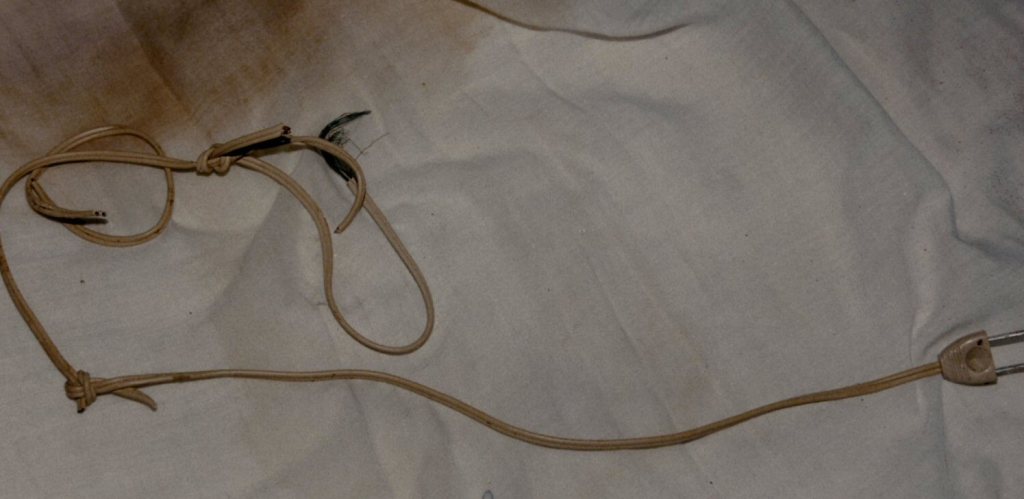
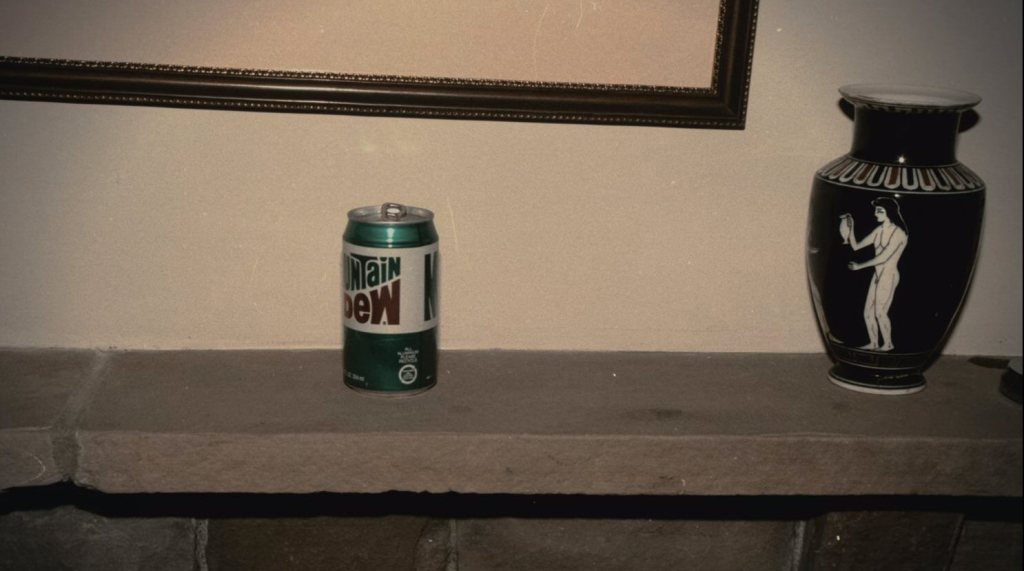

Was There Proof it was Richard Ramirez?
The rape kit yielded no semen or identifiable forensic evidence (at this time, PGM markers were usually examined because this was pre-DNA). The injuries suggested a sexual assault with an object, rather than penile rape.
There were no fingerprints on the hammer that could tie it to Ramirez. There is no way of knowing who ate half a banana and the prints on the Mountain Dew can turned out to be glove prints, which were not admissible. No saliva tests were taken from the can. Other palm prints were not thought to have come from Ramirez.
The hair on the hammer and the electrical tape around Florence Lang’s legs did not appear to have been Ramirez’s, nor were the pubic hairs in the bed. Some head hairs were either blonde or light brown according to the forensic investigator, Melvin Kong. These seemed to match hairs at other crime scenes but for some reason they were not compared with each other, and only with Ramirez’s hair:
“Under cross-examination, [sheriff’s criminalist Melvin] Kong said blond hairs found at three or four crime scenes were not tested for similarities.”
– Daily Breeze, March 1986.

The Assumption of Avias
Gerald Burke, the prosecution’s expert witness from the Los Angeles County Sheriff’s Department Crime Lab, initially said the partial print was different from the Avia prints at the Zazzara crime scene. Burke changed his mind two months later (in early July) and decided that it was made by an Avia.

The concentric circles on the clock Ramirez’s defence attorneys made no effort to challenge the prosecution’s shoe evidence. In 2004, for the Federal Habeas Corpus, Ramirez’s appellate lawyers retained shoe forensics expert Lisa DiMeo.
“The concentric circle pattern on an electric clock was consistent with the unique circle pattern found on the sole of an Avia shoe. Burke was unable to determine the model or size. In his early analysis, Burke found dissimilarities in the sole patterns of shoe impressions found at the Zazzara and Bell and Lang scenes but later changed his mind after obtaining flat outsoles from Avia.”
– Declaration of Lisa DiMeo, Document 7.19
In her second declaration, DiMeo said the concentric circles lacked sufficient detail to conclude they were made by a specific model of Avia.
“Based on the lack of sufficient detail, it was not possible to eliminate any Avia athletic shoe model, size or style, or any manufactured sole that exhibited a similar concentric circle pattern as the source of the impression.”
– Supplementary Declaration of Lisa DiMeo, Document 7.20.
This is important, because the prosecution’s argument was that shoe prints at seven crime scenes were made by a black Aerobics model 445B, which was incredibly rare. To this day, lead detectives refer to them as “unique” as well as newly invented. In fact, there are many variations of this sole design and they had been in circulation since 1981. Moreover, DiMeo revealed that:
“Mr Burke testified to finding 19 different manufacturer’s shoes that exhibit concentric circles in the ball of the foot area.”
– Supplementary Declaration of Lisa DiMeo, Document 7.20.
If the Avia sole design was not as rare as the prosecution claimed, and shared attributes with 19 different brands of sneaker, then the pool of potential culprits increases to tens of thousands. Furthermore, other lines of Avia shoes also share a concentric circle design, for example those featured in this post, about a break-in at a police officer’s house during the murder spree. DiMeo rules the Bell and Lang shoeprint inconclusive, and she emphasised that there was no scientific connection between Richard Ramirez and shoeprints at murder scenes.
Why Was Ramirez Suspected of the Bell and Lang Incident?
Ramirez had become a suspect early on, simply because he had a propensity to draw pentagrams. After being stopped by traffic police for running a stop sign on 15th June, Ramirez drew the symbol in dirt on a car, before escaping on foot. Thinking this suspicious – the car was stolen – the police officer impounded the vehicle and the Los Angeles County Sheriff’s Department asked the Los Angeles Police Department to hold it for prints, which melted away in the sun before the LASD could examine them. Ramirez left his dental appointment card inside, so the police were able to trace his alias Richard Mena to a dentist, who provided them with a description.
Although Ramirez’s appearance did not match witness or survivor descriptions (see posts on Okazaki, Yu and Doi), the police decided – based on the pentagram – that Richard ‘Mena’ was a person of interest. Just one victim (Khovananth, 20th July) would come close to describing ‘Richard Mena’ and the police felt this was enough, but that is another story.
Why Was Ramirez Convicted if the Evidence Was So Weak?
Simply put, his defence attorneys were inept and failed to argue against most of the prosecutor’s evidence. They were unable to secure funding because they were not sufficiently qualified under California law to take on a case of such magnitude. They were hoping to be paid by a movie and book deal that never materialised and ended up essentially working pro bono for most of the proceedings. They did not question the hairs found on the electrical tape that did not match Ramirez.
For Bell and Lang, the alibi the attorneys had developed for Ramirez collapsed. They argued that Ramirez was in El Paso when the crime took place, but he was proven to have attended the dentist on 30th May – the same day of the attack. This same alibi had been used for the Kyle Incident so had already failed – yet they brought it back for this case hoping for a different result.
Stolen Property:
A stereo/cassette player belonging to Mabel Bell and Florence Lang was recovered from an associate of Ramirez, a ‘fence,’ Felipe Solano. There is more to this story than meets the eye – in fact, the Solano angle is often omitted from documentaries. In court, Felipe Solano’s testimony unravelled, when it was revealed he was protecting multiple criminals – one of these could have committed some of the Night Stalker crimes, but the police and prosecution did not investigate this. There are so many questions that need answering in regard to Felipe Solano and the network of burglars.
According to Philip Carlo’s biography, a burglar associate of Ramirez, Sandra Hotchkiss, claimed that Solano was beaten up by police before being questioned about his connection to Ramirez (Carlo, pg. 370). She tried to tell the District Attorney and claimed this beating was recorded on tape but the tape was never presented as evidence and the police denied the beating.
Ultimately, the chain of custody of the stolen items was never established, none was recovered from Richard Ramirez and his fingerprints were not found on any of them.
Documentary Inaccuracies:
The Netflix documentary claims the stereo was recovered from Jesse Perez, but the 2008 appeal and a press report from the preliminary hearing claim Solano had it (habeas corpus pg. 436). Law enforcement and the prosecution were all aware of Solano and Perez’s illegal activities – as well as other burglar associates, but only pressed ahead for Ramirez’s conviction.
So, we are left with the unproven – and inconclusive – Avia print, the circumstantial evidence that Ramirez liked to draw pentagrams, and testimony from criminals – one of whom was impeached (Solano). This means there was reasonable doubt as to Richard Ramirez’s guilt. Because the cases were not separated into different trials per their crime category, it had a cumulative effect on the jury – plus the prosecution argued in bad faith that there were patterns between the crime scenes, despite police arguing that Ramirez had no modus operandi.
Illogical Logistics
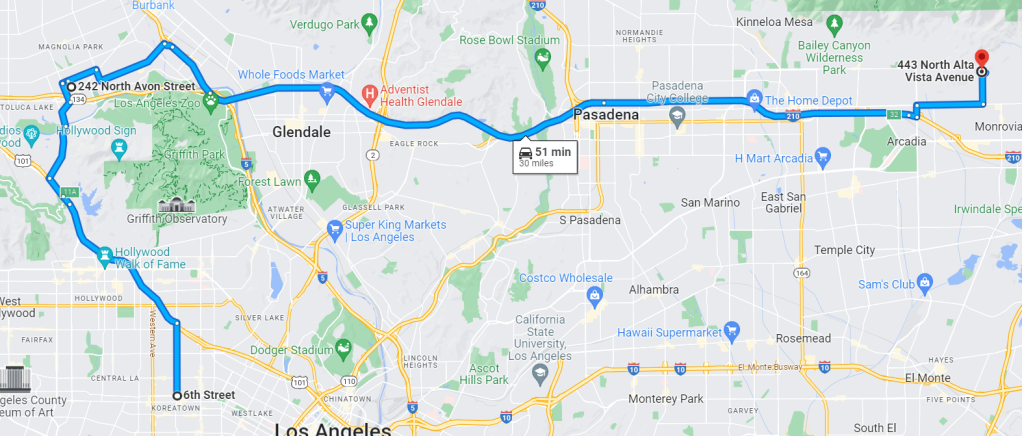
As mentioned, Ramirez was confirmed to have visited the dentist on 30th May 1985 and was reportedly seen in El Paso the day before by his father and a family friend. If those accounts are accurate, he would have had to travel nearly 800 miles by coach overnight to reach Los Angeles in time for both the Kyle and Bell/Lang attacks – a highly demanding timeline.
The ‘Night Stalker’ would’ve needed to travel about 13 miles from the 6th Street bus station in Downtown Los Angeles to Burbank for the Kyle attack, which began around 4am and lasted approximately two hours. From there, he would have had to drive another 22 miles east to the Bell and Lang residence in the foothills – a 20-25 minute trip. But as discussed in the Kyle article, the suspect seemed disoriented and unfamiliar with the area, needing directions to the freeway.
Bell and Lang’s clock stopped at 05:29 when the power was cut, placing both attacks within the same tight window – just 22 miles and possibly minutes apart. They could not have been committed by the same person unless one believes Ramirez was in two places at once. Tragically, the defence never raised this point.
Mikity Mystery
Something confusing was happening at the property on the day before the attack: a Monrovia fire inspector, Steven Mikity, went to the house on the morning of 29th May, to tell the residents to remove brush from their property. Nobody answered. The garage and kitchen door were closed. Mikity drove past the property at 5pm and noticed that the kitchen door and garage were now open. Looking into the garage, he saw an old, faded car with what looked like a TV in the trunk. This was unusual, as he went past the house every day and had never seen the garage open. However, he drove on, without knocking at the house.
The Petition states that Mikity returned two days later, making it 31st May. He claimed that paramedics were in attendance. He is likely mistaken – the sisters were discovered on 1st June. Mikity testified that the day after he saw the paramedics, he returned with police, who showed him the faded car in the garage. Now the trunk was closed. So, who was in the house removing a TV the day before the sisters were violently attacked?
The Bell and Lang case exemplifies how weak forensic evidence, false joinders between crimes, and poor defense counsel can result in a conviction built more on assumption than proof. With inconclusive shoeprint evidence, no cross-testing of hairs and physical impossibilities in the timeline, the Bell and Lang attack remains a case that demands renewed scrutiny.
One mystery solved: The Social Security Death Index suggests that Florence died on 7th August 1985. However, she was still alive throughout the trial. Thanks to Michael in the comments, we now know that Florence died in 1999 and it was a simple error on Ancestry. Thanks for the new information, we really appreciate it.
Originally published on 29th January 2023. Updated on 15th May 2025.
-
The Kyle Incident: Truth Decay
*This post contains details of rape and sexual assault, which some may find upsetting*
Carol Kyle was raped, sexually assaulted, and robbed at gunpoint, by a man she described as a male Mexican, mid to late 20s between 5ft10 and 6ft, having medium length, black wavy hair, around 175 pounds, with a slight Spanish accent. That initial description certainly fits with Richard Ramirez, doesn’t it? Until she gets to the teeth.
They were straight and white.
May/June 1985
From the 21st to 30th May Richard Ramirez was a very busy man, with dental appointments, travel to El Paso and back, after attending the first communion of his niece, and the brutal attack of two elderly sisters.
The horrific crime inflicted on Mabel Bell and Florence Lang is believed to have been carried out either late on 29th May or in the early hours of 30th, after which, he moved on to Carol Kyle’s house.
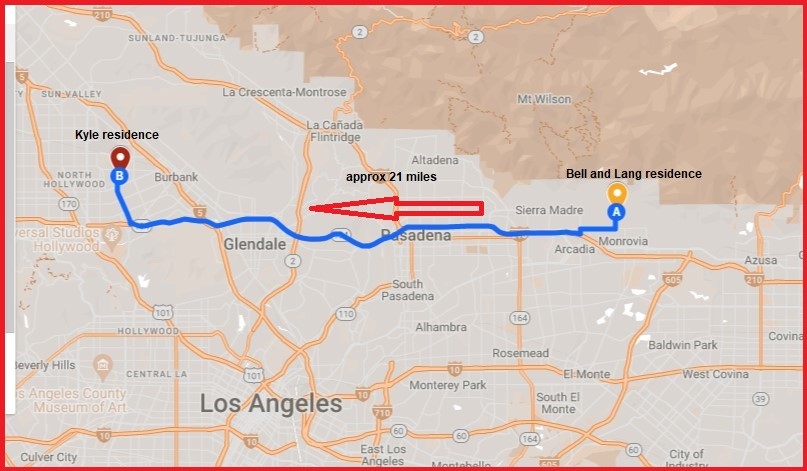
From Monrovia to Burbank, possible route taken.
One more double incident, a considerable distance apart, with twenty one miles between Carol Kyle’s house and the home of Mabel Bell and Florence Lang, fifteen miles between the Kneidings and the Khovananths, and no cross-contamination in either instance. The man who was having trouble taking care of his teeth, and who seemed to be mostly living in cars, was able to forensically scrub himself down and switch weapons, leaving not a trace of himself anywhere.
The Teeth Don’t Lie – or Do They?
If there is one thing, apart from the Night Stalker crimes, that Richard is known for, it is his teeth. They were not straight or white, a point law enforcement were at great lengths to emphasise and make known. Even going so far as inspecting them, like a horse, and getting casts made after his arrest. It is interesting to note that the Netflix documentary skirts over what happened to Ms Kyle, possibly after making such a big thing about his teeth, it would draw attention to this rather large discrepancy.

Photograph snipe dated October 4th,1989 reads, “Richard Ramirez during the reading of his sentencing which was death on all counts.” The image ran in the newspaper on October 5th, 1989. Photo credit: Herald Examiner Collection, by Akili-Casundria Ramsess
What Happened?
On the 30th May 1985, at approx. 4am, Carol Kyle was woken in her Burbank home by a torch being shone in her face, and a small, dark, steel handgun pointed at her head. A man said “Get up. Don’t make any noise!”
The man told Kyle to move to the living room. She indicated that her son was in the house. They went to her son’s bedroom; the man turned on the light, waking up her son. He told both not to look at him, as he left the room and started ransacking the hall cupboard. Kyle was then handcuffed with her son, as the attacker shoved them both into the now emptied cupboard. The man demanded money, jewellery, and a VCR. ( Taken from the Writ of Habeas Corpus, page 66)
When he appeared again, he was holding a different gun that was shiny. This is the first deviation from the original crime report, where there is no mention of a second gun.
He told them to move into her son’s room, where he made them sit on the floor. He then covered them both with a sheet, telling them not to look at him, else he would “gouge their eyes out”. The man removed the handcuffs from Ms Kyle, and after putting her son back into the cupboard, took her to her bedroom. (There are slight discrepancies between the court documents and the police crime report as to when the handcuffs were first used)

Crime report of Ms Kyle – document 20-3 (image is best viewed on a desktop)
The Assault of Carol Kyle
*this section details the rape and assault, which some may find upsetting*
The man tied Ms Kyle’s hands behind her back with pantyhose. He pushed her onto the bed, covered her head with a pillow, and screamed at her. He pounded on her back with his fist. Twice, he left the room and came back.
When the man returned for the second time, he removed the pillow and told her to lie down on her back on the bed. Her hands were still tied behind her back. The man ripped open the front of Kyle’s nightgown and removed her underpants. Kyle told the man she was having her period and had an infection. The man threatened to kill her. He took off his jacket, unzipped his pants, and started kissing her. The man got on top of her. He put his penis in her vagina. After a few minutes, he turned her over and put his penis in her anus; he ejaculated in her anus. (From the Writ of Habeas Corpus, outlining the prosecution’s case, page 66)
During this whole ordeal, Ms Kyle stated that her attacker did not put down the gun, the dark steel one, not the shiny one. It is unclear which gun she actually saw. No weapons used in any Night Stalker crimes were ever discovered in Richard’s possession.
After this, Ms Kyle spoke to her attacker for about fifteen to twenty minutes, in a very calm way, to her credit, as she must have been terrified and in pain.
The writ goes on to say:
“The man brought Kyle a robe because she was cold. He untied the pantyhose on her left wrist and later removed it altogether. He tried to tie her ankles with a telephone cord. The man said to her, “I don’t know why I’m letting you live. I’ve killed people before.” He told Kyle to tell police he wore a mask. He then brought Kyle’s son to her bedroom and handcuffed them to the bed. The man left handcuff keys on the mantle and told Kyle to make sure her daughter found them. In Kyle’s opinion, the man seemed confused, asking the name of the town and directions to the freeway. When the man left, Kyle thought his car sounded like a big, older car. Kyle’s son called 911; the police arrived within a few minutes after the call.” (Writ of Habeas Corpus, page 66)
Again, there are slight difference between the two documents, which probably occurs after subsequent interviews.
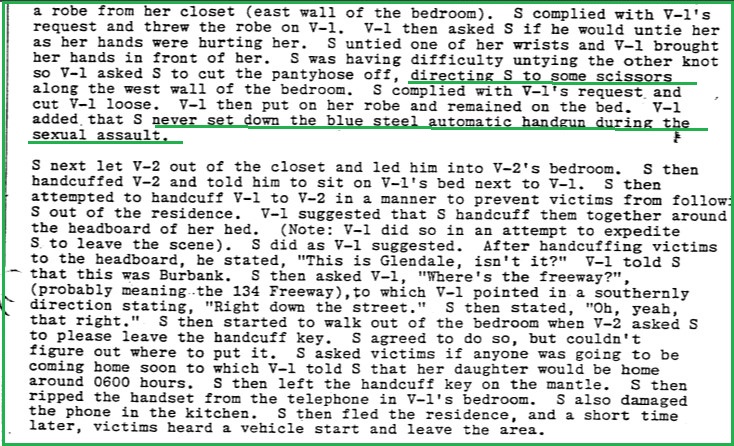
From the crime report taken by Burbank police. document 20-3 (image best viewed on a desktop)
Physical Evidence
Burbank Police Officer Ronald Cervenka was called to Kyle’s home about 6:25 a.m. on May 30th, 1985. He found the front door locked, but the back door by the kitchen was ajar. There was no sign of forced entry, and it appeared that entry was gained through the kitchen door, by reaching upwards through the dog door. The house was ransacked. Ms Kyle and her son were still handcuffed. Officer Cervenka removed the cuffs with the key on the mantle and noted the handcuffs were larger than those used by police. He later took her to St. Joseph Medical Centre, where she was checked and a rape kit used.
We never hear about the results of the rape kit test, whereby, it must be assumed, that there was no match to Richard, otherwise they would have used it in court, and they did not.
Evidence technician Robert Cestaro collected handcuffs, keys, and women’s clothing from the bedroom in Ms Kyle’s home. Cestaro also dusted for latent fingerprints. None were found.
What she doesn’t mention is her attacker being covered in blood. Why would this matter? Because Ramirez was also accused (and later convicted) of the brutal attack on Mabel Bell and Florence Lang, before his arrival at her home, that same morning. The attack was bloody, he would have to have been spattered, his clothes, hair. Yet there is no mention of this, no transfer of blood from one crime scene to another. No serological evidence that Richard was at either location.
Eyewitness Identification
This is what she said:
“Kyle identified Petitioner [Ramirez] at trial as her assailant on May 30, 1985. His dress and hair were different than on [that date]. Kyle initially described the assailant as approximately 6 feet tall [she actually said 5’10” up to 6 feet], wearing a black leather jacket, black slacks, and black gloves. She told police that the assailant wore bangs, but had no facial hair. She said his hair was parted on the left across his face and appeared to be shiny and wavy. She said at first, she did not see the man’s face except from the side. Later, in her bedroom, she noticed his teeth were straight and white. He was very thin with prominent cheek bones. Kyle noticed his smile because he laughed several times when he spoke to her.”
– Habeas Corpus pg. 67.
The forensic dentist saw something very different when he examined Richard’s teeth.
“On September 13, 1985, Gerald Vale, a forensic dentist, also examined Petitioner at the Los Angeles County Jail. He found Petitioner’s teeth in very poor condition with advanced decay. A jagged gap was observed between Petitioner’s two front teeth, other teeth were missing. Photographs were taken of Petitioner’s teeth, showing stains and missing teeth. Dr. Vale also made casts of Petitioner’s teeth. In Dr. Vale’s opinion, Petitioner may have had recent dental work, including the replacement of a crown. The missing teeth may have been removed by a dentist. Petitioner’s gums had healed from the extractions.”
– Habeas Corpus pg. 124.

The top photo shows Richard’s teeth when he was arrested and had his teeth examined. That took place in September 1985. The bottom picture is post sentencing in 1989, after restoration work finished. On September 3, 1985, a dentist with the Sheriff Department, Alfred Otero, D.D.S., examined Petitioner’s teeth. He described Petitioner’s front teeth as stained, with nine decayed teeth. Petitioner indicated that he had no complaints. (174 RT 20352-53.) In January 1986, Dr. Otero treated Petitioner for tooth decay, performed a root canal, and restored Petitioner’s teeth with fillings. (Id. at 20354-58. -Habeas Corpus, pg 124.
Carol Kyle said she was sure his teeth were clean, straight and white because he spent time chatting, laughing, and smiling with her, after the attack. If the man who attacked her had such good teeth, then that man could not have been Richard Ramirez. She assisted police artist, Fernando Ponce, with the preparation of a composite that was released on June 25th, showing the Latino male, with his side-parted hair, but not his white smile. Nearly one month had passed since her attack.
Below is an image from the Los Angeles Herald Examiner that revealed Ramirez’s dental records. The “straight, white teeth”, so clearly seen by Carol Kyle, were never taken into account.


Carol Kyle’s first composite, released 25th June
Deputy Sheriff Coleman met with Carol Kyle on August 30th, 1985, at her residence. She assisted him with yet another composite, the reason remains unclear, because on this date, they finally had Richard’s mugshot and knew who they were looking for. Deputy Sheriff Coleman insisted he had not seen the photograph of the suspect before the composite was executed. The two sketches look like two different people, and neither look anything like Richard Ramirez.
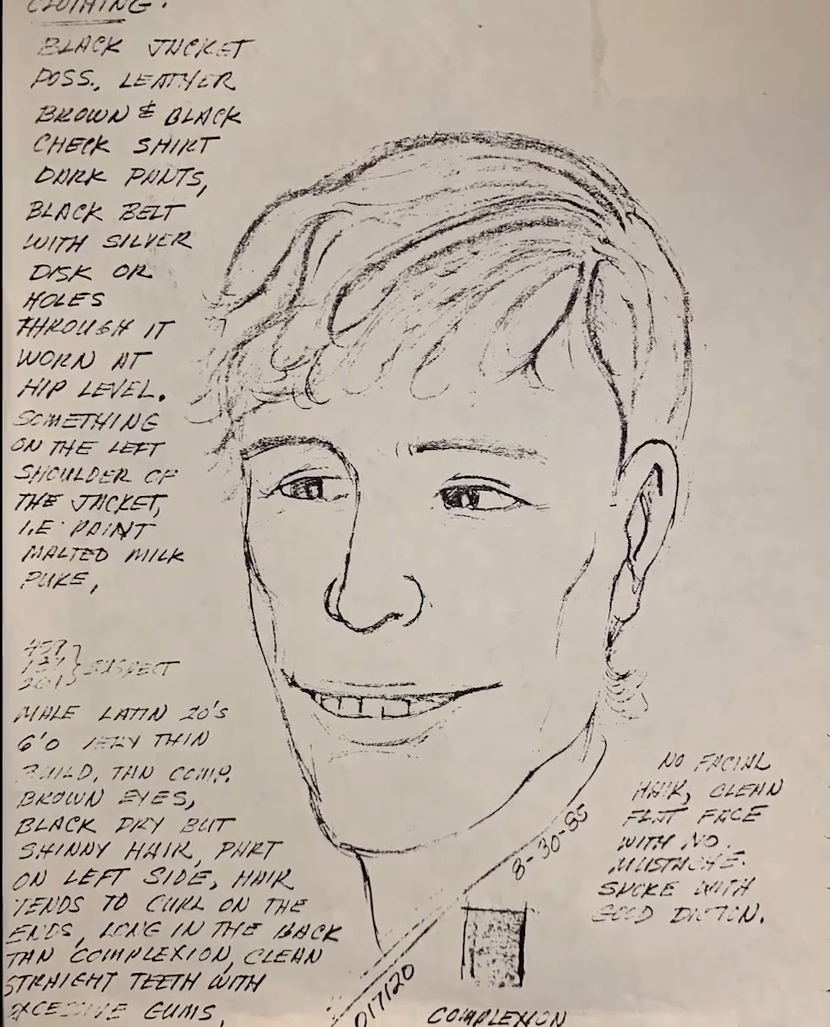
Released 30th August, 1985. “Clean, straight teeth and excessive gums” Below is a section clipped from the above composite, listed are California penal codes: 261 is rape, 459 is burglary and 187 is murder.

Thankfully Ms Kyle did not suffer murder, however, this composite details that penal code. It is already decided that the man who attacked Carol, without evidence, or arrest, (that would happen the following morning) is the same man wanted for multiple homicides in other incidents.
Line-Up
The day after she helped create the latest composite, Richard Ramirez was arrested. Ms Kyle saw him on TV numerous times and in the papers, however, she did not call the police to say this was the man who attacked her at gun point. She said nothing until the police contacted her to attend the tainted live line-up on 5th September 1985, where she identified him “by the inflection in his voice”. Perhaps she was influenced by the two fingers being held up to the assembled audience by the police officers who were in attendance that day. Richard was in place number two. She identified him again at the preliminary hearing, after months of media exposure.
Carol Kyle had been informed by the police that the ‘Night Stalker’ would be present in the line-up

Witness card, document 20-3 Video evidence of victims being coached to choose suspect 2: Ramirez.
Identification of property
Kyle identified jewellery taken from her home at the police property
line-up on September 5th, 1985. She identified a bracelet, silver chain, earrings, necklaces, and a ring.“A property line-up was held at the Los Angeles County Jail on
September 5, 1985 … Fewer than one-quarter of the approximately 1,500 items displayed at the line-up were identified by witnesses and victims.”– Habeas Corpus, pg. 117.
Richard’s Family in Texas
Sergeant Perry testified that, on September 3rd, 1985, he obtained two warrants through the El Paso courts to search the houses of Richard’s sister and parents. Before the warrants were executed, his parents, his sister Rosario, and brother Julian Jr., voluntarily met with Sergeant Perry at El Paso Police Department. They consented to having their homes searched. While at the police station, Rosario handed a pair of earrings and a bracelet. During a search of her home, she turned over a wooden box containing costume jewellery that had been given to her by her brother, Richard.
The Defence Malfunctions Again
What did they get right? This:
“If the person who committed these crimes … had straight white teeth, the person was not Petitioner.”
– Defence attorney, Ray Clark, Habeas Corpus, pg. 441.
During the 1986 preliminary hearing, the defence also questioned Ms Kyle’s failure to contact the police after seeing the suspect on TV numerous times, after his capture. Why, if she was so certain that he was the one who attacked her, did she wait?
“She [Kyle] was the first person who had more than a fleeting glance at her assailant during the commission of a crime to identify Ramirez in court … Arturo Hernandez, Ramirez’s co-counsel, questioned why the woman did not phone police after first seeing Ramirez’s photo on TV the day before his arrest last August. “She had seen this person (on TV) for several days … but she waited until she was contacted five or six days later.”
– Journalist reporting on the 1986 hearing for the L.A. Times (pictured below)
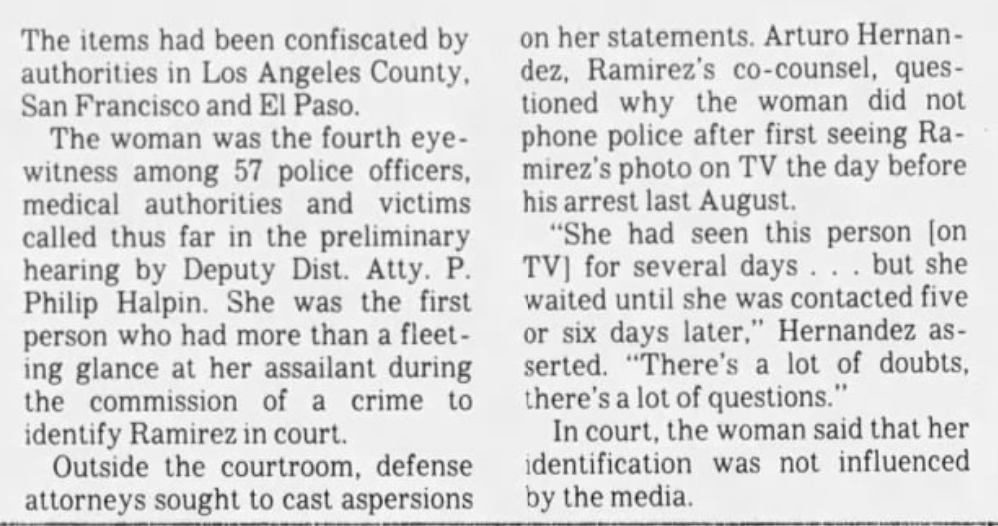
Los Angeles Times April 1, 1986
THIS post examines the tainted line up procedure and how voice recognition is NOT a reliable form of identification, especially when coupled with weapon focus and extreme stress factors. Had the defence had retained an expert witness, such as Dr Kathy Pezdek, the jury would have seen how unreliable the identification was.
“Carol Kyle first identified Ramirez at the live lineup and then subsequently at the Preliminary Hearing. However, she testified at the Preliminary Hearing that prior to attending the lineup, she had seen his picture in the newspaper and after the police identified him as the Night Stalker. She testified that in the days leading up to the lineup, she saw news reports “probably every day.”
– Habeas Corpus, pg. 396.
The defence presented no evidence on Richard’s behalf except for the failed alibi, discussed in the Bell/Lang incident. This discredited alibi could have been explained that Julian Sr had mistaken his dates, due to media pressure, stress, and the passage of time.
Not only did they fail to do this, they actually presented the alibi again as defence, when uncontroverted evidence from a Los Angeles dental office established that he was in Los Angeles on May 30th, 1985. This moment would have been better served had they mentioned his teeth, emphasising to the jury the disparity between the eyewitness testimony and the reality of Ramirez’s dental records.
Philip Carlo in the book The Night Stalker: The Life and Crimes of Richard Ramirez, stated that Sergeant John Yarbrough from the Night Stalker Task Force, testified that the clock at the crime scene of sisters Florence Lang and Mabel Bell had been ripped from it’s electrical socket at 5.29am, indicating that the attack was in progress at that time. Carol Kyle said she was woken at 4am, and that her son called the police around 6.20am. So how could Ramirez be in two places at once?
We know Richard was present in El Paso for his niece’s communion party and the chart below shows his possible movements during the dates in question.
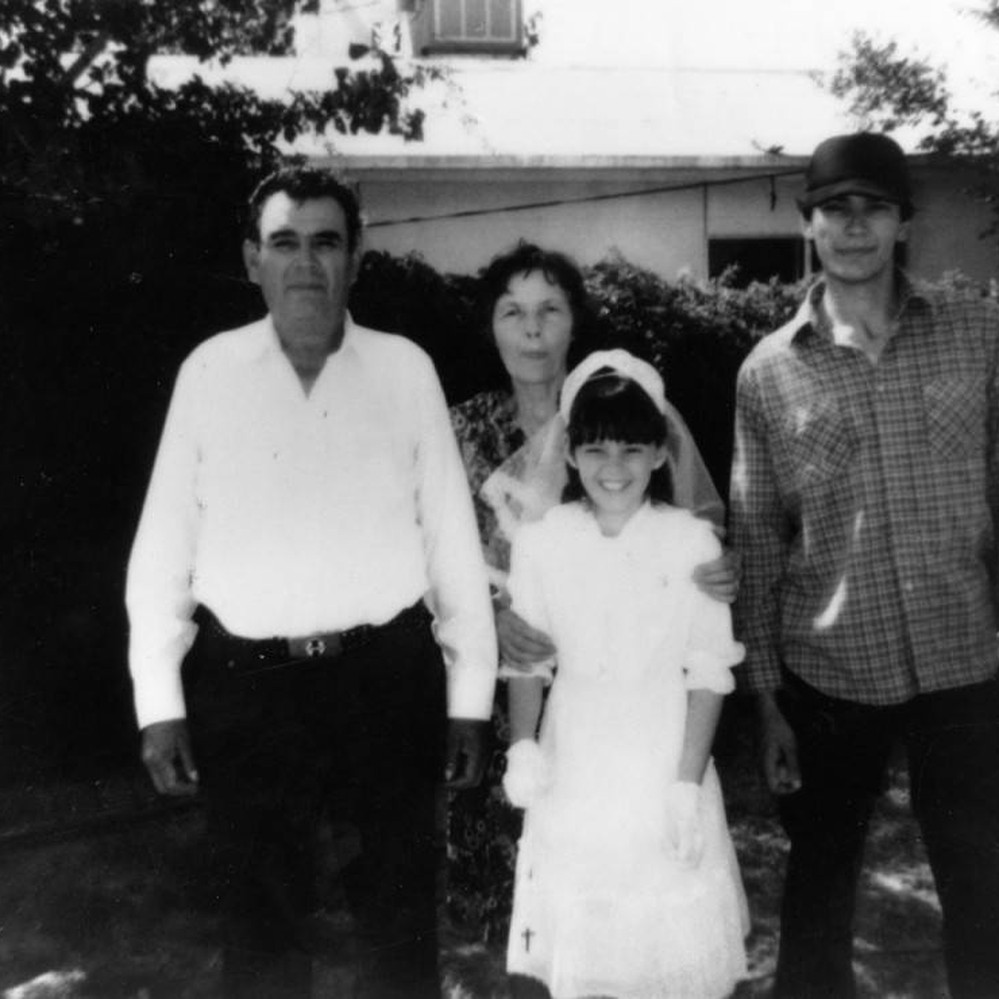
Richard pictured with his niece, Jennifer, and his parents in May 1985.

Dental appointments and possible movements during May/June 1985
In an effort to challenge the identification of jewellery found at Rosario’s home, defence counsel argued but failed to present evidence supporting the contention that the recovered jewellery was not unique and lacked distinctive characteristics. They failed to investigate the numerous other individuals who were involved with burglaries with Ramirez and failed to examine the trail of stolen property changing hands in and around the bus depot and at Felipe Solano’s, later impeached for perjury. Nor did they efficiently cross-examine Carol Kyle over the features of her attacker, detailed in two police sketches; or draw attention to the possibility of contamination of her testimony due to multiple points of contact with law enforcement, providing numerous opportunities for her original statement to be changed.
The prosecution urged conviction because of the similarities to the Dickman incident. Below is a summary of the findings of expert witness and criminologist, Steve Strong.
Dickman Incident
- No fingerprints belonging to Richard
- Inconsistent eyewitness testimony (she changed it)
- Trail of stolen property not questioned
- No serology
- Failed to recognise him on TV as the man who attacked her, even after seeing him numerous times
Kyle Incident
- No fingerprints belonging to Richard
- Unreliable eyewitness testimony
- Trail of stolen property not questioned
- No serology
- Saw him on TV but did not call the police.
In Conclusion
Richard Ramirez was found guilty of the rape and burglary, even though no physical evidence that he was the perpetrator was found. He was convicted because of the “spill-over” from both the Dickman and Bell/Lang incidents, the jewellery, and an unreliable witness testimony; he had at various times been described by other eyewitnesses as blonde, Asian, short, and Caucasian.
A competent defence, as a last resort, could have fallen back on his mental health, in mitigation, at penalty phase. However, as we have shown, Richard was denied effective assistance of counsel, in violation of his constitutional rights, and was failed in every way, by a defence team whose duty it was to develop a strategy, challenge, and test the prosecution’s case.
The job of the prosecutors was to prove guilt, beyond a reasonable doubt. They did not.
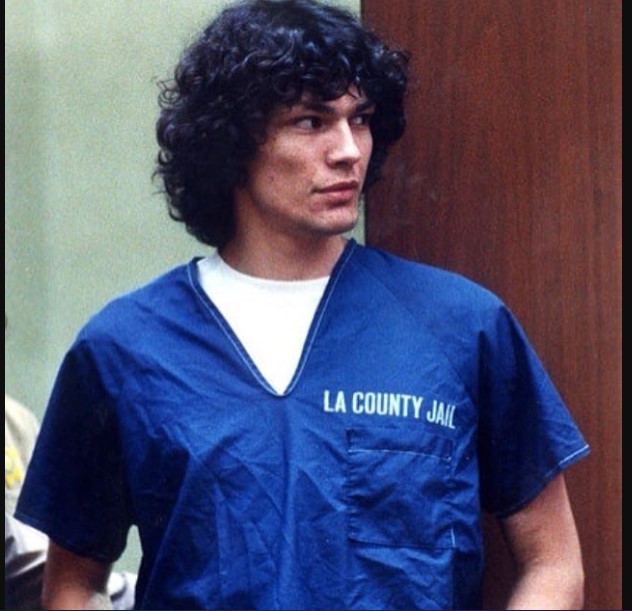
-
The Zazzara Incident
On March 28, 1985, Maxine and Vincent Zazzara were shot dead. The Zazzaras owned a pizza business managed by an individual named Bruno Polo. On the evening of March 28, Polo reportedly went to the Zazzara residence to drop off the daily proceeds from the pizza restaurant. He would later tell police the Zazarras did not answer the door, although the front door was open, the lights were on, and their vehicles were home. He returned the following morning and found the money he had left the previous evening had yet to be moved from where he had left it. At this point, he decided to enter the residence. He saw Vincent Zazzara lying on the couch with blood on his head. He ran out of the home and went to a neighbor’s to call Vincent Zazzara’s son. Apparently, they also called the police because law enforcement arrived at the Zazzara home shortly after this.
Maxine and Vincent Zazzara were both shot with a small caliber gun. Maxine’s eyes had been removed postmortem. Law enforcement found a pool of blood on the porch of a house across the street that was never elaborated upon. A bullet fragment was found on the bedroom floor, and jewelry was found in a bedroom drawer. A coin collection was found intact. A burglary had occurred at the Zazzara residence six weeks earlier, so law enforcement could not determine what had been stolen during this crime, if anything. Considering a coin collection, bags of money, and jewelry were found in the home, it doesn’t appear burglary was a motive.
The Avia Shoeprints
Police determined the point of entry was a window at the rear of the house. A latent fingerprint was lifted from the window screen. A shoe print was found on a tub under the rear window of the point of entry. Other shoe prints found outside the house near the bedroom window were similar to the shoe print on the tub. Two different shoe print patterns were found in the same area but the others – made by Vans – had come from the Zazzaras themselves.
The Zazzara crime scene was the first place the Avia shoe print was found. It was later found at the Doi, Bell and Lang, Cannon, Bennett, Nelson and Khovananth crime scenes and became the prosecution’s most compelling evidence.
Below, images of prints and casts from the crime scene: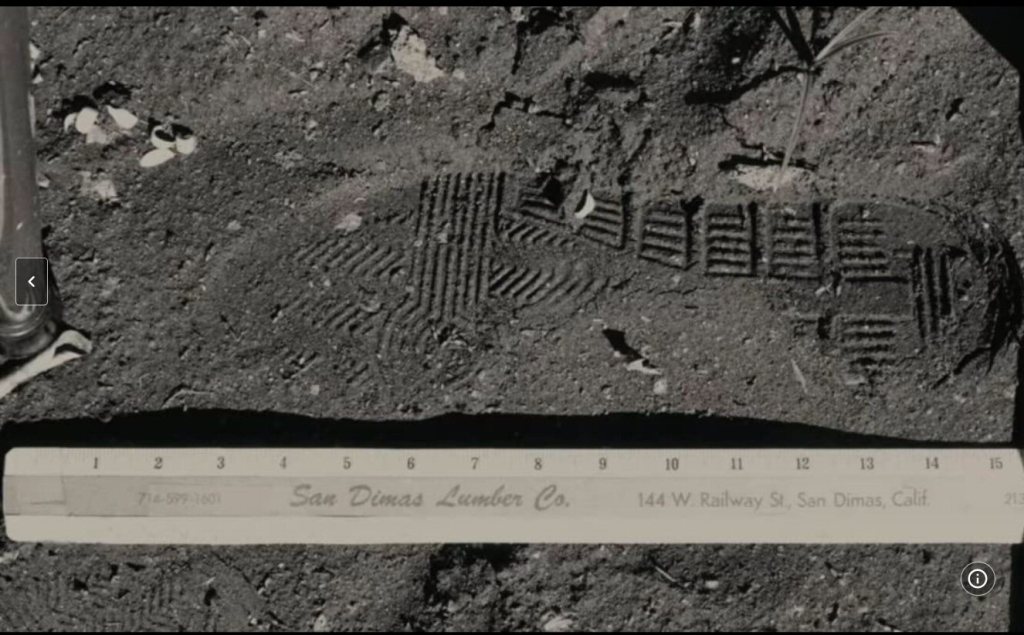
The Avia shoeprint in the garden border 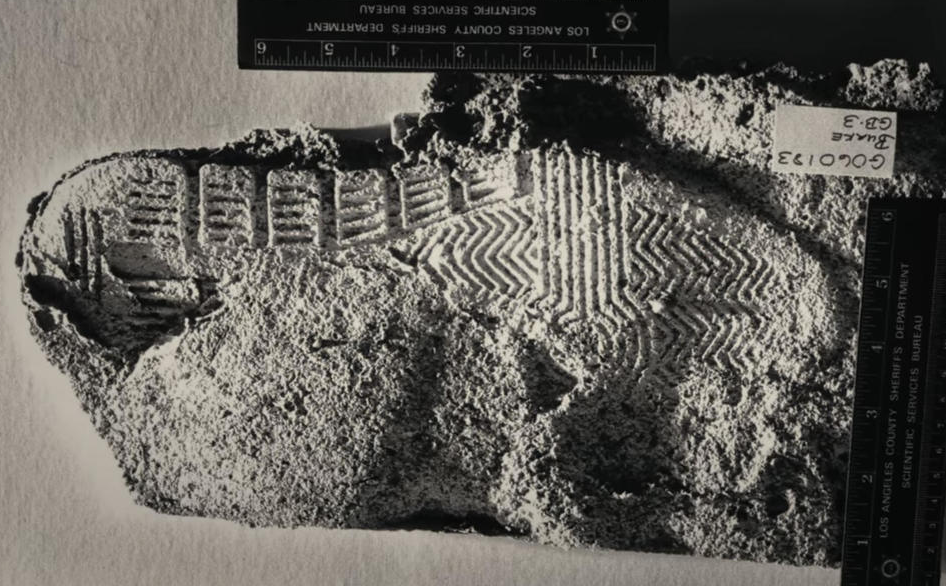
The cast of the shoeprint 
The ‘herringbone’ print is just about visible…if you squint The shoe impressions were examined by the Los Angeles Sheriff’s Department criminalist, Gerald Burke. He opined that shoe prints at the scene matched an Avia Aerobics model in size 11-½ to 12.
Since the infamous Avia shoe was paramount in Richard’s trial, his attorneys needed to retain a shoe print identification expert, but failed to do so. The most they could say was that it never proven that Richard ever had or wore any type of Avia shoe.
It was not until 2004 and Ramirez’s automatic direct appeal that flaws in the prosecution’s evidence were revealed. His appellate lawyers enlisted shoeprint identification expert Lisa DiMeo. She determined that several different types of shoes could have made the prints on the yellow tub pictured above.
“The partial patent print on the top of the yellow bucket depicts a herringbone pattern of unknown origin. The size or design of the shoe that made this impression is unknown … any shoe exhibiting a similar herringbone pattern could have been the source of this partial print.”
– Supplementary Declaration of Lisa DiMeo, Document 7.20.
The prints in the garden border were from Aerobics models but may not have been size 11.5 or 12 like Burke thought. DiMeo said:
“The two impressions that were cast in the Zazzara incident are sufficient to identify Avia Aerobics as the source based on several design features, however the exact size cannot be determined. The inclusion of the various sizes increases the pool of possible sources by tens of thousands.”
– Supplementary Declaration of Lisa DiMeo, Document 7.20.
Ballistics
LASD firearms examiner Robert Christansen determined bullets found at the scene were fired from a .22-caliber firearm. The three recovered bullets were mutilated at 70% and 80%. An additioal .45 bullet was distorted at 95%. See his report below.

Robert Christansen’s report, Document 7.23 Richard’s attorneys presented no evidence to challenge the flawed ballistics or shoeprint analysis. They made no objections, retained no experts, and failed to introduce third-party suspect theories – leaving the prosecution’s case unchallenged.
Eventually, the prosecution expert, Edward Robinson, claimed the bullets matched the Khovananth slugs. The previous examiner, Christansen, said that he originally thought the Khovananth slugs were from a .25 ACP.
Maxine Zazzara’s eyes were not found in Richard’s parent’s home, his sister’s home, or in any of his belongings. They were never recovered. We have never heard anything about the fingerprint on the window screen, which leads us to conclude that it was not identified as Richard’s. If it had been, it would certainly have been used against him in court.
Mafia?
As with all the crimes Richard was convicted of, we’re left with more questions than answers. The most pressing is: who really killed Vincent and Maxine Zazzara? The evidence does not prove Richard Ramirez was responsible. So why was law enforcement so determined to pin this crime on him? The police claimed they looked into a possible Mafia connection but deemed it not worth pursuing. But how thoroughly was that lead really investigated?
Peter Zazzara, Vincent’s son, told two separate offciers, LASD Detective Russell Uloth and Deputy Sheriff Paul Archambault, that his father had ties to the Mafia and was involved in narcotics. He believed his father and stepmother may have been killed because of this. Vincent had previously served prison time for federal bank fraud, and Maxine had been his attorney. Yet at the preliminary hearing, Judge Nelson barred this line of questioning, preventing the Mafia theory from ever reaching trial.
If Ramirez truly was the notorious cat burglar the prosecution claimed, would he have left behind jewelry, a valuable coin collection? He wouldn’t – but someone did.
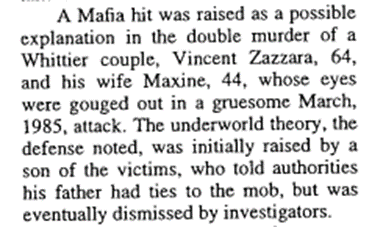
From the Los Angeles Times, March 30, 1986. Steve Strong, a crime scene analyst and former LAPD detective working for Ramirez’s appellate lawyers, reviewed all of the Night Stalker crimes. He noted there was no distinctive pattern. This is what he said about the Zazzara crime:
“No fingerprints found belonging to petitioner [Ramirez]. Exact model or size of Avia shoe not determined. No weapon found or recovered from petitioner. No property recovered. Could have been more than 1 person [perpetrator]. Location: Whittier.”
– From the Declaration of Steve Strong, Document 7.21.
KayCee
Jan 25, 2023





 Expendable For A Cause.
You must be logged in to post a comment.