
Many of us probably think we know who Miguel Valles was. After all, we have heard stories about “crazy cousin Mike.” As with most things, there’s more to the story than we know. So, who was Miguel? And why has he gotten so much press when it comes to Richard?
Miguel Angel Valles was born June 14, 1949, in Durango, Mexico. His parents were Juan Valles and Sebastiana Barscnas. He was the nephew of Julian Ramirez Sr., making him Richard’s first cousin. Miguel moved to El Paso with his family at the age of 13. He was married three times and depending on which report you look at he had between 4-7 children, including one that passed away at the age of 5, Miguel Jr, in a gas explosion accident in 1973.
Miguel joined the United States Army in 1970 during the Vietnam war. Although precisely what Miguel did during his time in service is subject to speculation, we do know he was involved in direct combat. Per his own report, he saw a lot of “action” while in Vietnam.

So, what did Miguel do in Vietnam that caused him to have nightmares and flashbacks after he was discharged from the Army?
The Phoenix Program
The Phoenix program was developed in 1967 by the Central Intelligence Agency and it combined existing counterinsurgency programs in a collaborative effort to “neutralize” the Vietcong infrastructure. The word “infrastructure” refers to those civilians suspected of supporting the North Vietnamese and the Vietcong. Phoenix targeted civilians, not soldiers. South Vietnamese civilians whose names appeared on blacklists could be kidnapped, tortured, murdered, or raped simply on the word of an anonymous informer. Phoenix “neutralizations” were often conducted while victims were home, sleeping in bed. Vietcong sympathizers were brutally murdered and tortured along with their families to terrorize the neighboring population into a state of submission. Such horrendous acts were often made to look as if they had been committed by the enemy. Based on Miguels own statements that he saw “severe action” in Vietnam and had flashbacks and nightmares related to his experiences, he may have been a part of the Phoenix program. (This is by no means a comprehensive account of what the Phoenix program was or of what occurred during the Vietnam War).
Miguel was honorably discharged from the Army in December 1971. Three months after he was discharged from the Army he was hospitalized and diagnosed with schizophrenia. This would be the first of numerous hospitalizations for Miguel related to schizophrenia and post-traumatic stress disorder.

Miguel was discharged from the Army with a 100% disability rating. The U.S. government does not hand out 100% disability ratings lightly, so whatever Miguel experienced in the war was deemed by the U.S. government to warrant a rating of being totally disabled.
It’s reported in various places online and in Philip Carlo’s book “The Life and Crimes of Richard Ramirez” that young Richard hung out with his cousin Miguel quite a bit and was enthralled with the stories Miguel told about his time in Vietnam. While Richard did spend time with Miguel based on his own statements, he could not have spent as much time with him as some would have us believe. To see just how much time Richard may have spent with Miguel and how much of an influence he could have had over young Richard’s life, we need to break down the timeline of events in Richard and Miguel’s lives.
- Miguel enlisted in the army in 1970. Richard was 10 years old at the time, and Miguel was 21.
- Miguel returned from Vietnam in late 1971 and was hospitalized in early 1972. By all reliable reports, Richard was still involved in school and hanging out with his friends.
- On May 4, 1975, Richard was at Miguel’s home when Miguel shot his wife, Josefina, leaving her seriously wounded. Miguel was arrested and sent to jail. She passed away 11 days later. Miguel was declared unfit to stand trial for the murder of his wife. As a result, he was sent to Rusk State Hospital for 2 years. Miguel served a combined total of 5 years in jail/prison and a mental hospital for killing his wife.
- Richard spent the majority of 1977 in reform school at Texas Youth Council.
- Miguel spent 1975-1980 either in a mental health facility or jail/prison. So, it’s safe to assume that he had no contact with Richard during this time.
- 1979-Richard moved to California, a year before Miguel was released from prison.
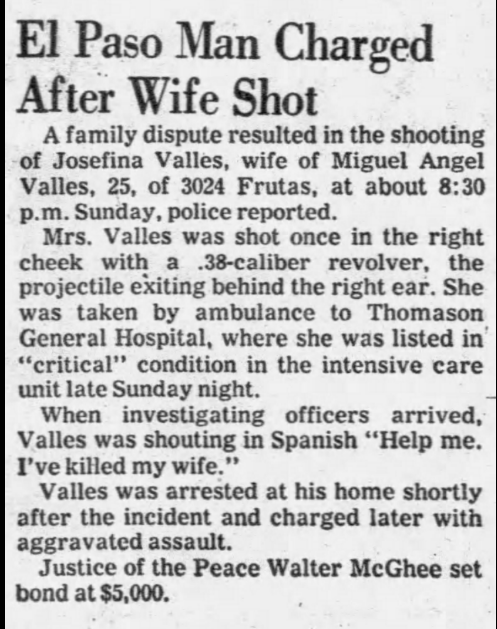
Courtesy of the El Paso Times
Perhaps Richard did see Miguel as a war hero after he returned from Vietnam, regaling Richard and anyone that would listen about his adventures during the war. Per family statements we know it wasn’t just Richard that Miguel told about the rapes and murders he committed during the war. He also spoke of his exploits to other family members. Family members gave statements in 2008 that described Miguel’s behavior after returning from Vietnam.
“Miguel constantly talked about the horrible things he had seen and done in the war. On more than one occasion, I had heard Miguel say that he kept the gun in the fridge because he liked the feel of cold steel when he killed someone.
After Miguel killed his wife, I asked Richard about the incident, and he replied that he didn’t want to talk about it. Richard was starting to become more of a loner and he often kept things to himself.”
– declaration of Ignacio Ramirez, exhibit 102, habeas corpus document 20.5
After Richard witnessed the murder of Miguel’s wife, he appeared to have suffered from severe emotional trauma. He was frightened of Miguel and afraid Miguel would harm him if he told anyone about what happened the day Josefina was shot. He also told hid friend Eddie. In error, Eddie refers to Miguel as an uncle.
“Ricky told me he had an uncle [sic] who was crazy and he was afraid of him. He told me that I couldn’t tell anyone what he was going to say to me and then he said that his uncle killed his … wife right in front of Ricky. Ricky was at his uncles house and an argument flared up. Then the uncle killed his wife. The uncle told him he would kill him if he told anyone and Ricky was terrified. I never saw Ricky look so scared”
– declaration of Edward Milam, habeas corpus document 20.8.
Hospitalizations & Incarcerations
Miguel had an extensive history of being hospitalized for schizophrenia. He also spent time in jail and prison after he killed his wife.
- 1972-first hospitalization
- 1975-incarcerated in El Paso jail
- 1976-1978 Rusk State Hospital
- 1979-1980 Texas Department of Corrections (prison)
- 1982-Miguel was hospitalized four different times (January-February, April, July-September, December -January 1983)
- 1983-hospitalized in March & September
- 1984-hospitalized four times (March-April, May-June, August -September, & November-December)
- 1985-hospitalized October-December
- 1986-hospitalized June & August
- 1988-August & September
- 1989-July-September
- 1990-August
- 1992-September
- 1994-January
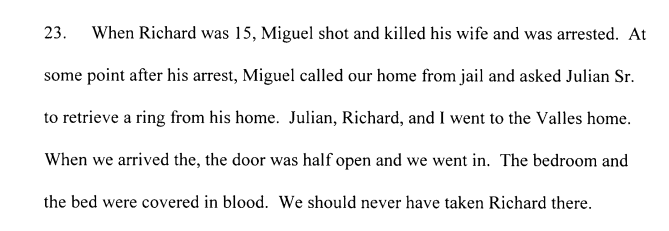
*Statement from Mercedes Ramirez in 2008 federal writ of habeas corpus petition.
When we look at all that was going on in Miguel and Richard’s lives from 1970-1979, it’s pretty clear Miguel had a lot more going on than hanging out with his teenage cousin. He was married twice during that time period and had several children. Miguel was repeatedly in and out of the hospital due to his mental health, often involving lengthy hospital stays. He also spent time in jail and prison. Richard was still attending school regularly, at least until around the age of 15, when Miguel killed his second wife. After Miguel killed his wife, he obviously wasn’t spending anytime with Richard and when he was released, Richard had moved to California.
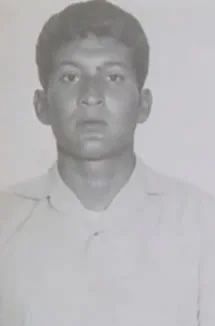
“There’s no thrill like a good kill. ” A statement attributed to Richard, but it was actually Cousin Miguel that Richard was quoting, likely referencing his exploits in Vietnam.
Richard stated in his 1992 interview with Philip Carlo that his dad taught him how to use a gun. Not Miguel. Richard also said in other interviews that he went hunting with his dad as a kid. Let me be clear: the kind of guns used to hunt is nothing like any of the weapons used in the so-called Nightstalker crimes. Many people assume Richard learned how to wield a knife from Miguel. Richard also stated in the interview with Carlo that Miguel told him how he cut some of his victim’s throats in Vietnam with a “stab-slash” cut. However, being told how someone killed their victim does not make you proficient at that method. So to say that Miguel taught Richard how to be a killer is a huge leap of the imagination that has been made by numerous individuals. After breaking down the evidence and the timeline of both Richard and Miguel’s lives, this hardly seems likely.
Miguel not only had serious mental health issues, but he also had physical ones, such as high blood pressure, high cholesterol, and substance abuse. All of these complications led to a shortened life for Miguel, and he passed away at the age of 45 from a heart attack.
Sources: 2008 Federal Petition for Writ of Habeas Corpus, Richard Ramirez v. Robert Ayers & supporting documents submitted with 2008 federal writ-Document 20-7 and 20-8, Miguel Valles medical records (available upon request).
We now have a book out! Currently on all Amazon marketplaces! Click the image below.


 Expendable For A Cause.
Leave a reply to Maria Valdespino Cancel reply