
“The media, the television, authors, newspapers; they tragically fail in their most important duty to report the truth in an unbiased and truthful manner. It’s easier to convict a man with words than with evidence“.
Richard Ramirez – from an interview with Mike Watkiss
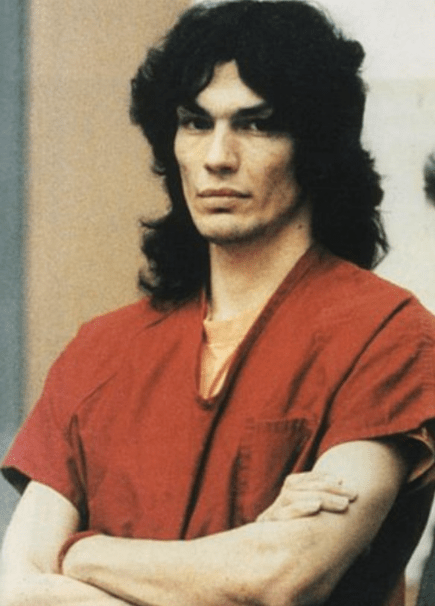
The media frenzy surrounding the capture of Richard had guaranteed a fair trial was going to be problematic, the newspapers were falling over themselves to print hundreds of articles with accompanying pictures. Most contained inaccuracies, and then, as now, the more macabre and horrific the material, the more the public clamoured for more, both fascinated and appalled. A sickening soap-opera, they couldn’t look away, gulping it all down, after which, they probably tutted and went to cook dinner, with a sweeping sense of relief now that the one-man crime wave was finally concluded. Los Angeles could settle down to its dream of a Utopia that never was.
Shill
Fast forward to 2021, another article, in celebration of the Netflix release of “Night Stalker: The Hunt For a Serial Killer”, was published by CBS News on 21st May that year. The report was astounding in its erroneous content, the journalist clearly having never done an ounce of research into the case. Of course, they had to follow the narrative, and likely neither knew nor cared that what they were writing bears minimal resemblance to the facts or the evidence.
Luckily, the original police reports and eyewitness statements contained within Richard’s habeas corpus petition are available and in the public domain; without that, the truth of what is contained therein would have been buried forever. There is no excuse for lazy journalism or for being a sycophant (or a shill, for that matter).
I hadn’t intended to write this; I was researching something else. However, specific points need addressing. Whether it’s 1985, 2021 or 2023, the propensity for mendacity continues ad nauseam.
Hunch
The CBS News article focuses on the old platitude that the child victims and Maria Hernandez closely described the same attacker. Truly a lightbulb moment for one person.
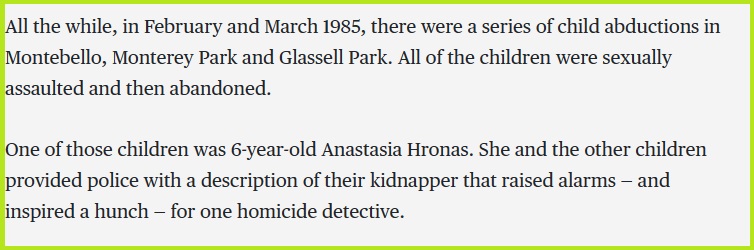
To find out what was reported the during the time the incidents took place, we need to go back to 1985 to look at the description of the man wanted for the child abductions and assaults.
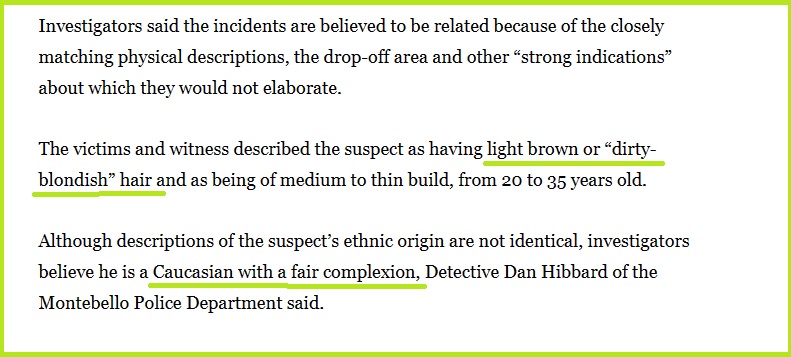
Light brown or dirty-blondish hair? Richard Ramirez has been called many things, but blonde is hardly a description that fits him, yet two children and one ADULT witness did just that.
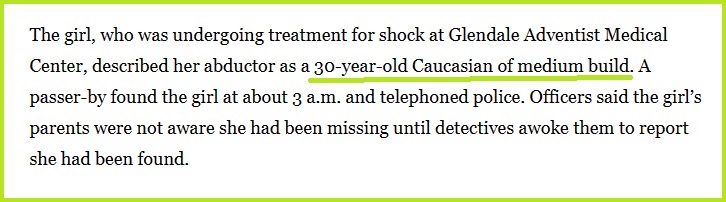
A 30-year-old Caucasian?

And again, a white male in his early 30s, with light brown or dark blonde hair. Ramirez stood at 6ft1, significantly taller than the 5ft 9 attacker. He was a 25 year old Latino, with very dark hair.
This is the composite of the man suspected of attacking the children, the original composite, before they began to change him into Ramirez.
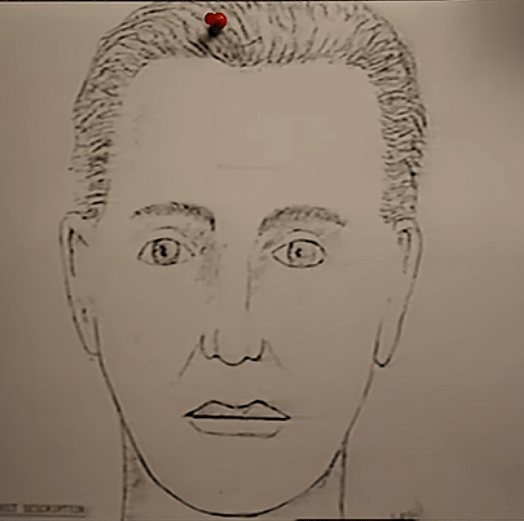
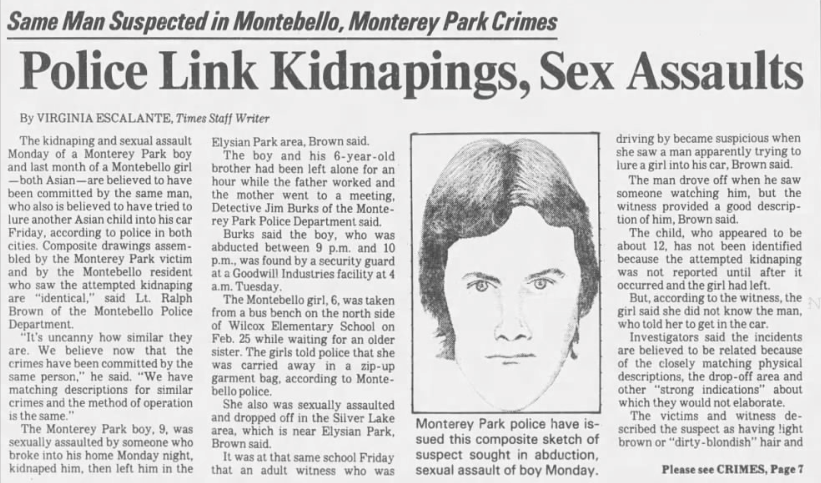
In June 1985, the most well-known abduction occurred, the kidnapping and sexual assault of Anastasia Hronas.


This description is at variance with the ones previously given, neither sound like Richard Ramirez. Too old, too short and, in the earlier abductions, too blonde.

What Did Maria Hernandez Say?
“At the hospital, Maria Hernandez told Detective Carrillo – who knew her mother – that the attacker was either a light-skinned Caucasian or Mexican male with brown eyes and a “very determined look on his face.” She estimated that he was between 5’9″ and 6’1.
Hernandez stated that her assailant was wearing a black “Members Only” type jacket over a white shirt, but that she cannot remember whether the attacker was wearing a hat or not – but if he was, it was dark.”
There is a big difference between someone who is 5ft 9 and someone of 6ft 1.
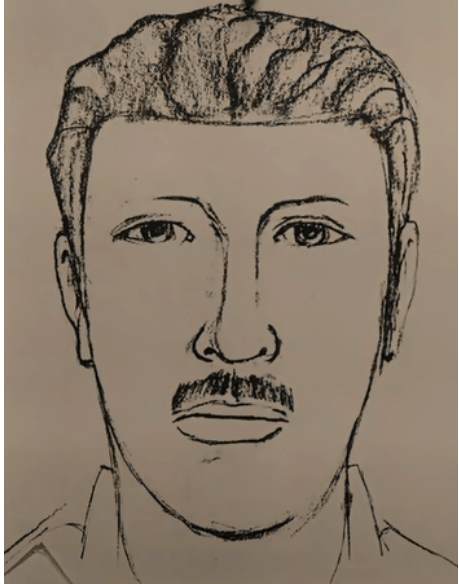
She helped to create a composite, describing a man with a moustache. Maria attended two line-ups in April and July 1985, of which one contained the unfortunate Arturo Robles, pulled in by Carrillo for allegedly following girls. Maria did not identify anyone, and Robles was let go. She was also shown two swatches of suspect photographs and chose one from each set. Neither Arturo Robles nor Richard Ramirez had blonde hair, so it is hard to see any similarities between either man or the child abductor, as described by his victims.
At Richard’s live line-up in September that year, she identified him, and added on her witness card that he also “had a little beard”. She claimed to have seen him numerous times on the TV and in the papers after his capture. However, in court, she admitted she could not identify him from memory. It is safe to say that Maria Hernandez was unsure of what her attacker looked like.
This is the composite she helped to create:
Did They All Mention Bad Teeth?

No, no, they did not. The teeth, the famous stained teeth, were first mentioned by Somkid Khovanath in July 1985.
The only person who mentioned teeth before July was Carol Kyle. She said her rapist had straight, white, clean teeth.
The CBS News article neatly circumvents what happened to Carol Kyle in the same way that the Netflix documentary does, the teeth she described being at odds with what the documentary states. She should have been included, regardless of the glaringly apparent teeth differences. One might suspect that she was ignored in the documentary for that reason. Ms Kyle also helped to produce two other composites, neither looking like each other nor anything like Ramirez. She somewhat implausibly picked him out at the line-up.
Why Was Richard Chosen at the Line-Up?
Quite simply, they were coached or, shall we say, “encouraged”, as the Public Defender Judith Crawford observed.
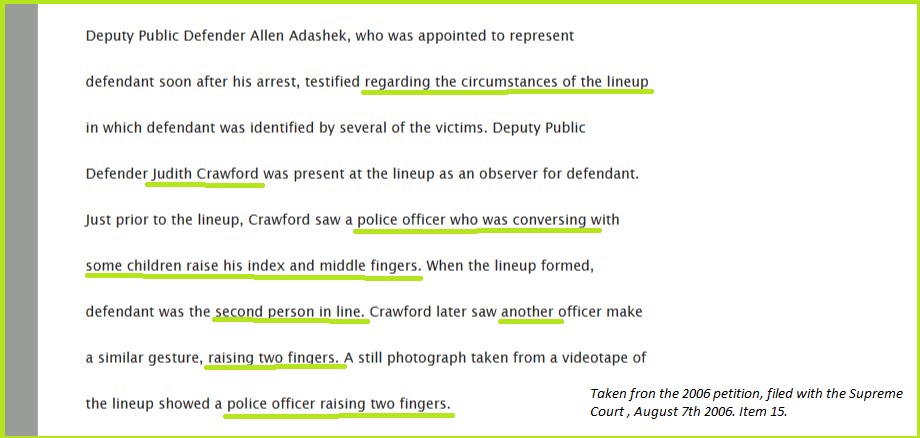
She saw one officer bending down to talk to the gathered children whilst holding up two fingers. Later she saw another officer behaving in the same way, holding up two fingers to assembled eyewitnesses; in fact, as there were two line-ups with two audiences, Judith Crawford watched them do it again. That is not a coincidence. Richard, as we know, was adorned with a card bearing the number two. Their line-up was tainted and compromised.
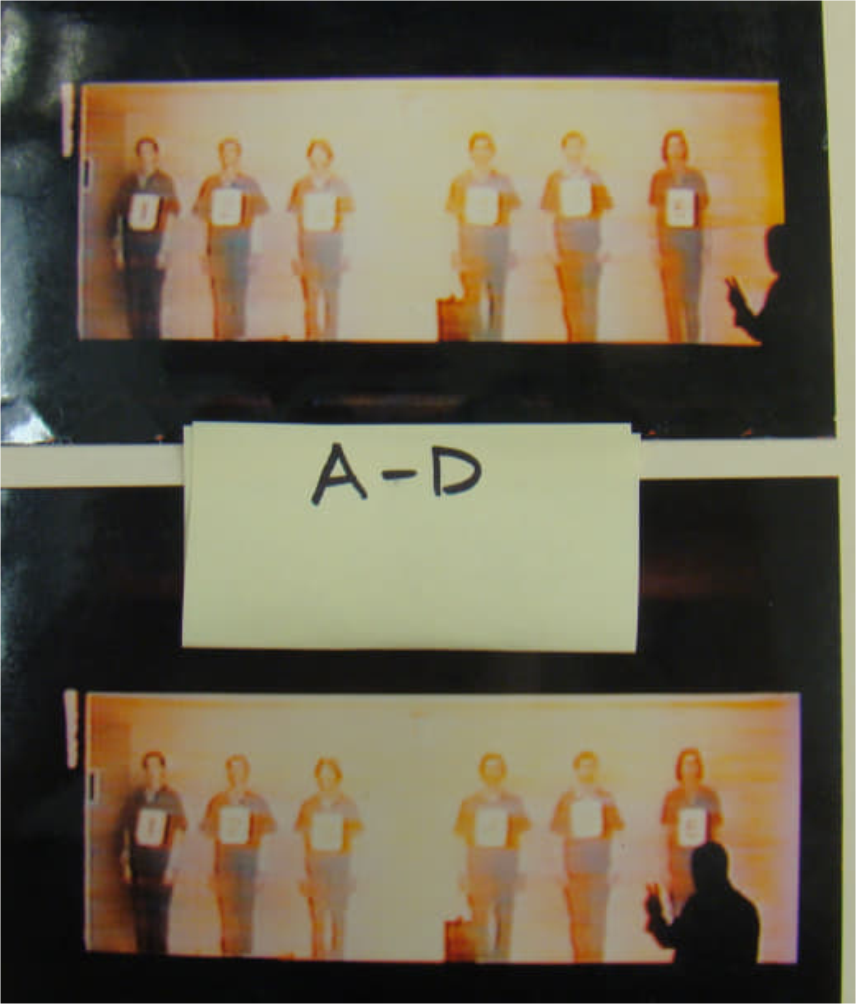

The two finger-waving deputies were Tom Hageboeck (according to Carlo) and John Jones; Detective Carrillo is not mentioned as being at the line-up in either the 2006 petition or the 2008 one. Perhaps he wants to avoid being associated with the leading of witnesses in legal documents. The glorification in the Netflix documentary is another separate issue.
As for the CBS article, I would not read too much into an article created by someone who writes this:

To transcribe in brief what they’ve watched on TV isn’t journalism; it isn’t researching the subject, looking at irregularities and asking pertinent questions. It is seeking approval.
No eyewitness definitively described the appearance of Richard Ramirez, and saying they did does not make it accurate, no matter how many times it’s said. All eyewitness and victim statements are covered in the “Crime” section; their recollections differ. If you’re hoping to find gratuitous and upsetting incident photos contained there, sorry, we don’t do that. Seeing horrific images images does not help anyone weigh up facts and evidence; it sheds no light on the perpetrator.
If you prefer sensationalism, stick to Netflix and articles from CBS News.
“Mirrors,” she said, “are never to be trusted.”
Neil Gaiman – Coraline
~ Jay ~


 Expendable For A Cause.
Leave a reply to ~ Jay ~ Cancel reply