
* Some images may require a desktop for greater clarity*
“I’ll describe some characteristics of a man I knew almost ten years ago. When I first met him he was sitting a table. He was thin and somewhat hunched over; he looked like a bird with a broken wing, afraid and isolated. He had a nervous smile and an awkward way of doing just about everything. Soon after, when he got to know me better, he began drawing pictures for me, usually of small animals. Rabbits were his favourite. He was quite a good artist”.
Jo-Ellan Dimitrius, jury consultant at Richard’s trial, from her book Reading People.
What Watson Said
Dale Watson, PhD, a psychologist specialising in forensic psychology and neuropsychological assessment, was retained by post-conviction counsel acting on behalf of Richard Ramirez. The reason for Dr Watson’s evaluation of Richard should now be apparent; it was to determine whether Richard had been competent to stand trial and to waive his rights during his LA trial in 1989, as part of his appeals process.
His findings, echoing what previous doctors had found, should come as no surprise as we have covered it numerous times, so this section may seem repetitive. It is because the psychiatrists, neuropsychiatrists and forensic psychologists all came to the same conclusion; that Ramirez was suffering from many mental health problems and thought disorders. Considering Richard’s San Francisco trial had been stayed indefinitely in 1995, due to mental incompetence, one would think that was obvious. These conditions rendered him unable to understand proceedings and rationally assist his counsel.
Dale Watson interviewed Richard on three separate occasions, 29th September 1999, 26th October 1999 and 20th June 2000. This is ten years post-conviction, ten years! Richard was still displaying the same symptoms observed by William Vicary, Victor Henderson, and Dietrich Blumer had reported pre-trial, in 1985 and 1986.
Richard refused to see Watson twice, just as he did with Blumer. The first refusal came in 1999, and the second in 2003. One can imagine it was the only vestige of control Richard could exercise concerning his life, who he chose to see and refused. No reasons are given for these refusals; we could speculate that Richard may have been sick of the tests, and he also trusted no one. Whatever the reason was, Watson said in his report:
“Mr Ramirez’s level of disorganisation and subsequently his refusal to be seen for further evaluation precluded conducting a more thorough and comprehensive neuropsychological evaluation.”
Dale Watson from his report. Doc 7-21
What Watson Did.

“Petitioner was incapable of understanding what he was entitled to before, during, and after his trial. Petitioner did not understand how the court functioned or how his attorneys should be functioning. He could not understand that he had a right to a strong and vigorous defense in a trial where his life was at stake. Petitioner’s counsel failed to protect his interests throughout their representation of him, a four-year period”.
Writ of Habeas Corpus page 177
Along with the neuropsychological tests Dale Watson conducted, he reviewed Richard’s medical records, school reports, hospital reports, information from his time in TYC (Texas Youth Council), and his El Paso Guidance Centre reports. Additionally, he examined the declarations of other doctors who had interviewed and evaluated Richard. The testing and evaluation aimed to determine the level of cognitive brain functioning and formed a fundamental part of a reliable and comprehensive clinical evaluation. Each test is designed to provide insight into brain dysfunction’s presence, nature and extent.
A word about percentiles, the measurement used for gauging Richard’s performance. Not to be confused with percentages, which reflect how well an individual has performed in a test or exam; percentiles show the performance compared to other individuals who also completed the test. For example, if someone falls at the 25th percentile, it means they achieved a higher score than 25% of others who also took the same test or exam.
The Tests
The Wisconsin Card Sorting Test (WCST)
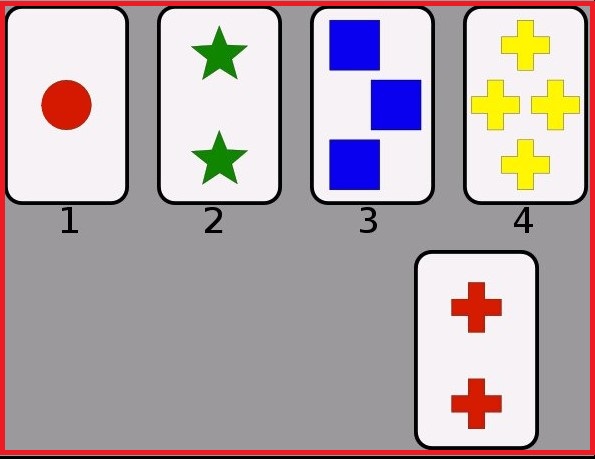
This test aimed to measure cognitive processes such as memory, abstract thinking, attention and cognitive ability. It can also measure perseverative behaviours and the insistence of an individual to repeat the same behaviour when it is inappropriate. The WCST is considered a measure of executive functioning because of its sensitivity to the frontal lobe area of the brain.
The subject is asked to place each upcoming card onto one of the four piles; there are no directions, and they may choose either colour, shape or number. Whichever category they choose is “correct” for several categories but then is met with an “incorrect” response, and they must switch sets to get a “correct” answer again. A failure to change sets is termed “perseveration”.
Richard fell in the 2nd percentile and was within the mild to moderately impaired range. Watson believed Richard was drawn to the saliency of the stimulus rather than solving the problem itself; in other words, the colours and shapes caught his eye, and that overrode the task itself. He had difficulty changing to the new rules and repeatedly made the same mistakes, even when shown that it was wrong.
“Mr Ramirez’s performance reflected a significant degree of perseveration. Perseveration has been defined as the ‘Persistence of the same response, even when it is shown to be inappropriate’. It is associated with both diffuse and frontal lobe disease. Perseveration may involve motor acts, speech, or ideas”.
Declaration of Dale Watson doc 7-21
Richard could only complete one of the six expected card sorts.
The Stroop Colour and Word Test
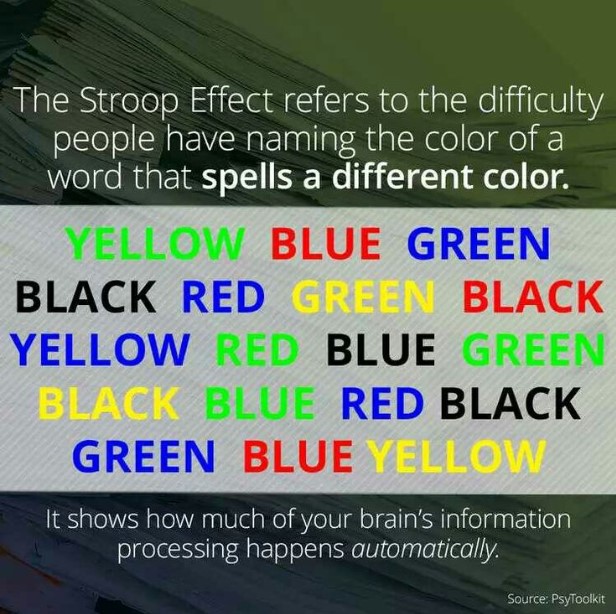
It measures a person’s attention, executive functions, and inhibitory behavioural control. It is an excellent example of how the left side of the brain interprets language and can change perceptions of what is real and what is fantasy.
Watson found that in this test, Richard fell within the low-average range.


This test assesses complex attention and is presented in two forms.
- Form A: the participant is required to drawn lines joining the numbers in ascending order as quickly as possible and involves focus and attention.
- Form B: Also requiring attention, this form also measures the ability to switch cognitive sets between letters and numbers.
Richard fell in the average range.
Repeatable Battery for the Assessment of Neuropsychological Status (RBANS)
This test is a screening instrument for the assessment of an array of neuropsychological functions: it measures the following components:
- Memory
- Visuospatial perception – the ability to copy a design
- Attention
- Language
- Delayed memory
Watson reported that Richard’s “overall performance fell at the 8th percentile and within the mildly impaired range. He had particular deficits in recalling paragraph-length auditory material, where his performance was at only the 1st percentile. Likewise, he was markedly impaired in his ability to copy a complex geometric figure (well below the 1st percentile rank) and recall the figure several minutes later (less than the 1st percentile rank). The impairment of memory functions is most commonly associated with temporal lobe functions”.
Additional auditory testing suggested some possible impairment.
This task required him to repeat different words presented simultaneously to the right and left ears via stereo headphones. Richard fell at the 5th percentile in the right auditory channel and was below the cut-off for identifying both words; Watson’s findings implicated impaired temporal lobe functioning.
Richard had difficulty recalling and repeating an auditory paragraph played to him; his performance fell within the 1st percentile.
The Test of Memory Malingering
Most importantly, this test measured if Richard was having them on, playing around and malingering. The visual recognition memory test is sensitive to lack of effort but not to brain dysfunction. Richard correctly completed 50 out of 50 during both trials and, in Watson’s opinion, was shown to have put in maximum effort and supported the interpretation of brain impairment from the other tests.
Summing Up
What does all this mean?
That Richard was perhaps “simple” or “stupid” somehow? No, he was neither of those things. His thinking was disordered, fragmented and disturbed; he had psychosis, paranoid delusions and severe depression; he was not an idiot
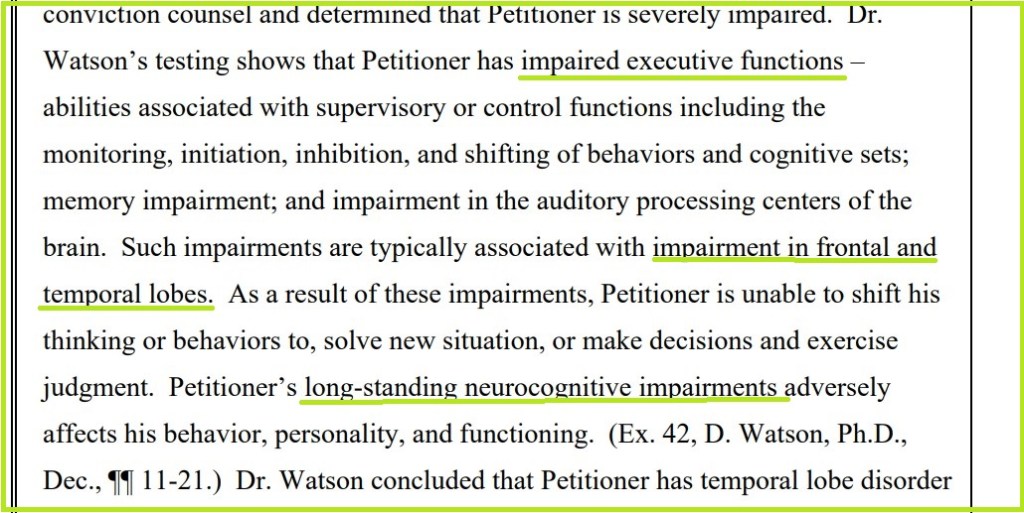
Dale Watson concluded in his findings that Richard had temporal lobe disorder and frontal lobe dysfunction; his preliminary testing suggested he also had neurocognitive deficits and difficulty with problem-solving and shifting mental sets. Watson also found Richard to have poor impulse control and impaired decision-making ability and judgement.
His report agrees with the conclusions of the other doctors who saw Richard over the years.
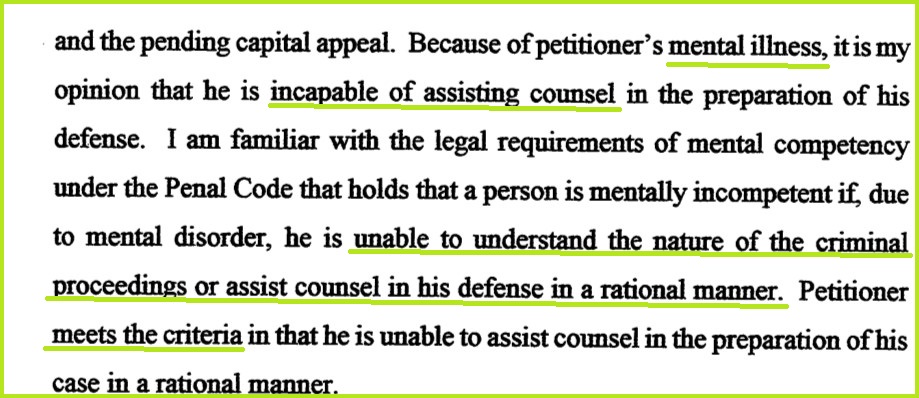
Watson had found Richard unable to rationally assist in is own defence and to understand the proceedings against him.
“Based on my review of records referenced above, including El Paso Guidance Center and Hotel Dieu Hospital, and the declaration of Dr Dietrich Blumer who evaluated petitioner in 1986, prior to petitioner’s trial, it appears that petitioner has been mentally impaired for a long period of time. Petitioner suffered brain dysfunction at an early age; he underwent brief treatment for temporal lobe epilepsy; and he suffered head trauma. In addition, he experienced trauma from exposure to violence; he used drugs to self-medicate after he stopped taking the prescribed medication; and he has a history of being unable to separate reality from fantasy. Exposure to neurotoxins, which petitioner likely experienced, can also result in neurocognitive deficits. These factors point to a long-term mental disorder with psychotic features”.
“There is strong evidence that petitioner suffers from a temporal lobe disorder and frontal lobe dysfunction with neurocognitive deficits. A competent mental health evaluation of petitioner at or near the time of trial would have disclosed much of the same evidence of mental illness as set forth in this declaration. Moreover, the evidence of his mental disorders was crucial information to explain to the jury”
Declaration of Dale Watson doc 7-21
Richard’s conditions were all treatable, although not curable, and his condition deteriorated as time passed, his symptoms exacerbated by the lack of medical care throughout his life.
“Long-term confinement while awaiting trial on capital charges in the Los Angeles County Jail, where the inadequate staffing, programming, and other adverse conditions of confinement resulted in institutional failure to address and provide appropriate intervention and treatment”.
(Ex. 43, Declaration of Dr Jane Wells, J.D., PhD, dated 05/19/2004, ¶ 46.)
Richard had been ill since before his arrest in 1985 and after, a cover-up still not acknowledged. We can thank Richard’s San Francisco lawyers for finally thoroughly investigating and disclosing the information deliberately hidden at Richard’s trial in LA. His habeas lawyers, in the 2008 petition, shed further light on this, enabling us to understand what happened in that courtroom and beyond; and why Richard’s defence team, Daniel and Arturo Hernandez, along with Ray Clark, failed him utterly.

Back to LA and incompetent, negligent lawyers
Here we are again, from LA to San Quentin, to San Francisco and back again. Back to LA and the sad excuse for a defence team on whom much of this rests. Their failure to fight this case in every way is sickening, especially as they had so much material to work with. Weak evidence not being the only thing. They had a duty to expose everything and cross-examine the charges against Richard; they failed. An obligation to investigate and fully present his mental impairments; they failed. A responsibility to provide the jury with counter-evidence to consider; they failed. A duty to submit, at mitigation, his whole life history; they failed.
Let’s stop with the “smart criminal” rhetoric; it’s a load of rubbish; if a man with a high IQ committed these crimes, that man could not have been Ramirez.
He cannot be the man who flummoxed LASD and SFPD, dancing rings around them, evading capture, like a coked-up, latter-day Scarlet Pimpernel, and also be the man who took part in these tests. One of those scenarios is blatantly inaccurate; he can’t be a criminal mastermind while simultaneously being unable to sort out a pack of playing cards. Take your pick.

What does this tell us about justice? There is none, not for an indigent defendant on a capital charge, and who has the bad luck to have a pitiful defence team.
“2060. Petitioner’s convictions, sentences, and confinement were obtained as the result of serious errors constituting multiple violations of his fundamental constitutional rights at every phase of his trial, from the unfair and discriminatory decision to charge and prosecute him, prosecutorial misconduct, the presentation of inaccurate, incomplete and unreliable evidence in the guilt phase, and culminating in a sentencing phase, in which no evidence of his character, background, and mental illness was presented, and was fatally flawed by gross prosecutorial misconduct. Through it all, Petitioner’s trial counsel were so ineffective and incompetent that they consistently provided grossly ineffective representation and failed to protect his fundamental rights.”
Writ of Habeas Corpus page 734
~ Jay ~


 Expendable For A Cause.
Leave a reply to kaycee0823 Cancel reply