
By Venning
The popular Night Stalker narrative claims that Richard Ramirez personally witnessed his cousin Miguel “Mike” Valles murder his wife Josefina – a moment said to have launched Ramirez on his path to serial killing. Josefina’s murder is described in detail in Philip Carlo’s book and Ramirez also told him about it in his interview. But was Ramirez’s involvement exaggerated? And have Carlo’s decorative details caused the story to snowball?
I was recently sent this blog post article by Richard K Cole Jr. who did a good job of deconstructing Philip Carlo’s lies about Miguel’s influence on Richard Ramirez. Cole points out how unlikely it was that Ramirez actually witnessed Josefina’s murder, which is something I wrote about in the book. He provided all the relevant newspaper articles which are well worth a look.
Let’s examine what was said. The murder happened at night – police were called at 8:30 pm. However, in Ramirez’s interview with Carlo, he described the incident as a “sunny day” and it being around 3 pm. Part of that tape was played on the Peacock/NBC documentary in 2024.
Writing the book last year, I observed that Richard’s description of the aftermath – in which his parents took him to the crime scene – was far more detailed than the murder itself. I wrote the following based on the interview transcript in Carlo’s book:
“He said his parents took him to the crime scene where he described the “mystical aura” hanging in the air, the smell of Josefina’s blood and motes of dust floating in the “golden beams of sunlight”. This seems to have had a more profound effect on Ramírez than the actual killing, and Mercedes Ramírez expressed regret at taking him there, where the bedroom and bed were covered in blood.”
– The Appeal of the Night Stalker, pg. 411
Ramirez only talked about the shooting itself after Carlo pressed him on how it made him feel. It seemed more like an afterthought and Ramirez’s description reads like a movie cliché.
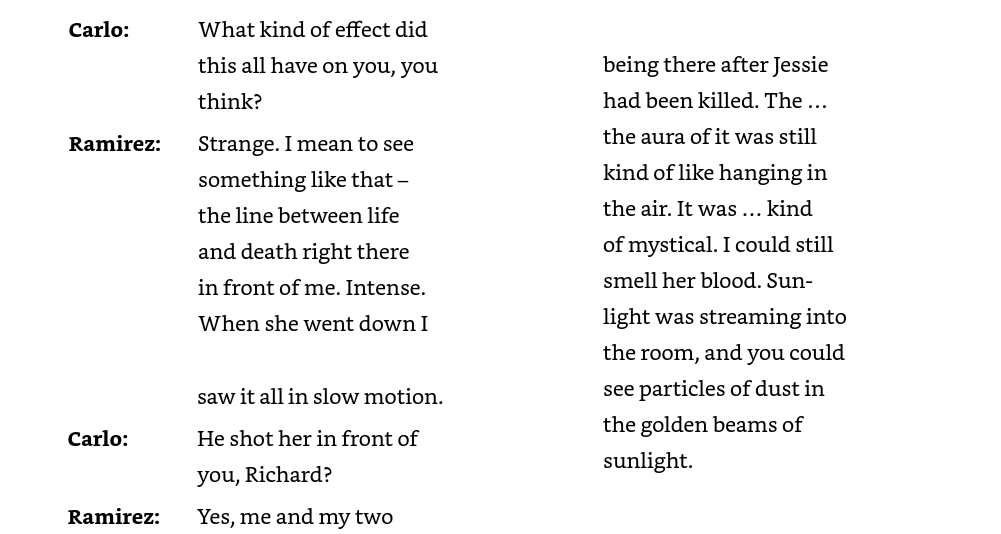
Carlo: “What kind of effect did this all have on you, you think?”
Ramirez: “Strange. I mean to see something like that – the line between life and death right there in front of me. Intense. When she went down, I saw it all in slow motion.”
Here’s a clip of him speaking in the Peacock documentary. Weirdly, half of Ramirez’s words do not fit with the printed transcript in Carlo’s book. For whatever reason, his real words have been changed.
Regarding Josefina’s death, it’s possible that Richard was playing along to a script given by Carlo? Below are two recorded recollections. They are different as if there were multiple takes. Neither appear in the interview’s transcript in the book – at least in the copies I own.
No Witnesses
Ramirez said his two cousins were there, aged 3 and 6. As I wrote in the book, there is confusion over how many children Miguel and Josefina had. The Valles family was involved in a gas explosion in 1973 where multiple people were killed including their son Miguel Jr, aged five. Some news articles say others say it was Jose, who was three. An obituary said Miguel’s surviving brothers were Oswaldo and Pablo. Either way, the newspapers said there were no witnesses. The sons were not there and according to Carlo, don’t remember anything.
Some might argue that it must have happened the way Ramirez recalled it. After all, he confided in his friend Eddie Milam and his older brother Ignacio about it. Ultimately, Ignacio said Richard clammed up and did not tell him anything (declaration of Ignacio Ramirez, habeas corpus document 20.5).
As for Eddie Milam, Ramirez could have lied and exaggerated to his friend. Or perhaps Eddie is recalling it wrongly – by the time he made his declaration in 2004, he would have been aware of the Carlo narrative that Ramirez witnessed the murder – it had been referenced in multiple documentaries by this point. So this might have caused him to misremember Richard’s distress at his cousin killing his wife and it became “He killed his wife right in front of Ricky.” (Declaration of Edward Milam, document 20.8)
Although Eddie was a good witness to Ramirez’s childhood and epilepsy, it seems that once he’s front of a camera, he will tell some tall tales of his own, such as unverifiable claims that Richard molested girls in a hotel and killed an old man. Everyone will embellish the story for 15 minutes of fame.
Trauma
Josefina’s murder is also referenced in Dr Jane Wells’ declaration. She was a clinical psychologist who worked on Ramirez’s family background for his appeals. She said:
“As if the damage and traumas thus far were not enough, petitioner was exposed to an extremely traumatic incident involving a shooting by his cousin, Miguel Valles. At the age of 15, petitioner was severely traumatized after witnessing the aftermath of the shooting by his cousin of his wife, Josefina.”
– declaration of Dr Jane Wells, document 7.22
Notice how Wells specifically says he was traumatised by the “aftermath”. His exposure to the incident could just refer to the fact it happened to someone he knew well. You do not need to see the murder to be deeply distressed by it.
There is no doubt that he was profoundly affected by the death. His mother expressed regret about taking her 15-year-old son into the crime scene. But he was definitely not spattered with blood as Carlo claimed. In this clip, Carlo tells the story but at the point of writing, there is no evidence that Richard actually told him using these words:
Cole’s blog post rightly shows Philip Carlo’s false statements about where on her head Josefina was shot. Carlo claimed she died instantly, but we know from newspaper reports that she died days later. Other documentaries have built upon what Carlo said and added new lies such as Ramirez smoking weed with Valles over Josefina’s body or going out for a drive.
Below is a clip from The Killer in My Family.
Cole also wrote about how difficult it would have been for Ramirez to sneak away from the crime scene because of the layout of the apartments the Valles family lived in. He’s correct. How could he escape here without being seen?


Delusions and Fantasies?
Could Ramirez’s story of the murder be a product of his delusions? Alternatively, he could have been exaggerating events so Carlo had a good story to write. A year after the murder, Ramirez was assessed by psychologist Dr Ursula Niziol. She said:
“The boy’s thinking pattern appears to be disorganised. He began to narrate some complicated ideas, and the longer he went, the more confused he became. Most of the TAT responses were suggestive of an inability to separate reality from fantasy.”
– Exhibit 58, Medical Report by Dr Ursula M. Niziol, Document 7.28.
Cole’s blog post also refers to Carlo’s claim that Ramirez and Miguel Valles hung out together after 1977 and correctly states that this is impossible because Valles went to a mental hospital before returning to El Paso to be tried. Then he was imprisoned.
This lie is also covered on the Questioning the Night Stalker Substack – Carlo completely invented Richard’s life between 1977 and 1979 and omitted his time at the Texas Youth Council. All this was done to sow seeds of early psychopathy and grooming by a murderer cousin. The SataysandMash channel also has a video on this here. Philip Carlo seemed to be attempting to bridge the chasm between Ramirez the sweet schoolboy and the rapist serial killer by not only exaggerating Miguel Valles’ influence, but also adding unverifiable rape attacks in his teens.
The Horrific Accident
For Ramirez’s appeals, Marilyn Cornell, a family therapist, listed both the Josefina shooting, and an incident in which Ramirez was witness to a disturbing car accident as traumas that contributed to his psychosis and PTSD. He was supposedly a passenger when the vehicle hit a fence which impaled his friend Nick Nevarez, who used his middle name “Abel.”
In the book, I also speculated that the Nick “Abel” Nevarez impaling incident might have been another one of Ramirez’s fantasies. If it was true, he must have been the unluckiest man in the world to return to El Paso for the day and be involved in a horror crash. Because this accident happened in October 1980 and Ramirez was living in San Francisco by then.
It was a van that was tipped on its side and firefighters had to cut Nevarez out. Ramirez was not found inside the back of the van unless he magically escaped unseen, just like with Josefina’s murder. The driver was Francisco Lucero, who was charged with negligent homicide, and the only other passenger aside from Nick was Albert Enriquez.
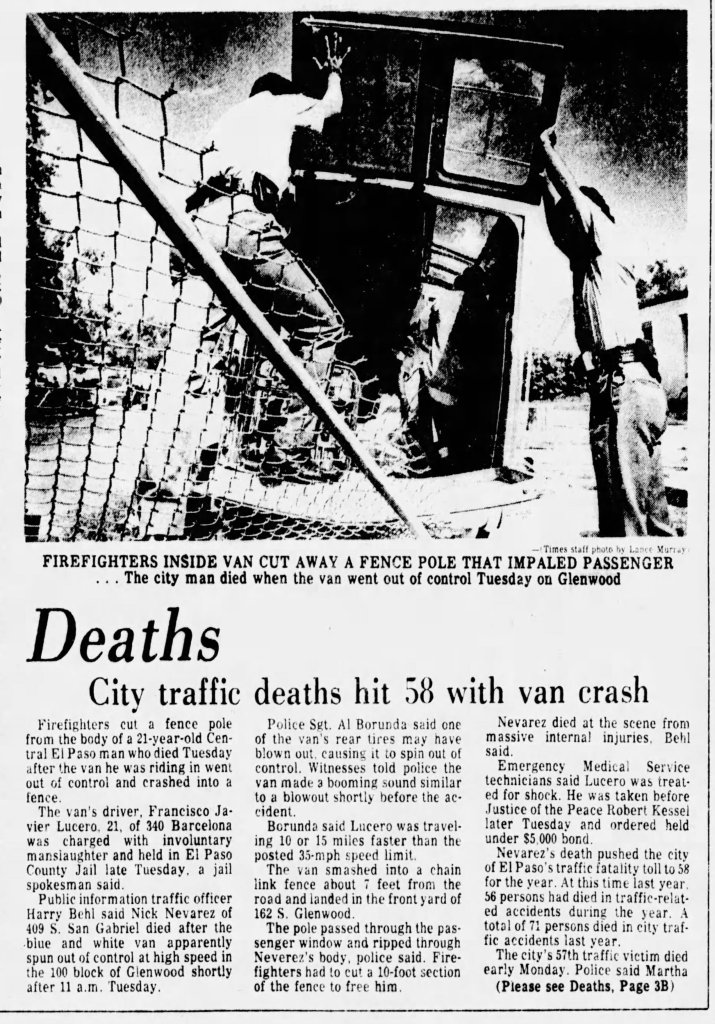
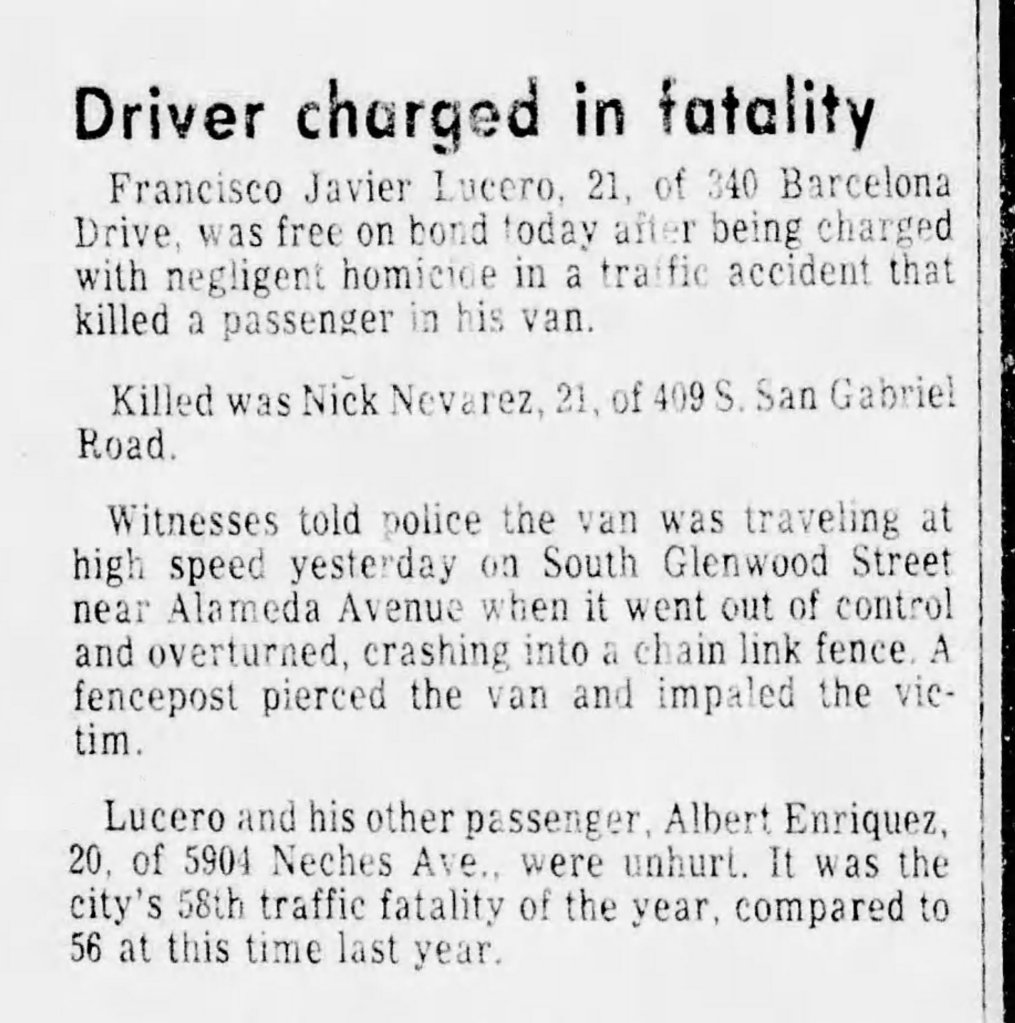
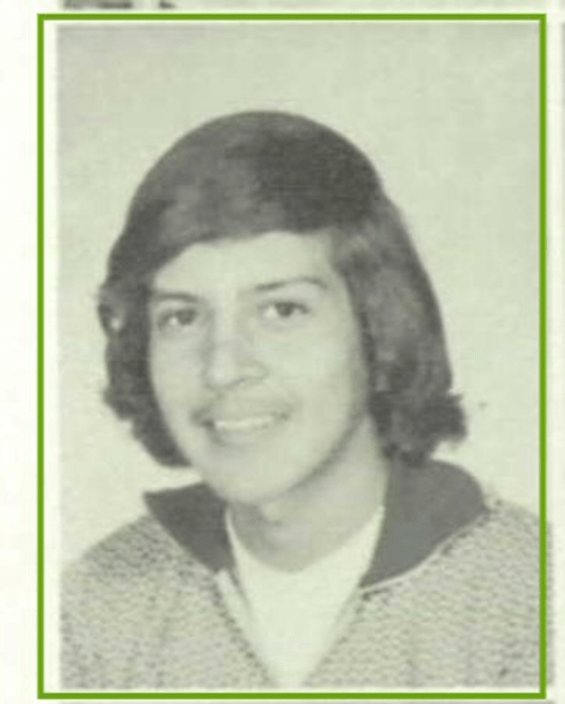
Ramirez went to school with Nevarez but was two years younger. He obviously told friends that he was involved in the crash: Eddie Gonzales retold the story to the Los Angeles Times. Gonzales used it to explain why his friend became a killer, although being in a car accident does not generally lead people to commit serial murders. But Ramirez was either deliberately lying or he was so disturbed by it that in his delusional mind it became “reality”. He might genuinely have believed it to be true.
What is difficult to understand, however, is his mother and sister recalling that the teenage Ramirez was distressed by the event. His mother said he was “16, 17 or 18. Ramirez was not living at home when he was 17-18 and 16 is four years too early. Rosa also gives 16 in her declaration and remembers her brother being distraught and crying after the funeral. Both can be found in document 20.5.
In the book, I suggested his trauma and sleeplessness was related to something else – perhaps a different accident or a mix of confused and hazy memories. Perhaps they too were searching for explanations for how Ramirez’s life went so wrong. His family’s recollections are too vague to be reliable and again only count on Ramirez’s words.
Miguel and the Military Exaggerations
Cole’s post also takes a razor to Carlo’s false narrative that Miguel was a “Green Beret” or in this case “Master Sergeant” soldier when actually, he was discharged after one tour of duty. Cole’s piece exposes a lying military historian who claims to have met “Michael Ramirez” aka “Cousin Mike” and dives into his true military history. The post is also a good accompaniment to KayCee’s article about Miguel’s time in mental institutions and prisons.
In conclusion, there are very few sources that can be trusted on Ramirez – least of all the man himself. But it really isn’t helpful that authors like Philip Carlo still managed to distort the truth despite gaining exclusive access to him. Nothing is straightforward; everything needs to be scrutinised. Our goal remains the same: will always do our best to present the most up to date information.
The videos above may contain copyrighted material but I have used them for educational purposes. Under section 107 of the Copyright Act, allowance is made for “fair use” for the purposes stated above.


 Expendable For A Cause.
Leave a reply to lwuchter Cancel reply