
This is a short sequel to “False Confessions?” from a year ago. In the previous post, Carrillo and Salerno’s misconduct was discussed, in which they violated Ramirez’s rights by interrogating him after he requested a lawyer, and they had read him his Miranda warning. Judge Nelson threw Richard Ramirez’s speculative discussion of the Night Stalker (in the third person) out of court, declaring them inadmissible.
It also covered post-trial confessions for which there is currently no evidence. The third issue it discussed (which is the subject of this post) was other quotes made by police officers guarding Ramirez after his arrest when they were waiting for Carrillo and Salerno to arrive for the proper interrogation. The court files provided a timeline, pictured below.
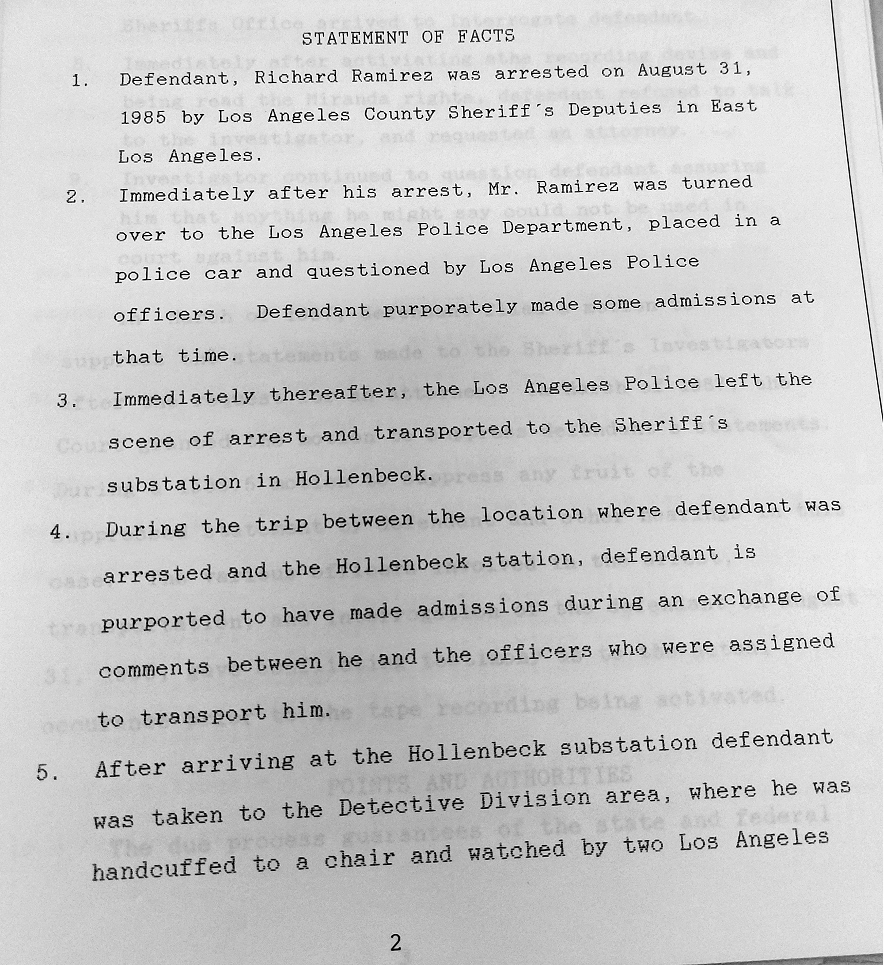
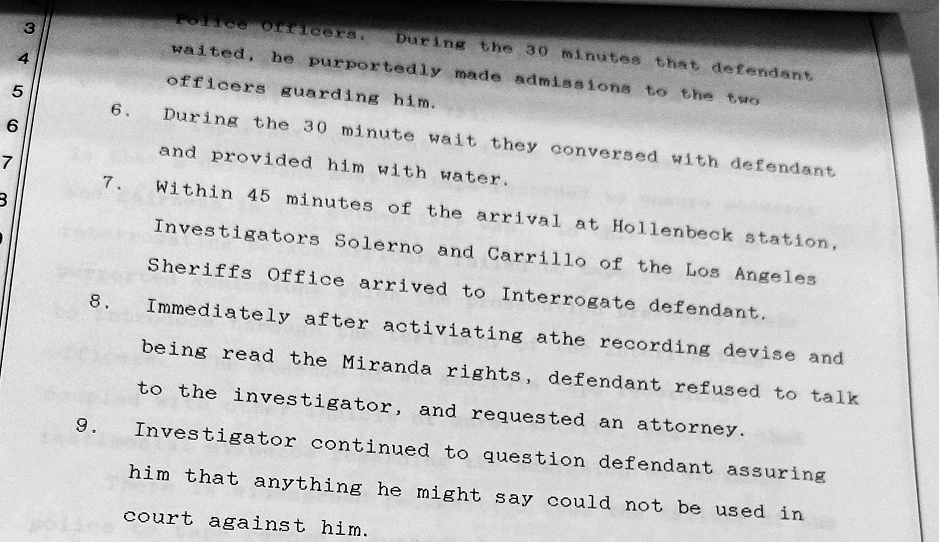
In Los Angeles court documents discovered in October 2024, it was revealed that none of these supposed confessions were recorded either. In fact, the officers in question, the LAPD’s Officer James Kaiser and Officer Jim Ellis never even wrote them down. Sergeant George Thomas (also LAPD) claimed that Ramirez stopped confessing when he noticed he was writing. Philip Carlo wrote that he had “copious notes” but where are they? The 2008 petition says that Thomas was unprepared with only a piece of paper. He testified that he had no idea whether or not a tape recorder was in the interview room, nor did he obtain one. None of these officers read Ramirez his rights after arresting him and taking him to Hollenbeck. Worse, they also conflicted one another’s recollections of Ramirez’s “confessions”, although details of the contradictions were not contained within the files. Ramirez too seems to have denied making the confessions, according to the court filings.
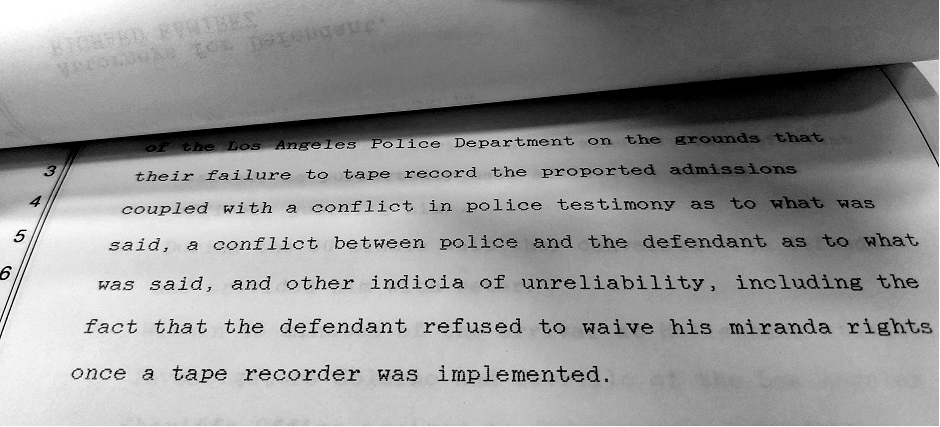
One might say, “Well, of course he would deny it!” but at this point, there is still no hard evidence that Ramirez confessed on the day he was arrested. The police, who are supposed to collect evidence, failed yet again.
In these motions, the defence team argued that there was ample opportunity to tape Ramirez – someone whose alleged murder spree was extremely high-profile and whose capture was greatly anticipated. It seems inconceivable that officers did not fetch a tape recorder ready for when Ramirez was brought to the police station. Had they been instructed not to because the L.A. County Sheriff’s Department wanted to be the ones to do it? Again, we can only speculate.
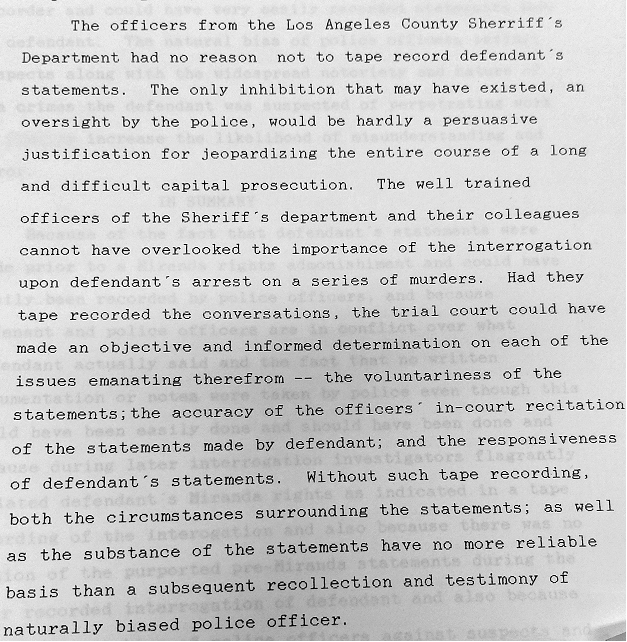
Is it simple incompetence? Or were they lying about Ramirez’s utterances? Without proof, statements of biased police were useless.
The defence also asserted that even though Ramirez had supposedly confessed to Jim Ellis and George Thomas earlier that day, Carrillo and Salerno made no mention of this in their interrogation of Ramirez.
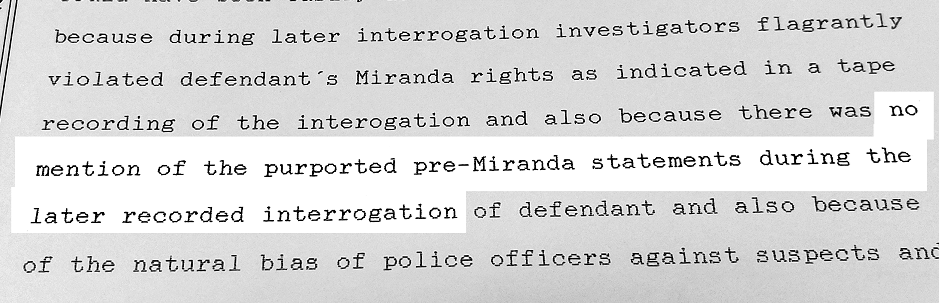
You would expect them to ask why he was now denying murders when he had already confessed to other police that same day.
The issue of Carrillo and Salerno questioning Ramirez after a head injury and a Miranda warning was already covered in the other post but there is a little more to add here. After the caution is given and the suspect invokes their rights, questioning must cease. It did not, hence the misconduct. They not only continued, but they lied to Ramirez. An example of a Miranda warning would be:
“You have the right to remain silent. Anything you say can and will be used against you in a court of law. You have the right to an attorney. If you cannot afford a lawyer, one will be provided for you. Do you understand the rights I have just read to you? With these rights in mind, do you wish to speak to me?”
Carrillo attempted to mislead Ramirez into believing that his statements post-Miranda could not be used in evidence. We criticise Carrillo a lot, but this is not illegal, nor is it misconduct. Police are allowed and even trained to trick suspects in order to trip them up or make them crack and tell the truth. They are allowed to lie to them. These techniques are effective. Ramirez seems not to have fallen for such tricks. It is tempting to infer that he was not guilty.
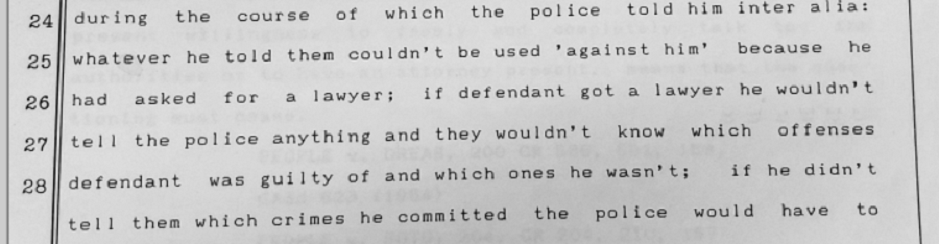

Maybe this is why Carrillo thinks Ramirez was “smart” because he could never deceive him or trip him up. But if Ramirez was truly smart, then why would he then begin a third person confession to Carrillo? A clever man would keep quiet. Alternatively, did Ramirez believe Carrillo’s lie that nothing he said post-Miranda could be used against him so began to speculate about the Night Stalker’s actions with the two detectives? The tapes are yet to be released. All we know is that Judge Nelson disagreed that they were confessions and that even if they were, they were not admissible.
As mentioned in our book, Carrillo claims Ramirez “knew the law”, so his choice to confess in the third person was deliberate: he knew it would invalidate it. We know from his psychiatric evaluations that Ramirez found legal proceedings confusing and only displayed a “cloak of competence” so this might be a matter of debate. The coercive interrogation techniques outlined in the other post might suggest Carrillo and Salerno knew there was something ‘not quite right’ about Ramirez so it is also debatable whether the ‘smart killer’ claim is all part of the Night Stalker character.
Regarding Ramirez’s conduct in TV interviews, it is clear that did not speak like the average dumb thug off the street. However, it is possible to be articulate yet still cognitively impaired. While this is open to interpretation (and of course choppy editing and unprofessional interviewers) he comes across like he is struggling to truly answer some questions or he cannot answer them directly. He always spoke about serial killers in general, never about himself. He would say “the crimes they say I committed” rather than “my crimes”. This might suggest he was exactly the same during the interrogation. Please feel free to write your opinions in the comments section.
Halpin: Not A Man of His Word…
Although Nelson threw out the Carrillo/Salerno taped “confessions”, the prosecutor, Philip Halpin, later presented testimonies from the LAPD officers regarding further alleged admissions – despite a previous judge, and Halpin himself (“The People”) reassuring the defence that they would not be raised at trial.
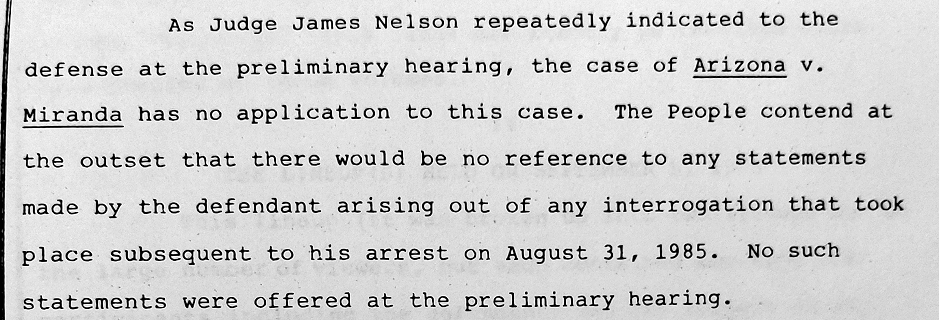
Halpin’s submission of confession ‘evidence’ for which there is no recorded proof is a violation of due process under Stephan vs State (Alaska) 1985. There must be an opportunity for jurors to assess the nature of the interrogation and the suspect’s responses on tape. Ramirez’s lawyers never made any effort to challenge the alleged confessions, nor did they complain that Halpin had defied Judge Nelson’s previous assurance that none of this would be used in the trial. If you have read our book or other posts, you will know this is a pattern with Philip Halpin.
And this post will end with another shameless plug of the book. Know anyone who likes killers, court cases and miscarriage of justice stories? Get it for them on Amazon!
-VenningB-


 Expendable For A Cause.
Leave a reply to Isabella 99 Cancel reply