
*A desktop may be required to view some images clearly*
Marylin Cornell, a marriage and family therapist, was retained by post-conviction counsel for Richard Ramirez. Cornell was regularly retained as an expert witness in capital cases to help prepare the defence of the charges, presenting mitigating evidence on behalf of the client.
Her task was to prepare detailed reports regarding social and family background, enumerating the history, economic, cultural, institutional, and environmental factors and how they affected his emotional and psychological development from birth.
For her assessment, Cornell interviewed Ramirez family members, including his mother, sister and his brother, Ignacio. She also reviewed all medical, school and social reports, court records and proceedings from Richard’s youth, the family declarations and doctor’s statements.
The family statements within this article are from 2004, and can be found in doc 7-30, apart from Robert Ramirez, whose statement is from 2008, and found in document 20-5. Marylin Cornell’s report is found in document 7-19; all are exhibits to the 2008 Writ of Habeas Corpus. Cornell’s report is sizable and will be broken down through subsequent posts.
Background

Mercedes Muñoz, Richard’s mother, was born in 1927. Her parents moved from Camargo, Mexico, to Montana to work on the railroad. However, the harsh Montana winters prompted the family to relocate to Colorado, where Mercedes was born. Guadalupe, the mother of Mercedes, missed her family back in Camargo, and in 1937 the family returned to Mexico.
Mercedes’ education was cut short; family circumstances required her to work to help with the finances, and she left school in the 5th grade. When she was fifteen, she met her future husband, Julian Tapia Ramirez.
Julian Sr was born in 1927 in Camargo, Mexico, one of eight children; his education was also cut short, completing only first grade. After that, he went to work in the fields to help support his family.
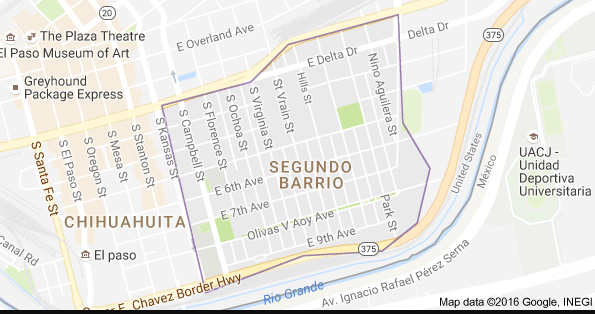
In the 1940s, after a traditional courtship, the couple married and left behind their hometown of Camargo, near the Sierra Madre Mountains, moving to the border town of Ciudad Juarez, infamously known for its poverty, pollution, and lawlessness. In 1951, after they had their first child, Julian Jnr, who was born in 1950, the family migrated across the Rio Grande River to the barrio in El Paso, Texas. Life wasn’t easy, and they struggled to survive as four more children were born over the next nine years: Ignacio, born in 1951, and Robert, born in 1953. Rosa in 1955, and lastly, Richard in 1960.
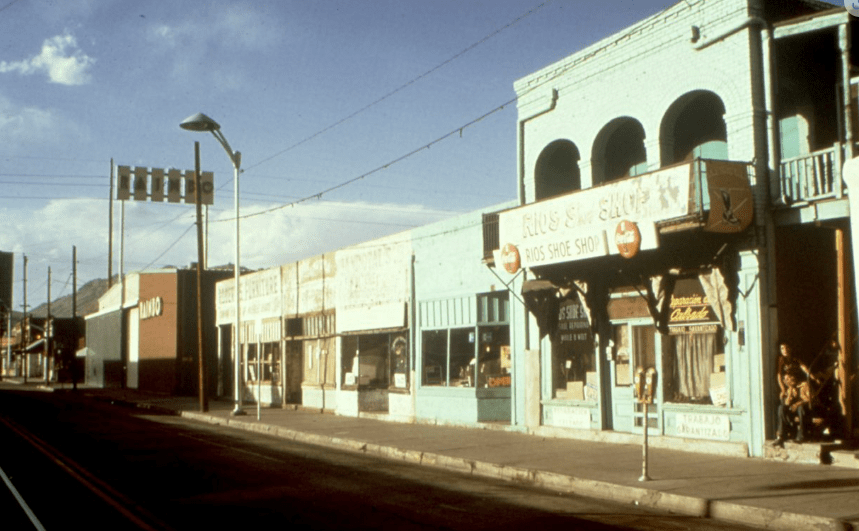
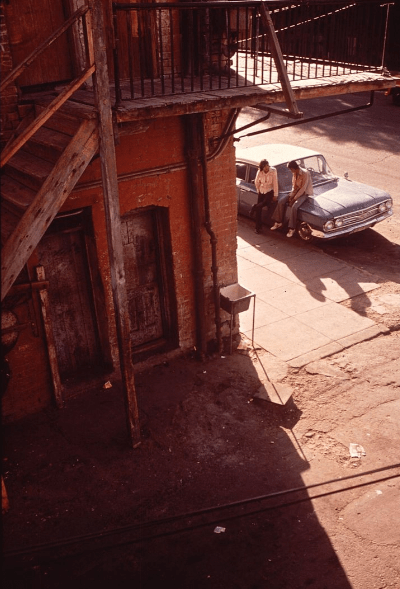
Richard Ramirez was to spend the first years of his life in El Segundo Barrio; this was one of the main entry points from Mexico into the United States for many years. The family lived in a two-roomed dwelling bordered to the south by the Rio Grande River and Juarez, Mexico.
How Clean is Your Earth?
“My husband, Julian, Sr., worked for the Santa Fe Railroad for
Declaration of Mercedes Muñoz Ramirez, 2004. Document 7-30 from the Federal Writ of Habeas Corpus, 2008.
many years. He worked in and around the ASARCO smelting plant, bringing home on his clothes heavy dirt which could be almost suffocating.
All of us were exposed to it especially Richard because he was the youngest and would be waiting on his father. I believe that many of the health problems my husband suffered came because of his work. He died at an early age from cancer.“
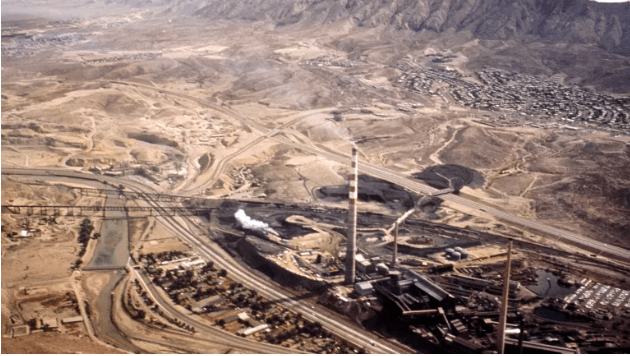
Julian Snr struggled to find full-time employment when the family first came to the United States, working several jobs, including construction, the Tony Lama boot factory (where his wife, Mercedes, also found work) and the American Smelting and Refining Company) (ASARCO). Eventually, he found full-time employment with the Santa Fe railroad company, where he was to work for nearly forty years, laying tracks within the vicinity of the ASARCO smelting works, which had been home to the world’s tallest smokestack/chimney when it was built in the 1950s; for many years it was the largest smelter in the USA, processing copper and lead harvested from mines in Mexico.
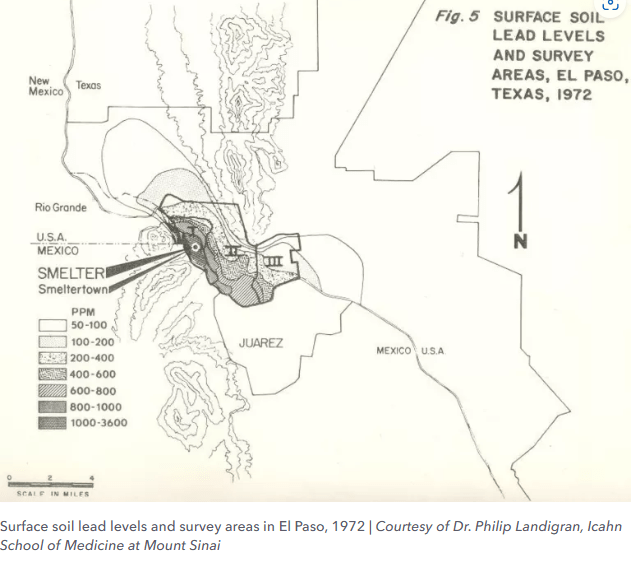
Julian Snr worked for a time inside the grounds of ASARCO, where the Santa Fe railroad hauled the products from the plant to off-site locations. The pollution from ASARCO permeated the air for three miles in any direction, while the lead poisoned the soil and the bodies of those within the area of El Paso.
The company-owned community, Smeltertown, where many who worked at the plant itself lived, was dismantled in the 1970s after an environmental investigation and scandal, where the city of El Paso sued the smelting company for the devastatingly high levels of contamination from lead, cadmium, arsenic, and zinc, continuously belched out into the atmosphere over many years. For the residents of Smeltertown and El Paso, and the areas surrounding the ASARCO plant, it meant toxicity in the air they breathed, the soil they walked and played on, the food they ate and the rivers and waterways that flowed through the land.
Lead Poisoning in Children
Exposure to lead can have terrible consequences for the health of children, including:
- Damage to the brain and nervous system
- Convulsions
- Learning disabilities
- Behavioural disorders, criminality
- Neurological damage
- Reduced attention span
- Reduced attainment in education
- Hearing and speech problems
The inhalation of toxic dust and air in pregnant women can also cause foetal damage.
Julian Ramirez Snr died at 64 in August 1991 from cancer. It was not determined that his prolonged exposure to neurotoxins had any ill effect on his health. He had worked long years in hazardous conditions in an environment severely polluted by heavy metals and toxic substances. One cannot help but wonder if exposure to multiple carcinogens contributed to his illness.
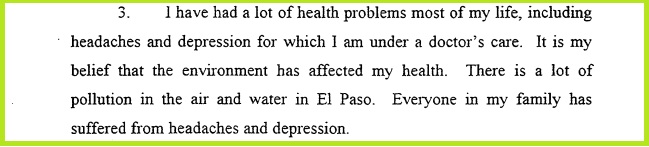
But what of Richard, his mother, and his siblings? They, too, were vulnerable to the polluted atmosphere in and around El Paso, and all exhibited physical and cognitive problems throughout their lives.
Mercedes
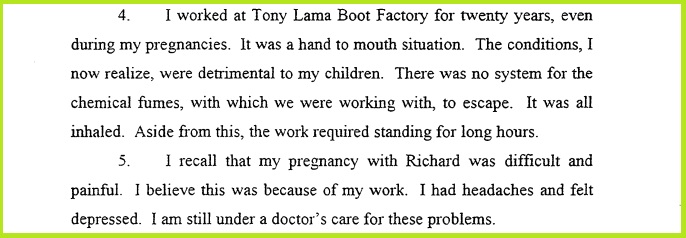
For Richard’s mother, the conditions within the Tony Lama boot factory, where she was employed, were an additional cause for concern. Throughout her five pregnancies and beyond, she worked an average of five days a week, eight hours a day, on her feet in a poorly ventilated environment. Handling toxic substances daily, she was provided with no protective clothing, gloves or eyewear, as she polished and treated boots with paints and dyes, leaving her skin stained black.
The chemicals she breathed in made her feel sick and dizzy, something which significantly affected her during her last and most challenging pregnancy with Richard. Mercedes had to see a specialist throughout her term and was advised to take time off from work, as continuing in her job may cause harm to her unborn child. She was unable to do so because the family needed her income.
Julian Jnr.
“My family was very poor when I was growing up. Both of my parents worked full-time when I attended grade school. We first lived in an El Paso barrio very close to Juarez, Mexico and ASARC0 smelting plant.
By the age of 10, I began to have difficulties in school. I had trouble concentrating and was unable to keep up with my classes. I attended special education classes to help with my schooling, but I continued to have problems with my studies. In high school I suffered a serious injury to one of my arms. After that, I stopped attending and did not finish high school.”
Declaration of Julian Jnr Ramirez, 2004. Document 7-30
The first child of Julian Snr and Mercedes, Julian Jnr was born in 1950 in St Joseph’s Maternity Hospital in El Paso, where he spent the first month of his life receiving treatment for tumorous growths on his head. At the time of his birth, the family were still living in Juarez, Mexico.
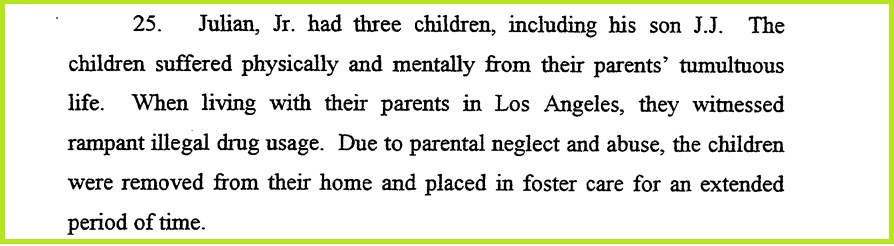
Julian Jnr attended special educational classes for a series of learning difficulties, difficulties which continued throughout his school life. He became addicted to heroin, dropping out of school after an incident where he received a severe knife wound to his arm.
Julian later married and moved to Los Angeles, where he and his wife continued a dependency on both alcohol and drugs, contributing to their children’s removal into care for an extended period, and Julian being in and out of jail on drug-related offences. Both genetics and environment may be considered a factor in his lifelong addictions and mental impairments.
Ignacio
“I believe that my medical problems are related to the area that
Declaration of Ignacio Ramirez, 2004. Document 7-30.
I lived in, including the soil because of lead poisoning by ASARCO; air pollution from Chevron oil refineries that were nearby; and water pollution of the Rio Grande. All of these things have affected my health”
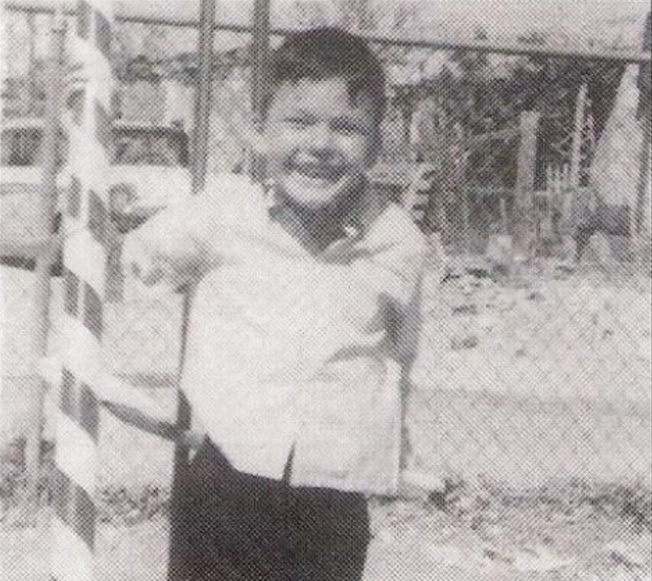
Ignacio was born less than a year after Julian Jnr, and birth-related problems led to grave physical disabilities that severely impacted his life. His childhood was marred by painful bone deformities, and he underwent many painful operations in his early years, eventually leading to the amputation of a leg.
Medical treatment was expensive, and the Ramirez family received some financial assistance from the Lions Club programme.
Like his brother before him, Ignacio also needed educational support, although it seems he did not get it.
His parents devoted most of their limited time, resources and energy to their second son out of necessity, as he needed their support and care. Even that was problematic, for at age eleven, with his father away and his mother unable to take time off work, Ignacio had to travel by bus to the hospital on his own for an operation
He was to suffer into his adult years, both physically and mentally.

Robert
“I have been diagnosed with bi-polar disorder, schizophrenia, high blood pressure and arthritis. I have had four surgeries on my left knee and two on my right knee. I have had back surgery and broken both of my arms. I am currently on disability; I am unable to lift more than fifty pounds”.
Declaration of Robert Ramirez, 2008. Document 20-5
The third child, Robert, was born in 1953 to parents already struggling to manage their older children with their cognitive and medical needs. According to Mercedes, it was a “hand to mouth situation”.
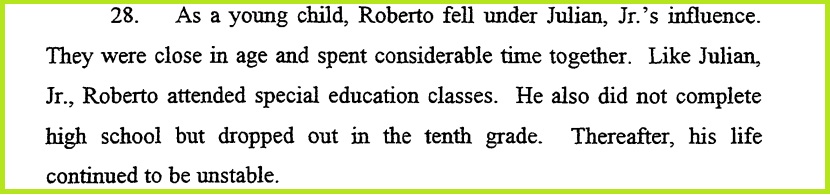
Sadly, Robert also had mental difficulties that required special needs classes and assistance in school. Robert dropped out of school in the tenth grade, and his life became more unstable after that as he fell under the influence of his brother Julian Jnr, who was probably not an ideal role model; they were often left to their own devices as their parents attempted to cope with the needs of Ignacio, coupled with the demands of work.
Like Julian Jnr (and later, Richard), Robert became a substance abuser, addicted to drugs. With his psychiatric problems, which limited his ability to find and retain work, he also would spend time in prison for theft and gun offences
Rosario
“When we were growing up, I tried to take care of Richard. I watched over him and tried to protect him from teasing from my older brothers, Julian, Jr., and Roberto. When I left home and got married, Richard came to my home and spent time with me and my then husband. I was aware that Richard had problems in school, and he was running around”.
Declaration of Rosario Ramirez, 2004. Document 7-13
Richard’s only sister, Rosa, was born in 1955, the fourth child of Mercedes and Julian Snr. Unlike her brothers, she did not require special educational assistance, although she struggled with drugs and depression, suffering from chronic headaches as all her siblings suffered.
She was particularly close to her youngest brother, Richard, caring for him when his mother could not.
But as we’ve shown in earlier posts, the young Richard was to have his own deeper problems, problems that would one day engulf them all.
And Richard? What of him?
We have covered the mental and cognitive deficiencies of Richard Ramirez in THIS SECTION; out of any of the siblings, for obvious reasons, Richard has had the most investigation into his considerable neurological problems. I do not need to repeat them here; all the reports have been covered in the above-referenced section.
Richard’s early years and head injuries can be found in THIS POST.
This article is not a “blame game”; however, the environment that the Ramirez family grew up in did have physical and mental consequences for all of them.
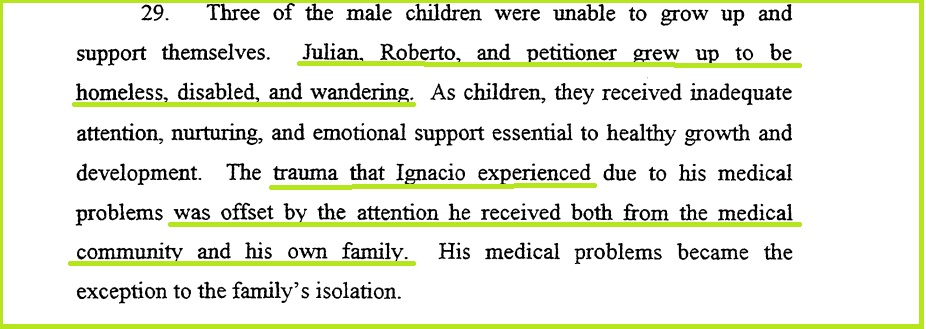
Cornell asserts lack of emotional support and nurture had a profound effect, as the brothers, lacking guidance and psychiatric and parental intervention, found themselves on dangerous trajectories.
Their father, both strict and with a traditional view of disciplining his wayward sons, often worked away, leaving Mercedes to cope with everything, trying to work whilst simultaneously taking care of Ignacio and his multiple needs. Neither parent seemed to comprehend that traditional forms of discipline would not help to bring the other three boys into line. This doesn’t mean they didn’t love their sons; they just couldn’t cope, while straddling two different cultures brought added pressure.
Julian Jnr, Robert, and Richard were unable or unwilling to support themselves. At various times, they became homeless, drifting, and in trouble, varying in degrees of seriousness, with Richard ending his life in more trouble than anyone could imagine.
The family environment, coupled with the actual environment they inhabited, contained the seeds for disaster.
Additional sources: Lead Poisoning in El Paso (theirminesourstories.org), Juarez: The Laboratory of Our Future by Charles Bowden | LibraryThing, Before Flint, Before East Chicago, There Was Smeltertown (nrdc.org)
~ Jay ~


 Expendable For A Cause.
Leave a comment