
Who Will Pick Up the Pieces?

“Could you talk about some of your childhood trauma?”

– Faye Snyder, to Richard Ramirez in 1990.

“I know enough about psychoanalysis to know what you want of me. Right now, I’m strong. You want me to remember things with you, but the mind is like a jigsaw puzzle: You take one piece out, and the rest will fall apart. And where will you be then? You won’t be here to pick up the pieces.”

– Richard Ramirez, according to author Faye Snyder.

Trauma

After analyzing the various mental health evaluations about Richard, I started thinking about why he likely said and did some of the things he did. Why did he act the way he did at times? The answer I came to is simple: Trauma. Yes, I believe a lot of what Richard said and did was from a place of deep trauma.

Back in the 1980s and 1990s, the mental health community knew that trauma affected people, but they did not realize just how devastating it could be. It was widely accepted that trauma, specifically post-traumatic stress disorder (PTSD), was only caused by war experiences or sexual assault. Fortunately, we have made progress in the field of psychiatry, and we now know that a multitude of things can cause trauma and that you don’t even necessarily have to experience an event to be traumatized by it. Some people experience trauma from witnessing or hearing about a traumatic event.

In the attempt to save his life, multiple attorneys and healthcare professionals evaluated and examined Richard over decades. I can only imagine how awful it must have been for Richard when lawyers, doctors, and mental health professionals were poking and prodding for information about his childhood and illnesses. Given what we know about his childhood, this likely was very traumatic for him (Family declarations, Habeas Corpus document 20.5).

We know he was very protective of his family and would not discuss them or anything that happened during his childhood. (Declaration of Elise Taylor, document 20.3, Exhibit 99). I think his being protective of his family wasn’t the only reason he didn’t want to talk about his childhood experiences. It was emotionally painful for him to discuss specific incidents or to even think about them.

Avoidance is a common behavior we see in people with trauma. They do not want to talk about those experiences, so they avoid reminders of the event or things that can trigger memories of the trauma. Some cope by suppressing what happened. Some people use drugs to deal with it. When Richard wasn’t in jail, he coped by using drugs. He avoided experiencing the hurt by self-medicating. Yes, it was an unhealthy way of coping. Nonetheless, it was how he coped. It kept the pain at a distance. It kept him numb, in a sense, so that he didn’t experience the negative feelings. 

When Richard went to jail and then prison, he no longer had a way of coping with the emotional pain. He didn’t know how to deal with the pain and trauma he experienced. So, he became paranoid, disconnected, and disassociated, trying to control what little he could. He couldn’t control his convictions. He couldn’t control what happened to him when he was growing up. So he tried to control what little he could, such as who could visit him and who he could call on the phone. (Declaration of Anne Evans, Exhibit 73, document 16.7). This may seem trivial to us, but it was all he had.

On the outside, he was functional, mostly. Yes, he had a drug addiction. But he seemed to have interacted with people in an acceptable way. None of his friends or acquaintances said anything about him acting crazy, going off on angry tirades, or exposing himself. Those that did speak of his attributes described him as quiet, a loner, and not prone to violence.

Effects of Prison on a Trauma Victim

In 1985, they took a young man full of trauma and pain and put him in a jail cell where he likely went through withdrawal from cocaine, and on top of that, he had no way to deal with the turmoil inside of him. He couldn’t numb it anymore. He was angry. But anger is a secondary emotion. There’s always something underneath that anger that the person can’t deal with. Anger is easier to deal with than inner pain and suffering.

The things he masked with drugs couldn’t be masked anymore, and it came out in ways that showed he was experiencing symptoms of mental illness. He had managed to hide those symptoms for years from everyone but the health professionals he interacted with. And even some of the professionals that spent time with him, interviewing him, failed to see the inner turmoil and and pain and would merely go on to write about his psychopathology and never understand what was really going on with Richard Ramirez. Some would blame his alleged crimes on his childhood experiences and his parents, not the system and individuals that railroaded him.

Alone in a jail cell, with no way to escape the pain and trauma, Richard began to experience full-blown psychosis. He developed compulsions and obsessive behaviors as coping mechanisms. Again, unhealthy coping mechanisms, but still a means of coping. Then they locked him away on death row. He had nothing. I can picture him in my mind in that cell all alone, with no way to deal with his emotional pain, no way to deal with emotions that he had suppressed for so long. He couldn’t deal with the fact that he had been sentenced to death. So he disassociated. No one understood what he was going through. No one validated his suffering.

I know his attorneys were trying to save his life, but he couldn’t deal with the fact that he had been sentenced to death. (Declaration of Elise Taylor, document 20.3, Exhibit 99). He couldn’t help them because it was too painful. I can only imagine how much he suffered inside every day. He was cut off from everyone and everything he had ever known.

Ramirez in Popular Culture

Some individuals keep the ever-growing saga of Richard Ramirez alive by not only continuing the serial killer and rapist narrative but also by creating new storylines to keep it interesting, to keep people drawn to their stories, regardless of whether or not there’s a shred of truth to it. And the masses, being enthralled with Richard Ramirez even though he has been labeled as one of the most heinous killers in history, flock to said stories and take it all in as though it were fact, not bothering to do a bit of research for themselves. They are drawn to the serial killer, rapist narrative like moths drawn to a flame.

In 1993, Ramirez appeared on an episode of Inside Edition, which further fueled public fascination with his image. Media segments like these didn’t seek to understand the mental health crisis he was experiencing, but rather to sensationalize his notoriety, often presenting a one-dimensional villain devoid of humanity or psychological context. People attempt to psychoanalyze him from the footage but never seek out his genuine psychiatric evaluations.
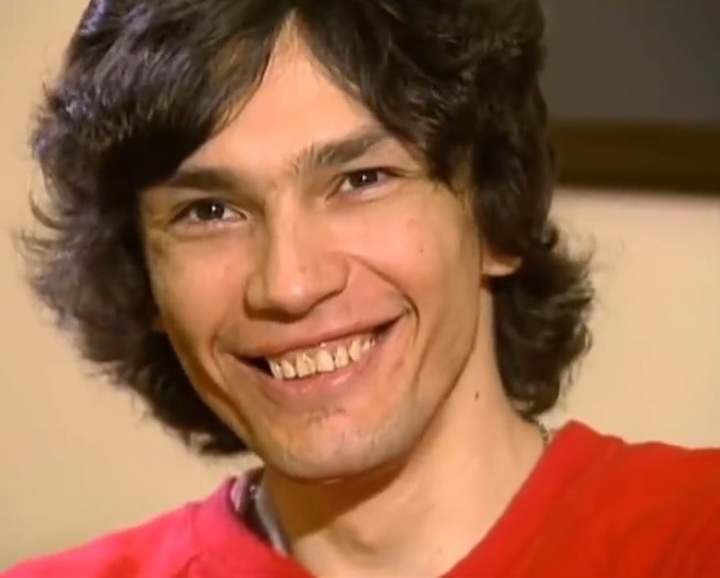
Ramirez on a 1993 episode of Inside Edition

Who picked up the pieces of Richard’s broken life, of his broken soul? How many people had the opportunity to change the trajectory of his life but didn’t?

A few words about trauma: everyone experiences trauma differently. What may be perceived as traumatic to me may not be perceived as traumatic to you, and vice versa. So, we should not assume that we all experience trauma in the same way. Trauma-focused therapy is a specialty. Not every psychologist or mental health professional is qualified to engage in this type of therapy. Trauma therapy must be conducted systematically and with an appropriate patient-focused approach. To blurt out, “Tell me about your childhood traumas,” is insensitive and can cause more harm to someone who has experienced trauma. Approaching a trauma victim with anything but genuine concern and empathy is harsh, unwarranted, and does not facilitate healing.

KayCee

59 responses to “Who Will Pick Up the Pieces?”

  1. Michelle Peru Avatar
    Michelle Peru

    It was sad to know that Richard had no
    Kinda support for anything. It just looks like everyone failed him. He’s Family as well the defense lawyers didn’t work seriously on his appeals.

    Like

    1. Hi, thanks for your comment.
      Richard was failed badly, but not by his post-conviction attorneys, they were the ones who did the work and investigated properly. They are the ones who finally had his mental health conditions evaluated. They are not to be confused with his trial attorneys, who failed him utterly.
      Thank you for reading, we appreciate it.

      Liked by 1 person

    2. Richard was indeed failed by his defense attorneys in his LA trial. As a teen, he was failed by the Texas Youth Council, an organization that was put in place to help him but that did not do so.

      Liked by 3 people

  2. In the end, he was right again. There was no one to pick up the pieces, no one to even claim his remains when he passed away.
    Ultimately, the biggest letdown came from his family, not only because of all the things that happened in his childhood but also because I haven’t seen anything about them trying to be there for him even as emotional support. I know they wrote letters to him, some have been made public, and I reckon it wasn’t as easy back then to just go visit or to call or anything. But whenever I read about people in general, dying and their bodies are never claimed by the family, it really makes me wonder. He came from a Catholic family, surely burial is important to them?
    Was it because of his satanist tendencies, was it because of the so-called DNA match on the Linda Mei girl? Is there any law that prevents you from getting closure if a loved one of yours is sentenced to death?
    Even his wife, best friend, fangirl or whatever people want to call Doreen, vanished before his death. Left to rot in a cell thanks to dubious evidence and left to die as though he was some sort of parasite.
    The fact that journalist, Laurel Erickson, called this a merciful blessing really makes my blood boil.

    Liked by 2 people

    1. His body was definitely claimed. Doreen dealt with the cremation. I do think she was wrong to sell his urn to Zak Bagans of all people, for his weird museum.

      Liked by 2 people

      1. Oh, really! I was half relieved until you mentioned she sold the urn 😂 so far I’ve only read that “nobody wanted to deal with him” so they didn’t claim his remains.

        Like

      2. I think it’s Shelly Ramirez who said that, if some articles are to be believed. But two other nieces have said it isn’t true.

        Liked by 1 person

      3. Yes, we can put that rumour to bed, his body was claimed by Doreen, as Venning said. This “no one wanted him” rumour isn’t true at all. Shame she sold the box and toe-tag, I find that a very grim…but at least the ashes box was empty. I am half surprised that his ashes were not sold off to the highest bidder, like everything else. You can only imagine what some creepy weirdos would have done with those.

        Liked by 1 person

      4. Yeah, I don’t know how that works, I hope these are things she discussed with Richard though.

        Do we know what happened to the ashes?

        On a side note, do you guys plan on writing a post on Doreen unless that’s already been done? I feel like she’s often seen as that one groupie who pestered Richard until he married her out of exhaustion, but my senses tell me there’s more to that. Unfortunately (or rightfully so), she became a very private individual and won’t intervene when it comes to Richard.

        Liked by 3 people

      5. Kaycee will mention a bit about Doreen in an upcoming post but we don’t plan to dedicate one to her.
        I can understand why she wants to be private, I bet weirdos try to contact her all the time. I sort of want to know why they fell out.

        Or … Maybe I don’t 😬

        Like

      6. Doreen scattered his ashes at a secret location.
        We tend to stick to the trial and appeals, as much as possible, and have never really thought about Doreen as a subject. Although yesterday I read a news report from their wedding where it said they sat quietly together, and at one point she put her head on his shoulder; I thought it was sweet.
        I think there’s more to that relationship than anyone understands, the groupies/fangirls hate her, I assume they’re jealous. Only Richard could know what he really felt. I admire her tenacity, she was getting “‘her man” despite all the groupies. 🤣

        Liked by 1 person

      7. I do think it’s nice that he had someone to look after him. Some prisoners have nothing.

        Liked by 3 people

      8. And if an incarcerated person has no one in the free world to support them, they will lack so much, even food.

        Liked by 2 people

      9. Doreen gets a lot of hate and is frequently bodyshamed, and I guess it’s partially thanks to someone writing that she insisted at least three times to get Richard to marry her. From an appeal standpoint, if I’d been Richard lawyer I certainly would have suggested, at some point, that he do get married to someone he’s known for a long time. Appearances count in court more than facts, and a married person gives the impression that they’re stable or at least more than they used to be.

        Another person that really interests me is Frank Salerno. Mostly because he gives me the impression that he’s very smart and intelligent, but somehow he got on board with the whole circus. Unfortunately, there aren’t as many statements from him since Carrillo takes the stage for everyone.

        Like

      10. I think Salerno didn’t believe Carrillo’s ‘one perpetrator’ hypothesis until they found the shoe print at the Bennett scene, and even then I don’t know if he was 100% convinced. But then he too is making up stuff that can’t be verified. For example, his claim that Jesse Perez said Ramirez told him he murdered two people in Monterey Park. If this was the case, why was Perez never interrogated about this in court? Then he claimed Perez gave the Bell and Lang stereo to his friend in Tijuana, but the appeal documents and journalists in the press gallery say the stereo was from Felipe Solano’s loot. I think he has a deep contempt for Ramirez. But I do wonder if he too knows some of it is bullshit. Of course, police will close ranks around each other, generally.

        Liked by 1 person

      11. This reminds me!

        This boom box thing seems to be so shrouded in this big lie; f.e. in the Netflix documentary Salerno says he gets a call from a woman whose father is “a street person” and “some guy named Rick” bragged about this boom box and this gun and some murder he committed. But wasn’t this informant a convict or did I misread one of your posts?

        Salerno says the murder information wasn’t public then, but if so, as a cop, shouldn’t you first investigate the “street person” who seems to know a bit too much instead of some Rick you don’t even know exists? What if the street person is blowing smoke up your ass?

        Liked by 3 people

      12. They all forget that the “street person”, Perez, originally told the cops he bought the Jennings 6 to 9 months before the Doi incident. He changed his story and blamed senility. They all changed their stories..
        He was a former convict, yes, he was imprisoned for manslaughter, after a bar fight.

        Liked by 1 person

      13. As a convicted felon, he could have gone to prison for having a firearm. But he didn’t. Instead, he testified against Richard and conveniently faced no charges.

        Like

      14. Yes Perez stabbed someone to death once and served time for manslaughter (it was considered a fight) and also burglary.

        And there was a reward being given out by the city, which was definitely a motivator. Apparently when cross-examined, Perez claimed he thought he was getting a quarter of a million (if Carlo is to be believed)!!

        Liked by 1 person

      15. And let’s not forget. The LAPD/LASD have a long history of corruption and coercive tactics.

        Like

      16. Someone I consider to be trustworthy and who has never sought personal gain from a relationship to Richard, unlike some of his family members, disclosed that Richard had expressed the desire (at some point in his life) to be cremated, not buried in a catholic cemetery. So, Doreen had him cremated and spread his ashes in a location he was said to have liked going to when he was younger. The individual who shared this information did so without hoping to gain anything, and I have a lot of respect for that. Out of respect for this individual, I will not disclose the source and that’s why I do not mention it in articles. It seems like Doreen did care a lot about Richard and did a lot for him. Whatever happened between them I am glad that he had her support most of the years he was in prison, otherwise it would have been even worse for him. Doreen could have made a lot of money off of her story about Richard. Instead, she chose to live privately and keep her relationship with him private. I think this says a lot about her and how she felt about him.

        Liked by 7 people

      17. That’s incredibly sweet to read, thank you for sharing. I feel reassured to know that someone cared about him so much, which is weird I’ll give you that, it’s not like I knew the guy 😅 but I hated reading so much bad stuff about Doreen when she’s probably one of the first, if not the first person who saw through people’s BS back then.

        Liked by 4 people

      18. And at the end, Doreen stepped up and carried out his wishes, and that says a lot about her, too and apart from the ashes box,( which is really grim) you have to respect her for not dragging their lives through the lens of public gaze all over again.

        Liked by 1 person

      19. Wow how did you find that out? Where does it say that and where is this museum?

        Like

      20. It’s Zak Bagans’ Haunted Museum in Las Vegas.

        Like

    2. We have covered the Mei case, have you read it yet? Read it (it’s in the San Francisco section) , and see what you think, it’s a long post, Venning and I split it between us; we always felt it was the “elephant in the room” and needed talking about. It was a hard one, as you can imagine.

      Like

      1. I will check it out ASAP!

        Like

    3. We have a post coming out very soon about Death Row and how it’s run, visits, phone calls, etc. There’s also a good podcast called “Killing Death Row”, available on BBC Sounds, and it’s horrific. Back street deals to get drugs for lethal injections, one state penitentiary calling another “LIFE SAVERS” for supplying them with drugs to execute someone. The didn’t see the irony in that statement, it went right over their heads.

      Liked by 1 person

    4. Thanks for taking the time to read the blog posts. I do think Richard’s family failed him in many ways. However, I think they all had some significant difficulties that contributed to what they did and didn’t do for him. He certainly did not deserve what happened to him. I’m not sure if Jay or Vennings addressed this already, but there’s information that isn’t widely known of from a trustworthy source regarding what happened after Richard passed away and what was done with his ashes. Also, this same source has shared information that indicates Doreen did not separate from Richard, nor does she seem to have believed the allegations about Mei Leung.

      Liked by 1 person

      1. I have found very little information about Doreen and their relationship. From what I gathered, my overall impression is that she probably started out as one of the many groupies, but she did find a friend in him and vice versa, but there are many rumours (as usual) that confuse me. One was that she didn’t claim his body, which you guys put to bed, and others are that she was shocked at the Mei thing and decided to divorce him, or that he was involved with another writer chick, etc. etc.

        I’m interested in her life because she probably got to know Richard on a level no others did, and while I doubt there was any significant intimacy (both because of him being a convict and his overall awkwardness and shy nature), I’m sure she wasn’t lying when she said they were best friends.

        Liked by 1 person

      2. Yeah that part is a mystery to us too (regarding how she felt about Mei).

        Like

      3. Doreen herself said she flew “under the radar”, and only gave a few interviews to help promote the Carlo book when it was published. I find her interesting, or at least her motives, anyway. She gave up everything for him, so she must have got something out of it, why do it otherwise?

        Liked by 1 person

      4. Who knows! Could be anything from the corny “true love” reason to something as surreal as Richard having incredible stolen stuff stashed somewhere remote so she could live off of it for three lifetimes.

        Personally, I think they must have been very similar in their own ways. Maybe she didn’t feel like she fit in that society any more than he did. Maybe she wanted to tell the truth and nobody wanted to hear it. Maybe when she dies an actual book written by her will be released. (One can hope 😂)

        Liked by 1 person

      5. Ha ha! If he had a secret stash, he certainly wouldn’t be asking Felipe Solano to give him $10.
        I think she cared deeply, and it couldn’t have been easy being the wife of the “Night Stalker”.

        Liked by 1 person

      6. I agree. See certainly had nothing to gain by marrying him and a lot to lose!

        Like

      7. This is why I think she’s an interesting person who gets a lot of hate for nothing. There aren’t many people out there who would sacrifice their chances at having a “normal life” just to “be” with someone who’s basically never getting out of prison just because you’re convinced they’re innocent.

        Another person who mostly seemed to have nice things to say about Richard seems to be Eva Ortiz, but she didn’t seem particularly interested in his innocence, and it seemed more like a vague crush.

        Funnily enough, anyone who *actually* interacted with him, whether from visits or letters or phone calls, never mentioned anything about him having violent tendencies or making weird comments. I don’t consider “perverted” comments as weird considering everyone is pretty much a pervert out there and frankly, what’s a person to do when they’re in a cell 24/7 and have brain damage that can make you hypersexual. But on that note, I remember that Shelly Ramirez claimed Richard made some very inappropriate and offensive remarks about her (something about fucking her if she wasn’t his niece), which I kind of scrunch my nose at considering she wants to write a book about him but was like 3 when he was arrested…

        Liked by 2 people

      8. Even if he did say that to her, he was ill. So he has an excuse I guess. But yeah, it’s difficult who to believe. In one interview she said her aunt forced her to look at him while he was jerking as Doreen ate cookies nearby and it caused an argument in the family. It went from kind of plausible to far-fetched IMO.

        Liked by 1 person

      9. Hahaha, what?

        Yeah, I’m sure Catholic virgin-Doreen was eating cookies while this man masturbated in front of his aunt and niece while the niece forced her to watch.

        Not even Carrillo went that far.

        Liked by 1 person

      10. He did. He said to a packed audience that he knew Julian Snr had molested Rosa.
        He does not know that at all.

        Liked by 1 person

      11. Well, I tried. But I guess there’s no redemption at all for this guy 😂

        Liked by 1 person

      12. The man seems obsessed to me.

        Like

      13. I agree Doreen likely knew him on a level that no one else did. There is very little information about her, and I think that she purposely made it so. I don’t think she believed the Mei Leung allegations. The reason I believe this is that she never divorced Richard. The Mei Leung case was brought to light in 2009. Richard lived until 2013. If she were going to divorce him, I think she would have done so before that and disassociated from him completely. But that isn’t what happened. I think she knew how biased the case was against him. After all she sat through his entire trial and heard everything.

        Liked by 1 person

      14. Hi! Yes, we have mentioned the ashes, not the source, because we can’t, but that person would know more than any of these rumours would have us believe.

        Liked by 1 person

  3. ekaemmerling55 Avatar
    ekaemmerling55

    And I feel much admiration for Doreen and her courage . She ignored Mainstream thinking right from the start…What a though woman ..cool and intelligent.She just did what she felt…There must be a reason why Richard chose her . ..

    Liked by 2 people

  4. Kavindi Perera Avatar
    Kavindi Perera

    I’m so relieved that you guys created this entire blog. When I saw the infamous video of Richard’s head all bandaged up from being attacked by the angry mob of ‘hero’ citizens. There was something inside me that told me that there was more to his case than I was being shown. He just didn’t have the same aura or presence about him that confirmed serial killers like Dahmer or Bundy did. After watching the Netflix documentary, the ‘very’ limited amount of clips of his court appearances and interviews, and reading Carlo’s book. I was left very confused and bewildered as nothing was really adding up. So I looked for other sources to see whether there was any discussion regarding. But mostly found people mostly bashing him and calling him a psychopath and what not. I first came across this blog a few months ago and read through one of two articles. Initially, I was a bit angry because I thought that it was just more groupies trying to justify their attraction to a serial killer. But as I read through more of the content I found that questions that were floating around in my head after researching this case were slowly being addressed one by one. I honestly felt extremely depressed and grief stricken that they railroaded a man like this and destroyed his entire reputation and existence and took advantage of his lack of education, lack of financial resources, and mental illness. It made me sick. I didn’t want to believe that the great American justice system had allowed such a gross miscarriage of justice. Especially as I want to become a lawyer in the future. I hope that in the future people will begin to actually look into this case in more detail and ask more questions and try to see everything from a different perspective instead of simply relying on Carrillo’s ridiculous claims or the claims of others that merely try to profit off him. Thank you guys so much for taking so much time out of your probably busy lives to bring light to this case. I look forward to reading the book!!

    Liked by 1 person

    1. Hi, thank you for taking the time to leave an in-depth comment for us, we appreciate it. To begin with I’ll address your first assumption that we were groupies, as it’s something people like to say to denigrate us. We are not, and never have been. Realising that the trial of Ramirez was a sham doesn’t automatically fall under the Groupie Banner. Most groupies hate us, because we are spoiling their vision of a psycho killer, they don’t want to face any suggestion that there’s a whole world of bullshit attached to this case. We noticed the massive inconsistencies, and as no one was talking about those, we decided that we would, and so Expendable for a Cause was born.

      Many people who claim to be into “true crime” only know this case from the ridiculous Netflix documentary, the swathe of YouTube videos, all spouting and repeating the same inaccuracies. Few seem to have looked deeper than that, and so it’s great when people like yourself find us. I am glad that you finally saw what this blog is truly about. We ask for no more than that.

      I hope you became a lawyer, a damn good one. and I hope no one else has to suffer because of incompetent attorneys cluttering up the justice system.
      Thanks again for reading what we’ve got to say.

      Liked by 1 person

    2. We truly appreciate you reading the posts.After watching an episode of “Very Scary People” and reading Carlos book several years ago, I was left feeling there was much more to Richard’s story that we hadn’t been told. So much doesn’t add up. We can certainly relate to your frustration at not being able to find objective sources about Richard’s life and case, as those were factors that led us to this path we are on. I used to believe that the American criminal justice system was fair and unbiased, but in the quest to find the facts of Richard’s case I have found so much information that establishes that isn’t the case at all. Especially if you are a minority from an impoverished background. I know there are many competent, caring attorneys who do their best for their clients. Unfortunately, it seems if you are indigent, that’s the exception rather than the norm. I wish you the best in your journey to become an attorney and hope you will fight the injustices in the criminal justice system.

      Liked by 1 person

    3. Thanks for your comment. I agree that Ramirez didn’t behave in the same way as other famous serial killers. Once the ‘bad boy’ swagger is stripped back, one can see he lacked their intelligence, calculation and arrogance.
      You aren’t the first to see us and feel an initial pang of anger. We had one girl lash out at us once, but within a day of reading our posts, she switched views and began arguing that something was very wrong with the case. We had a family member of a victim stop by in a rage too, because she probably just thought it was a conspiracy site!

      But yes, I too feel depressed about it when writing it. I’ve learned this happens often, but the Ramirez case is faulty on a grand scale and I was completely shocked when I first learned about it just two years ago. I am sometimes rendered speechless, as are others when I tell them. I am glad you mentioned Carrillo as he is the source of all that went wrong. He portrays Ramirez as arrogant but in my opinion, arrogance is him, admitting to multiple instances of police misconduct on camera and bragging about it. Right now, I am adding a new page to the book about this.

      Good luck with becoming a lawyer. Are you going to study/studying criminal law? To me, that’s the most exciting.

      Liked by 1 person

      1. Yes I plan to study criminal law as I feel that there is a great deal of corruption and misconduct within this sector of the law by law enforcement, legal officials, and politicians. And thanks to all three of you for your well wishes!

        Liked by 1 person

      2. Oh good luck, we really wish you well. You’re correct, the corruption is rife and the world needs people like you.

        Liked by 1 person

  5. It’s truly disheartening to think that he believed his mental and emotional strength was so fragile that revisiting his past—even with someone else—could completely shatter him, leaving him unable to piece himself back together. In that quote, there’s an unexpected vulnerability, almost as if he’s silently crying out for help. It’s as though, for a brief moment, he allowed himself to be seen—not as the hardened, detached persona he projected, but as someone who felt deeply vulnerable, exposed, and unsafe. It makes me wonder what he was going through at that time, what internal battles he was fighting that caused his carefully constructed “I don’t care” façade to crack. For anyone who insists that he was an unfeeling psychopath, I strongly encourage them to read this post and reconsider.

    Liked by 1 person

    1. I agree with you, Kaycee did a great job untangling these threads.
      The other quote I find illuminating was Jo-Ellan Dimitrius, the jury consultant during the trial. On observing Richard she said he was hunched over, and reminded her of “a bird with a broken wing”.

      Liked by 2 people

      1. A bird with a broken wing. Reading that always makes me sad. That’s a fitting description of him.

        Like

    2. It was difficult to read and write about. I can only imagine how broken he really was inside. The statement shows he had some limited insight into what he was experiencing. I think Faye Snyder was an incredibly self-centered individual, and as a psychologist, she should have known that you never ask a person what she asked Richard about his trauma. I work in psychiatry and we never say to a patient, “So tell me about some of your past trauma?” That statement can be triggering. Trauma has to be processed slowly. I was quite enraged at her for that. And still am. I’d love to give her my opinion from one mental health professional to another. I’m glad he didn’t choose her to write the book. She would have been worse than Carlo.

      Liked by 1 person

      1. I wholeheartedly agree—she would have left Richard far more scarred and shattered than Carlo ever did. While I have a deep respect for mental health professionals, I’ve noticed a troubling tendency among some to overstep the bounds of professionalism, treating their patients as intellectual puzzles to be solved rather than human beings with complex emotions and experiences. There’s a fine line between guiding someone toward healing and prying too deeply out of sheer curiosity, often without considering the long-term consequences.

        Therapy, for example, is a double-edged sword—it has the power to reshape perspectives, allowing people to process their past and grow, but it can also unearth wounds too deep to close, leaving someone feeling exposed, vulnerable, and trapped in a darkness they can’t escape from. In Richard’s case, the 19 death sentences he received have only made it easier for people to dehumanize him, reducing him to nothing more than a collection of his crimes. The prevailing attitude seems to be, “He killed all those people, so why should I care about treating him like a human being?” But that kind of thinking is exactly what enables society’s willingness to strip certain individuals of their basic humanity, as if their mistakes—however severe—erase the fact that they were still living, breathing human beings with emotions, thoughts, and experiences that shaped them.

        Like

      2. Did you ever see the link I put up about the Reith lectures and Dr Gwen Adshead’s four-part lectures on “evil”? She’s a very well know forensic psychologist and I think you would find those talks absolutely fascinating and probably very useful.

        Liked by 1 person

      3. Yes, I did! Thank you for that. I also watched Dr. Adshead’s lectures for my courses. I agree with her perspective that psychological and cognitive disorders, trauma, and a wide range of other influences can contribute to qualities that society characterizes as “evil.” However, I disagree with the notion that human beings are not innately immoral. While I wouldn’t go as far as to say that we are born evil—because that concept extends beyond immorality—I do believe that morality is not something we are simply born with.

        Perhaps my personal experiences and interactions with people, as well as the environment I was raised in, have shaped my perspective. I grew up around individuals who were extremely selfish and spiteful, people who would go to great lengths to get what they wanted, even at the cost of others’ suffering. Because of this, I find it difficult to accept the idea that we enter this world as entirely good or as blank moral slates, only to be corrupted by the vices and evils of the world. Instead, I believe morality develops through a combination of innate predispositions and environmental influences.

        That being said, I do agree with another point Dr. Adshead makes—treating individuals with empathy and understanding, especially when rehabilitation is needed, is far more productive than simply labeling them as evil or irredeemable. No matter what someone has done or is accused of, I believe in treating every person with at least basic human dignity and respect. That doesn’t mean I would hold them in the same regard as my loved ones or show them the same level of affection, but I refuse to dehumanize anyone.

        Reducing someone to a monstrous caricature born purely from human imagination only serves to obscure the reality that individuals like this do exist. Dehumanization does not undo the pain and suffering they have caused; if anything, it only adds more fuel to the fire. I firmly believe that people should be held accountable for their actions, but that does not grant society the right to pry into their minds as if they are lab rats in an experiment. It is deeply unethical to strip someone of their humanity for the sake of satisfying morbid curiosity, and in my opinion, doing so does not give anyone moral superiority over the person they are scrutinizing.

        Richard, despite everything, was not an inanimate object to be dissected and broken down as if he were nothing more than a case study. Even though he is no longer alive, this was done to him while he was still here, and people continue to do it after his death. The only individuals who have a legitimate, well-informed understanding of his psychology, actions, and mental state are the eleven mental health professionals who spent countless hours interviewing him and analyzing his psychological tests. I highly doubt that the same people who so confidently label him as “evil” or a “monster” would appreciate being put under the same level of scrutiny.

        Imagine if someone had the sheer audacity to force another person to break down their psychological defenses and coping mechanisms just to extract fragments of information for a book or some exploitative piece of content they were trying to create. The idea is disturbing, yet that is exactly what people have done—and continue to do—with Richard.

        Liked by 1 person

      4. I thought you’d enjoy the lectures, I found her work so interesting.
        You know, many of those who label Richard “evil” or a “monster” are generally the ones who haven’t even read his psychiatric evaluations, it’s always the same.

        Liked by 2 people

      5. I just love how the psychologists on the doccos say Richard was a psychpath. Not a single one of them read any of the psych evals or the reports on his cognitive impairments. I’d really like to tell them how obtuse they are for not reading the reports before going on TV and giving their so-called expert opinions. Which are grossly inaccurate. If they had read them, they would know psychopath was never used to describe him. Nor was he diagnosed with anti-social personality disorder, which is the term used to describe people with a lack of empathy/conscience and that are “cold blooded.” That was not Richard.

        Liked by 1 person

Leave a reply to Vivi Cancel reply